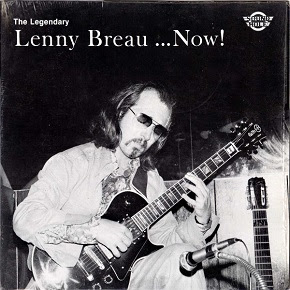
Review
by Paul Kohler
Recorded
with the help of guitar master Chet Atkins, this record showcases Breau
in the solo guitar spotlight. A few tunes feature him soloing against a
seperate rhythm guitar track that he also played. Breau's version of
McCoy Tyner's "Visions" is astounding!!
https://www.allmusic.com/album/the-legendary-lenny-breau--now%21%21-mw0000875119
Biography:
Leonard
Harold Breau (August 5, 1941 – August 12, 1984) was an
American-Canadian guitarist. He blended many styles of music, including
jazz, country, classical, and flamenco. Inspired by country guitarists
like Chet Atkins, Breau used fingerstyle techniques not often used in
jazz guitar. By using a seven-string guitar and approaching the guitar
like a piano, he opened up possibilities for the instrument.
Early life
Breau
was born August 5, 1941, in Auburn, Maine, and moved with his family to
Moncton, New Brunswick in 1948. His francophone parents, Harold Breau
and Betty Cody, were professional country and western musicians who
performed and recorded from the mid-1930s until the mid-1970s. From the
mid to late 1940s they played summer engagements in southern New
Brunswick, advertising their performances by playing free programs on
radio station CKCW Moncton. Lenny began playing guitar at the age of
eight. When he was twelve, he started a small band with friends, and by
the age of fourteen he was the lead guitarist for his parents' band,
billed as "Lone Pine Junior", playing Merle Travis and Chet Atkins
instrumentals and occasionally singing. He made his first professional
recordings in Westbrook, Maine at Event Records with Al Hawkes at the
age of 15 while working as a studio musician. Many of these recordings
were released posthumously on the album Boy Wonder.
The Breau
family moved to Winnipeg, Manitoba in 1957 and their new band performed
around the city and province as the CKY Caravan. Their shows were radio
broadcast live on Winnipeg's CKY on Saturday mornings from remote
locations.
Jazz career
Around 1959 Breau left his parents'
country band after his father slapped him in the face for incorporating
jazz improvisation into his playing with the group. He sought out local
jazz musicians, performing at Winnipeg venues Rando Manor and the Stage
Door. He met pianist Bob Erlendson, who began teaching him more of the
foundations of jazz.
In 1962, Breau briefly performed in the
Toronto-based jazz group Three with singer and actor Don Francks, and
Eon Henstridge on acoustic bass. Three performed in Toronto, Ottawa, and
New York City. Their music was featured in the 1962 National Film Board
documentary Toronto Jazz. They recorded a live album at the Village
Vanguard in New York City and appeared on the Jackie Gleason and Joey
Bishop television shows.
Returning to Winnipeg a few months
later, Breau became a session guitarist, recording for CBC Radio and CBC
Television, and contributed to CBC-TV's Teenbeat, Music Hop, and his
own The Lenny Breau Show filmed in Winnipeg. In 1963 and 1964, Breau
appeared at David Ingram's Fourth Dimension at 2000 Pembina Highway in
Fort Garry, a suburb of Winnipeg. Every Sunday night was a party open to
all. Other regulars at the club on Sunday nights included Neil Young
and his band The Squires, and Randy Bachman, who was heavily influenced
by Breau, in particular in the jazz guitar style of his The Guess Who
hit "Undun".
In 1967, recordings of Breau's playing from The
Lenny Breau Show found their way to Chet Atkins. The ensuing friendship
resulted in Breau's first two albums, Guitar Sounds from Lenny Breau and
The Velvet Touch of Lenny Breau – Live! on RCA, accompanied by fellow
Winnipegers Ron Halldorson and Reg Kelln. Breau did not record again for
nearly 10 years, though he continued to do session work in Winnipeg.
Breau
left Winnipeg in 1976 and spent the last few years of his life in the
United States, living in Maine, Nashville, Stockton, California, and New
York City, eventually settling in Los Angeles in 1983. These years he
spent performing, teaching, and writing for Guitar Player magazine. A
few more solo albums were issued during his lifetime, in addition to
albums recorded with fiddler Buddy Spicher and pedal steel guitarist
Buddy Emmons.
Breau had problems with drugs beginning in the
1960s which he managed to control during the last years of his life. On
August 12, 1984, his body was found in a swimming pool at his apartment
complex in Los Angeles, California. The coroner reported that Breau had
been strangled. Breau's wife, Jewel, was the chief suspect, but she was
not charged. He is interred in an unmarked grave at Forest Lawn Memorial
Park Cemetery.
Posthumous honors
Many live and "lost"
recordings have been issued since Breau's death, and most of his
previously released albums have also been reissued. Due to efforts by
Randy Bachman of Guitarchives, Paul Kohler of Art of Life Records, Tim
Tamashiro of CBC Radio and others, a new generation of listeners has
access to his music.
A documentary titled The Genius of Lenny
Breau was produced in 1999 by Breau's daughter, Emily Hughes. This
Gemini Award-winning film includes interviews with Chet Atkins, Ted
Greene, Pat Metheny, George Benson, Leonard Cohen, and Bachman, as well
as family members. George Benson said, "He dazzled me with his
extraordinary guitar playing... I wish the world had the opportunity to
experience his artistry." The biography One Long Tune: The Life and
Music of Lenny Breau by Ron Forbes-Roberts was published in 2006
containing interviews with nearly 200 people and a comprehensive
discography.
CBC Radio presented a documentary on Lenny Breau
titled On the Trail of Lenny Breau (the title is in reference to Breau's
parents' song "On the Trail of the Lonesome Pine"). It was first
broadcast on September 13, 2009, as part of a regular weekly program
called Inside the Music. It was narrated by Breau's son, Chet. The
one-hour feature was produced in Montreal by John Klepko.
Breau was inducted into the Canadian Music Hall of Fame in 1997.
Technique and guitars
Breau's
fully matured technique was a combination of Chet Atkins's and Merle
Travis's fingerpicking and Sabicas-influenced flamenco, highlighted by
right-hand independence and flurries of artificial harmonics. His
harmonic sensibilities were a combination of his country roots,
classical music, modal music, Indian, and jazz, particularly the work of
pianist Bill Evans. Breau often adapted Evans's compositions, such as
"Funny Man", for guitar. Breau said in relation to this, "I approach the
guitar like a piano. I've reached a point where I transcend the
instrument. A lot of the stuff I play on the seven-string guitar is
supposed to be technically impossible, but I spent over twenty years
figuring it out. I play the guitar like a piano, there's always two
things going on at once. I'm thinking melody, but I'm also thinking of a
background. I play the accompaniment on the low strings."[citation
needed]
He had two custom seven-string guitars made, one
classical and one electric. At the time, no company made a string that
could be tuned to the high A on his classical guitar. Breau used fishing
line of the correct gauge until the La Bella company began making a
string for him. The electric guitar was made by Kirk Sand, also with the
first string being a high A.
https://en.wikipedia.org/wiki/Lenny_Breau
///////
Reseña
por Paul Kohler
Grabado
con la ayuda del maestro de la guitarra Chet Atkins, este disco muestra
a Breau como guitarrista solista. En algunos temas, Breau interpreta un
solo sobre una pista de guitarra rítmica que él también toca. La
versión de Breau de "Visions" de McCoy Tyner es asombrosa.
https://www.allmusic.com/album/the-legendary-lenny-breau--now%21%21-mw0000875119
Biografía:
Leonard
Harold Breau (5 de agosto de 1941 - 12 de agosto de 1984) fue un
guitarrista estadounidense-canadiense. Combinó muchos estilos musicales,
como el jazz, el country, la música clásica y el flamenco. Inspirado
por guitarristas country como Chet Atkins, Breau utilizaba técnicas de
fingerstyle poco frecuentes en la guitarra de jazz. Al utilizar una
guitarra de siete cuerdas y acercarse a la guitarra como a un piano,
abrió posibilidades para el instrumento.
Vida temprana
Breau
nació el 5 de agosto de 1941 en Auburn, Maine, y se trasladó con su
familia a Moncton, Nuevo Brunswick, en 1948. Sus padres francófonos,
Harold Breau y Betty Cody, eran músicos profesionales de country y
western que actuaron y grabaron desde mediados de los años treinta hasta
mediados de los setenta. Desde mediados hasta finales de los años 40,
actuaban en verano en el sur de Nuevo Brunswick y anunciaban sus
actuaciones con programas gratuitos en la emisora de radio CKCW de
Moncton. Lenny empezó a tocar la guitarra a los ocho años. A los doce,
formó una pequeña banda con amigos, y a los catorce ya era el
guitarrista principal de la banda de sus padres, llamada "Lone Pine
Junior", tocando temas instrumentales de Merle Travis y Chet Atkins y
cantando ocasionalmente. Realizó sus primeras grabaciones profesionales
en Westbrook, Maine, en Event Records con Al Hawkes a la edad de 15 años
mientras trabajaba como músico de estudio. Muchas de estas grabaciones
se publicaron póstumamente en el álbum Boy Wonder.
La familia
Breau se trasladó a Winnipeg, Manitoba, en 1957 y su nueva banda actuó
por la ciudad y la provincia con el nombre de CKY Caravan. Sus
actuaciones se retransmitían en directo por la emisora CKY de Winnipeg
los sábados por la mañana desde lugares remotos.
Carrera en el jazz
Alrededor
de 1959, Breau abandonó la banda de country de sus padres después de
que su padre le abofeteara por incorporar la improvisación de jazz a su
forma de tocar con el grupo. Buscó músicos de jazz locales y actuó en
los locales de Winnipeg Rando Manor y Stage Door. Conoció al pianista
Bob Erlendson, que empezó a enseñarle los fundamentos del jazz.
En
1962, Breau actuó brevemente en el grupo de jazz Three, de Toronto, con
el cantante y actor Don Francks y Eon Henstridge al bajo acústico.
Three actuó en Toronto, Ottawa y Nueva York. Su música apareció en 1962
en el documental Toronto Jazz de la National Film Board. Grabaron un
álbum en directo en el Village Vanguard de Nueva York y aparecieron en
los programas de televisión de Jackie Gleason y Joey Bishop.
De
vuelta a Winnipeg unos meses más tarde, Breau se convirtió en
guitarrista de sesión, grabando para CBC Radio y CBC Television, y
colaboró en Teenbeat, Music Hop de CBC-TV, y en su propio The Lenny
Breau Show filmado en Winnipeg. En 1963 y 1964, Breau actuó en David
Ingram's Fourth Dimension, en el 2000 de Pembina Highway, en Fort Garry,
un suburbio de Winnipeg. Cada domingo por la noche era una fiesta
abierta a todos. Otros habituales del club los domingos por la noche
eran Neil Young y su banda The Squires, y Randy Bachman, muy influido
por Breau, en particular en el estilo de guitarra jazz de su éxito de
The Guess Who "Undun".
En 1967, unas grabaciones de Breau en The
Lenny Breau Show llegaron a manos de Chet Atkins. La consiguiente
amistad dio lugar a los dos primeros álbumes de Breau, Guitar Sounds
from Lenny Breau y The Velvet Touch of Lenny Breau - Live! en RCA,
acompañado por sus compatriotas de Winnipeg Ron Halldorson y Reg Kelln.
Breau no volvió a grabar durante casi 10 años, aunque siguió haciendo
trabajos de sesión en Winnipeg.
Breau abandonó Winnipeg en 1976 y
pasó los últimos años de su vida en Estados Unidos, viviendo en Maine,
Nashville, Stockton, California y Nueva York, para instalarse finalmente
en Los Ángeles en 1983. Estos años los pasó actuando, enseñando y
escribiendo para la revista Guitar Player. A lo largo de su vida publicó
algunos álbumes en solitario, además de otros grabados con el
violinista Buddy Spicher y el guitarrista de pedal Buddy Emmons.
Breau
tuvo problemas con las drogas a partir de la década de 1960, que logró
controlar durante los últimos años de su vida. El 12 de agosto de 1984,
su cuerpo fue encontrado en una piscina de su complejo de apartamentos
en Los Ángeles, California. El forense informó de que Breau había sido
estrangulado. La esposa de Breau, Jewel, era la principal sospechosa,
pero no fue acusada. Está enterrado en una tumba sin nombre en el
cementerio Forest Lawn Memorial Park.
Honores póstumos
Desde
la muerte de Breau se han publicado muchas grabaciones en directo y
"perdidas", y también se han reeditado la mayoría de sus álbumes
publicados anteriormente. Gracias a los esfuerzos de Randy Bachman de
Guitarchives, Paul Kohler de Art of Life Records, Tim Tamashiro de CBC
Radio y otros, una nueva generación de oyentes tiene acceso a su música.
La
hija de Breau, Emily Hughes, produjo en 1999 un documental titulado The
Genius of Lenny Breau (El genio de Lenny Breau). Esta película,
ganadora de un premio Gemini, incluye entrevistas con Chet Atkins, Ted
Greene, Pat Metheny, George Benson, Leonard Cohen y Bachman, así como
con miembros de su familia. George Benson dijo: "Me deslumbró con su
extraordinaria forma de tocar la guitarra... Ojalá el mundo tuviera la
oportunidad de experimentar su arte". La biografía One Long Tune: The
Life and Music of Lenny Breau, de Ron Forbes-Roberts, se publicó en 2006
con entrevistas a casi 200 personas y una completa discografía.
CBC
Radio presentó un documental sobre Lenny Breau titulado On the Trail of
Lenny Breau (el título hace referencia a la canción de los padres de
Breau "On the Trail of the Lonesome Pine"). Se emitió por primera vez el
13 de septiembre de 2009, como parte de un programa semanal regular
llamado Inside the Music. Fue narrado por el hijo de Breau, Chet. El
programa, de una hora de duración, fue producido en Montreal por John
Klepko.
Breau ingresó en el Salón de la Fama de la Música Canadiense en 1997.
Técnica y guitarras
La
técnica plenamente madura de Breau era una combinación del
fingerpicking de Chet Atkins y Merle Travis y el flamenco influenciado
por Sabicas, destacado por la independencia de la mano derecha y las
ráfagas de armónicos artificiales. Su sensibilidad armónica era una
combinación de sus raíces country, la música clásica, la música modal,
la india y el jazz, en particular la obra del pianista Bill Evans. Breau
adaptaba a menudo a la guitarra composiciones de Evans, como "Funny
Man". Breau dijo al respecto: "Abordo la guitarra como un piano. He
llegado a un punto en el que trasciendo el instrumento. Muchas de las
cosas que toco con la guitarra de siete cuerdas se supone que son
técnicamente imposibles, pero he pasado más de veinte años
averiguándolo. Toco la guitarra como un piano, siempre están pasando dos
cosas a la vez. Pienso en la melodía, pero también en el fondo. Toco el
acompañamiento en las cuerdas graves"[cita requerida].
Mandó
hacer dos guitarras de siete cuerdas a medida, una clásica y otra
eléctrica. En aquella época, ninguna empresa fabricaba una cuerda que
pudiera afinarse en el La agudo de su guitarra clásica. Breau utilizó
hilo de pescar del calibre adecuado hasta que la empresa La Bella empezó
a fabricar una cuerda para él. La guitarra eléctrica fue fabricada por
Kirk Sand, también con la primera cuerda en La agudo.
https://en.wikipedia.org/wiki/Lenny_Breau
A1 - I Can't Help It 4:34
A2 - Always 3:44
A3 - Our Delight 4:06
A4 - Freight Train 2:55
B1 - Ebony Queen 3:46
B2 - I Love You 4:20
B3 - It Could Happen To You 2:46
B4 - Vision 4:13
Credits:
Acoustic Guitar, Electric Guitar – Lenny Breau
Mastered By – John Eberle
Photography By [Cover] – Paul Yandell
Note:
Recorded at C.A. Workshop; Nashville, Tn.; Fall 1977, Fall 1978
Label: Sound Hole Records – NR10462
Released: 1979
Genre: Jazz
https://www.discogs.com/release/3999480-Lenny-Breau-The-Legendary-Lenny-Breau-Now

This file is intended only for preview!
I ask you to delete the file from your hard drive or device after reading it.
thank for the original uploader


No comments:
Post a Comment