Sunday, September 27, 2026
Friday, September 11, 2026
Music Is My Life Louis Armstrong, Autobiography, and American Jazz
Friday, August 28, 2026
Lil Hardin & Her Swing Orchestra, 1936-1940
Lillian Hardin Armstrong (née Hardin; February 3, 1898 – August 27, 1971) was an American jazz pianist, composer, arranger, singer, and bandleader. She was the second wife of Louis Armstrong, with whom she collaborated on many recordings in the 1920s.
Her compositions include "Struttin' with Some Barbecue", "Don't Jive Me", "Two Deuces", "Knee Drops", "Doin' the Suzie-Q", "Just for a Thrill" (which was a hit when revived by Ray Charles in 1959), "Clip Joint", and "Bad Boy" (a hit for Ringo Starr in 1978). Armstrong was inducted into the Memphis Music Hall of Fame in 2014.
Background
Lil's grandmother, Priscilla Martin, was a former slave from near Oxford, Mississippi. Martin had a son and three daughters, one of whom was Dempsey, Lil's mother. Priscilla Martin moved her family to Memphis to escape from her husband, a trek the family made by mule-drawn wagon. Dempsey married Will Harden, and Lillian Hardin was born on February 3, 1898. She grew up in a household with her grandmother. Will died when Lil was seven. Dempsey later remarried to John Miller.
During her early years, Hardin was taught hymns, spirituals, and classical music on the piano. She was drawn to popular music and later blues.
Early education and mentors
Hardin first received piano instruction from her third-grade teacher, Violet White. Her mother then enrolled her in Mrs. Hook's School of Music. At Fisk University, a college for African Americans in Nashville, she received more advanced training, and earning a diploma from Fisk, returned to Memphis in 1917. In August 1918, she moved to Chicago with her mother and stepfather. By then she had become a proficient sight-reader, a skill that helped her gain a job as a sheet music demonstrator at Jones Music Store.
The store paid Hardin $3 a week (US$58 in 2022 dollars), but bandleader Lawrence Duhé offered $22.50 (US$438 in 2022 dollars). Knowing that her mother would disapprove of her working in a cabaret, she made it known that her new job was playing for a dancing school. As observed by Thomas Brothers, the discrepancies between her education and that of Duhé's band members were apparent; when she asked what key the New Orleanians were going to play in, they remarked, "We don't know what key. When you hear two knocks start playing." Three weeks later the band moved to a better booking at the De Luxe Café, where the entertainers included Florence Mills and Cora Green. From there, the band moved up to Dreamland. Here the principal entertainers were Alberta Hunter and Ollie Powers. When King Oliver's Creole Jazz Band replaced Duhé's group at Dreamland, Oliver asked Hardin to stay with him. She was with Oliver at Dreamland in 1921 when an offer came for the orchestra to play a six-month engagement at the Pergola Ballroom in San Francisco. At the end of that booking Hardin returned to Chicago while the rest of the Oliver band went to Los Angeles. She later studied at the New York College of Music, where she earned a post-graduate diploma in 1929.
Marriages and divorces
In Chicago, Hardin returned to work at Dreamland as a pianist in an orchestra for Mae Brady, a violinist and vaudeville stalwart. While there, she fell for Jimmie Johnson, a young singer from Washington, D.C., whom she married on August 22, 1922. The marriage was short-lived, ending in divorce. The Oliver band returned from California and opened at the Royal Gardens with Bertha Gonsoulin at the piano but soon found itself back at Dreamland with Hardin at the piano.
King Oliver's band was enjoying enormous success at Dreamland when he sent for Louis Armstrong to join as second cornetist. Armstrong was beginning to make a name for himself in New Orleans and regarded Oliver ("Papa Joe") as his mentor. At first, Hardin was unimpressed, remembering that she "was very disgusted" by Louis, who arrived in Chicago wearing clothes and a hair style that she deemed to be "too country" for Chicago, but she worked to "take the country out of him", and a romance developed (to the surprise of other band members, some of whom had been trying to woo her for some time with no success). They would visit cabarets and after-hour spots after their job at Lincoln Gardens, but their relationship was solidified after Armstrong's mother's intervention in 1923, when she visited Armstrong in Chicago. She and Armstrong needed to be divorced from their previous relationships (Lil Hardin to Jimmie Johnson, Louis Armstrong to Daisy Armstrong) and "claimed desertion" from said relationships to annul the marriages. Hardin and Armstrong were married on February 5, 1924, and honeymooned/toured with the Oliver band in Biglerville, Pennsylvania. The Defender noted that Hardin was dressed in a "Parisian gown of white crepe elaborately beaded in rhinestones and silver beads."
Hardin took Armstrong shopping and taught him how to dress more fashionably. She got rid of his bangs and began working to foster his career. In addition to updating his appearance, Hardin assisted Armstrong in learning classical music with the help of a German teacher in Chicago. She felt he was wasting his talent in a secondary role. Armstrong was happy to be playing next to his idol, but Hardin at first persuaded him to manage his own money and assert himself on the bandstand and during recording sessions; eventually, she convinced him to leave Oliver and go out on his own. Armstrong resigned from Oliver's band and in September 1924 accepted a job with bandleader Fletcher Henderson in New York City. Hardin stayed in Chicago, first with Oliver, then leading a band of her own. When Hardin's band got a job at the Dreamland Café in Chicago she prepared for Armstrong's return to Chicago by having a huge banner that read "The World's Greatest Trumpet Player".
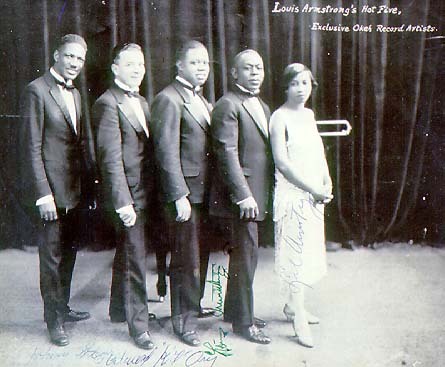
Richard M. Jones convinced Okeh Records to make a series of sessions under his name: the Armstrong "Hot Five" recordings. With Hardin at the piano, Kid Ory on trombone, Johnny Dodds on clarinet, and Johnny St. Cyr on banjo, this group rehearsed at Armstrong and Hardin's residence on Chicago's East 41st Street and held its first session on November 15, 1925.
In the late 1920s, Hardin and Armstrong grew apart due to class differences and money issues. He formed a new Hot Five with Earl Hines on piano. Hardin reformed her own band with Freddie Keppard, whom she considered second only to Armstrong. Hardin and Armstrong separated in 1931 when he had a liaison with Alpha Smith, who threatened to sue Armstrong for breach of promise, so he begged Hardin not to grant him a divorce. They finally divorced in 1938.
Later years
In the 1930s, sometimes billing herself as "Mrs. Louis Armstrong", Hardin led an "All Girl Orchestra", a mixed-sex big band which broadcast nationally over the NBC radio network. In the same decade she recorded for Decca as a swing vocalist and performed as piano accompanist for other singers. She also performed with Red Allen.
Solo work
In the late 1940s and early 1950s, Hardin worked mostly as a soloist, singing and playing piano. In the late 1940s, she decided to leave the music business and become a tailor, so she took a course in tailoring. Her graduation project was to make a tuxedo for Armstrong.
Hardin returned to Chicago and the house on East 41st Street. She made a trip to Europe and had a brief love affair in France, but mostly she worked around Chicago, often with fellow Chicagoans. Collaborators included Red Saunders, Joe Williams, Oscar Brown Jr., and Little Brother Montgomery.
In the 1950s, Hardin recorded a biographical narrative for Bill Grauer at Riverside Records that was issued in LP form. She would again appear on that label in 1961, participating in its project Chicago: The Living Legends as accompanist for Alberta Hunter and leader of her own hastily assembled big band. The Riverside recordings led to her inclusion in a 1961 NBC network special, Chicago and All That Jazz, and a follow-up album released by Verve. In 1962, she began writing her autobiography with Chris Albertson, but she changed her mind when she realized the book would include experiences that might discomfit Louis Armstrong, so the project was delayed until his death. She died before finishing the book.
Death
When Louis Armstrong died in 1971, she traveled to New York for the funeral and rode in the family car. Returning to Chicago, she felt that work on her autobiography could continue, but the following month, performing at a televised memorial concert for Armstrong, she collapsed at the piano and died from a heart attack on the way to the hospital. After her funeral, her letters and the unfinished manuscript of her autobiography disappeared from her house.
She was interred at Lincoln Cemetery in Blue Island, Illinois.
In 2004, the Chicago Park District renamed a community park in her honor.
Legacy
Hardin's song "Bad Boy" was recorded by Ringo Starr in 1978 and became an international pop hit.
Armstrong's composition "Oriental Swing" was sampled by electro swing musician Parov Stelar to create the 2012 song "Booty Swing". The song gained notoriety when it was used in a 2013 Chevrolet commercial.
https://en.wikipedia.org/wiki/Lil_Hardin_Armstrong

Bio:
En 1918, Lil se traslada junto a su madre y su padrastro a Chicago y comienza a trabajar en una tienda de música llamada Jones Music Store. Su propietaria, Jennie Jones, también era agente de música y, conociendo las dotes musicales de Lily, la animó para que aceptase tocar en alguna banda de música swing o jazz. Sin embargo, la madre de Lil no veía con buenos ojos esa música a la que calificaba de "pecado".
Lillian, para poder tocar en la banda del clarinetista Lawrence Duhe, engañó a su madre diciéndola que tocaba en una escuela de danza. De allí, la banda fue cogiendo fama en los clubes de Chicago hasta que en 1921 se asentó en uno de los locales nocturnos más importantes de la ciudad: "The Dreamland". Fue allí donde conoció a Joe King Oliver y éste la ofrece el puesto de pianista en su grupo Creole Jazz Band. Hardin toca con ellos durante un tiempo limitado tanto en Chicago como el San Francisco, pero cuando la banda se traslada a Los Ángeles, Lil decide volver a su ciudad.
Lillian Hardin vuelve a trabajar en el local "Dreamland" como pianista, y allí conocería a Jimmie Johnson, un cantante más joven que ella del que se enamoraría. Se casaron en 1922, pero se separaran poco tiempo después. Es entonces cuando la Creole Jazz Band regresa a Chicago y Joe King Oliver la vuelve a ofrecer el puesto de pianista; ella acepta.
En 1922, Oliver invita a Chicago a Louis Armstrong para unirse a su banda como segundo cornetista, ya que éste ya empieza a tener fama como trompetista. Es entonces cuando al Creole Jazz Band alcanza un gran éxito tanto artístico como económico y Armstrong se convierte en un músico famosísimo. Lillian Hardin se enamora de Louis al que, en un principio, consideraba un pueblerino. Este enamoramiento causa sorpresa entre los integrantes de la banda ya que algunos habían intentado, sin éxito, conquistarla. Lil ayuda a Louis a poder divorciarse de su primera esposa y ambos se casan en 1924.
Lillian Hardin, admirando el talento de su segundo esposo, convence a éste de abandonar amistosamente a Oliver para poder alcanzar mayores metas artísticas. Armstrong se traslada a Nueva York en 1924 pero Hardin continúa trabajando para Joe King Oliver, hasta que decide formar su propia banda y en 1925 vuelve a asentarse por tercera vez en el club "Dreamland".
Ese mismo año, regresa Armstrong, y el matrimonio junto a Kid Orly (trombón), Johnny Dodds (clarinete) y Johnyy St. Cyr (banggio) forman la banda Hot Five (y los Hot Seven junto a Earl Hines), con la que obtendrían grandes éxitos tanto artísticos como económicos pues realizaron numerosas grabaciones.
Pero a partir de 1928, el matrimonio se empezó a separarse, entre otras causas debido a las infidelidades de Louis. Earl Hines ocupa el piano y Lily forma otra banda propia. En 1931 se divorcian.
Lillian Hardin siguió trabajando como pianista, pero también como cantante. Grabó varios temas para Decca Records y trabajó con otros artistas como Ray Charles y Ringo Starr. Pero poco a poco empieza a alejarse del mundo de la música, al que tan sólo vuelve en ocasiones puntuales.
En 1962, escribió su autobiografía en colaboración con Chris Alberson.
Muere en Chicago en 1971 de un colapso mientras tocaba el piano en un concierto televisado en homenaje de Louis Armstrong, que había fallecido un mes antes.
http://en.wikipedia.org/wiki/Lil_Hardin_Armstrong
Tuesday, August 25, 2026
Louis Armstrong • When you wish upon a star
Disney y Satchmo se juntaron e hicieron este maravilloso disco.
Disney and Satchmo got together and made this wonderful album.
Saturday, August 1, 2026
Friday, July 3, 2026
VA • Saga Jazz Jazz & Latin Songs [Argentina, Brasil, Cuba, Mexico]
Louis Armstrong, Harry James, Django Reinhardt, Tommy Dorsey, Gene Krupa, George Shearing, Charlie Shavers, Oscar Aleman, Charlie Parker, Fats Waller, Duke Ellington, Ahmad Jamal, Sarah Vaughan …
Saturday, December 6, 2025
Sunday, April 6, 2025
Jazz Makers Vanguards of Sound
Jazz Makers gathers together short biographies of more than 50
of jazz's greatest stars, from its early beginnings to the present. The
stories of these innovative instrumentalists, bandleaders, and composers
reveal the fascinating history of jazz in six parts:
* The Pioneers, including Scott Joplin, Louis Armstrong, and Bessie Smith
* Swing Bands and Soloists, with Duke Ellington, Ella Fitzgerald, and Billie Holiday
* The Piano Giants, featuring Fats Waller, Art Tatum, and Mary Lou Williams
* Birth of Bebop, including Dizzy Gillepsie, Charlie Parker, and Miles Davis
* Cool Jazz, Hard Bop, and Fusion, with John Coltrane, Sonny Rollins, and Stan Getz
* A Century of Jazz, featuring Wynton Marsalis, Joshua Redman, and other contemporary greats.
Wednesday, April 2, 2025
VA • Jazz In Paris - Louis Armstrong And Friends [1933-39]
In tune with the book "Better Days Will Come Again: The Life of Arthur Briggs, Jazz Genius of Harlem, Paris, and a Nazi Prison Camp", here is a compilation of some of his performances.
Review
by Ken Dryden
The title of this compilation is a bit misleading, as Louis Armstrong only appears on seven of the CD's 20 tracks. All of them were recorded during a visit by the trumpeter to France in 1934 and were made on the sly, since he was under an exclusive contract to another label. The all-stars were primarily European musicians assembled for the session, though pianist Herman Chittison, a fellow American, makes his mark in "Super Tiger Rag," along with the leader's crisp, high-note solo. They compare favorably with some of Armstrong's later work back home with larger orchestras, but for the most part, the music is of minimal interest aside from his contributions. The other selections are a mixed bag. Pianist Freddy Johnson and trumpeter Arthur Briggs lead an orchestra that offers rather dated treatments of "Sweet Georgia Brown" and Spencer Williams' "Foxy and Grapesy." Actress Marlene Dietrich sings in her native German in "Wo Ist der Mann?" (Where Is the Man?), though the lyrics are half-spoken, backed by Briggs and Johnson leading a quintet. Tracks featuring vocalist Louis Cole with Briggs and Johnson are simply forgettable. Austrian singer Greta Keller is far more interesting than Dietrich on her pair of songs, including a moving "Goodbye to Summer" and the humorous, lightly swinging "I'm Gonna Lock My Heart and Throw Away the Key." The band is a good one, with expatriates Herman Chittison on piano and trumpeter Bill Coleman soloing. Clarinetist Danny Polo leads a sextet on the last four tracks, featuring either Garland Wilson or Una Mae Carlisle on piano and the phenomenal but underrated guitarist Oscar Alemán. The unaccredited "Doing the Gorgonzola" is easily the high point of this rare session. Overall, this music falls somewhat short of being essential, though the very reasonable price (like all of the CDs in Universal's Jazz in Paris series) makes it a bit more attractive.
https://www.allmusic.com/album/jazz-in-paris-louis-armstrong-and-friends-mw0000229374
///////
Reseña
por Ken Dryden
El título de esta recopilación es un poco engañoso, ya que Louis Armstrong sólo aparece en siete de las 20 pistas del CD. Todas ellas fueron grabadas durante una visita del trompetista a Francia en 1934 y se hicieron a escondidas, ya que tenía un contrato de exclusividad con otra discográfica. Las estrellas eran principalmente músicos europeos reunidos para la sesión, aunque el pianista Herman Chittison, también estadounidense, deja su impronta en "Super Tiger Rag", junto con el nítido y agudo solo del líder. Las composiciones de Armstrong son de gran calidad y se pueden comparar favorablemente con algunos de sus trabajos posteriores con orquestas más grandes, pero en su mayor parte, la música tiene un interés mínimo aparte de sus contribuciones. El resto de las selecciones son variadas. El pianista Freddy Johnson y el trompetista Arthur Briggs dirigen una orquesta que ofrece tratamientos bastante anticuados de "Sweet Georgia Brown" y "Foxy and Grapesy" de Spencer Williams. La actriz Marlene Dietrich canta en su alemán nativo en "Wo Ist der Mann?" (¿Dónde está el hombre?). (¿Dónde está el hombre?), aunque la letra es medio hablada, respaldada por Briggs y Johnson al frente de un quinteto. Los temas en los que aparece el vocalista Louis Cole con Briggs y Johnson son sencillamente olvidables. La cantante austriaca Greta Keller es mucho más interesante que Dietrich en su par de canciones, incluyendo una conmovedora "Goodbye to Summer" y la humorística y ligeramente oscilante "I'm Gonna Lock My Heart and Throw Away the Key". La banda es buena, con los expatriados Herman Chittison al piano y el trompetista Bill Coleman en solitario. El clarinetista Danny Polo lidera un sexteto en los cuatro últimos temas, con Garland Wilson o Una Mae Carlisle al piano y el fenomenal pero infravalorado guitarrista Oscar Alemán. El tema no acreditado "Doing the Gorgonzola" es fácilmente el punto culminante de esta rara sesión. En general, esta música no llega a ser esencial, aunque el precio muy razonable (como todos los CD de la serie Jazz in Paris de Universal) la hace un poco más atractiva.
https://www.allmusic.com/album/jazz-in-paris-louis-armstrong-and-friends-mw0000229374
Saturday, March 15, 2025
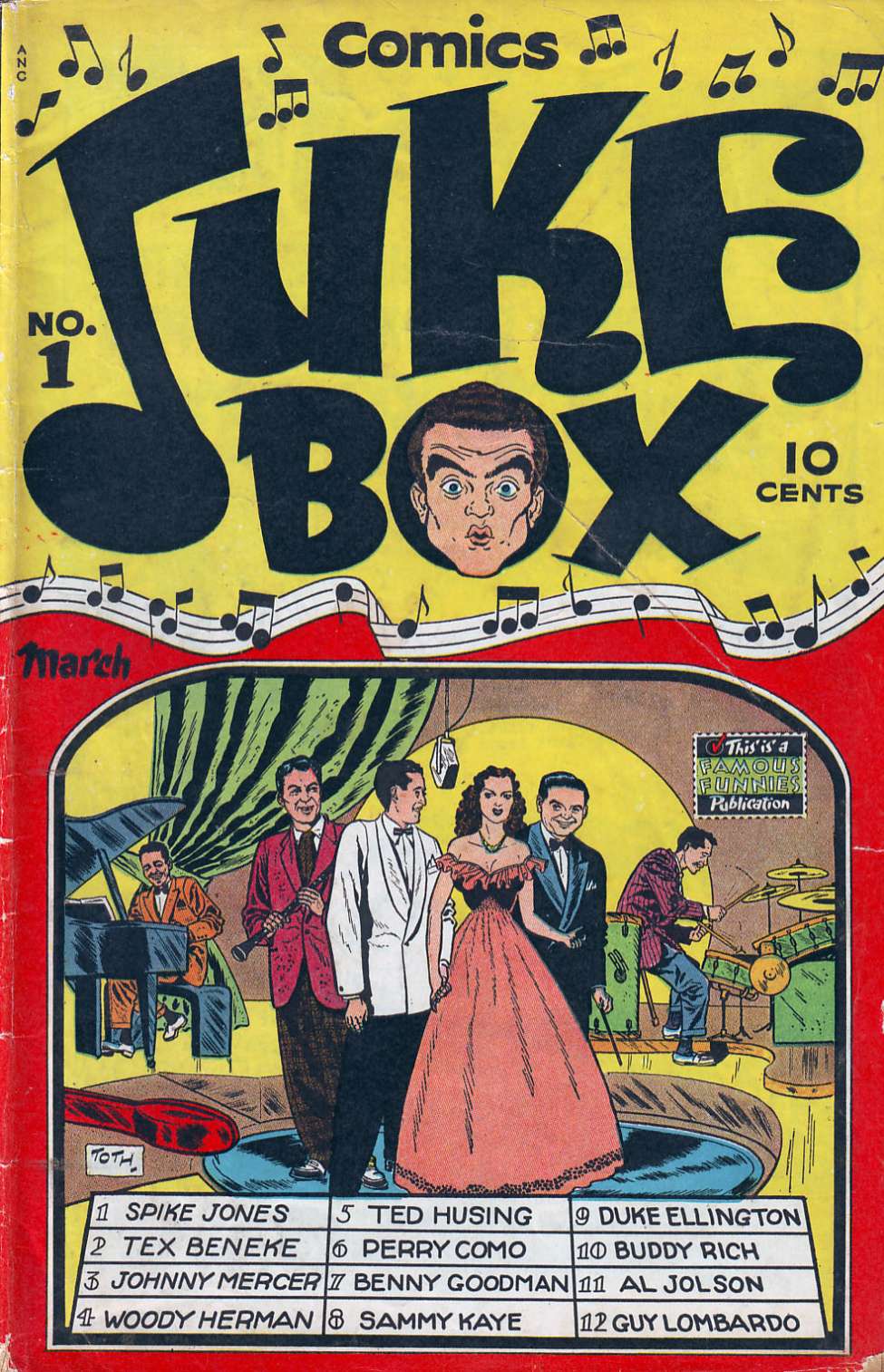
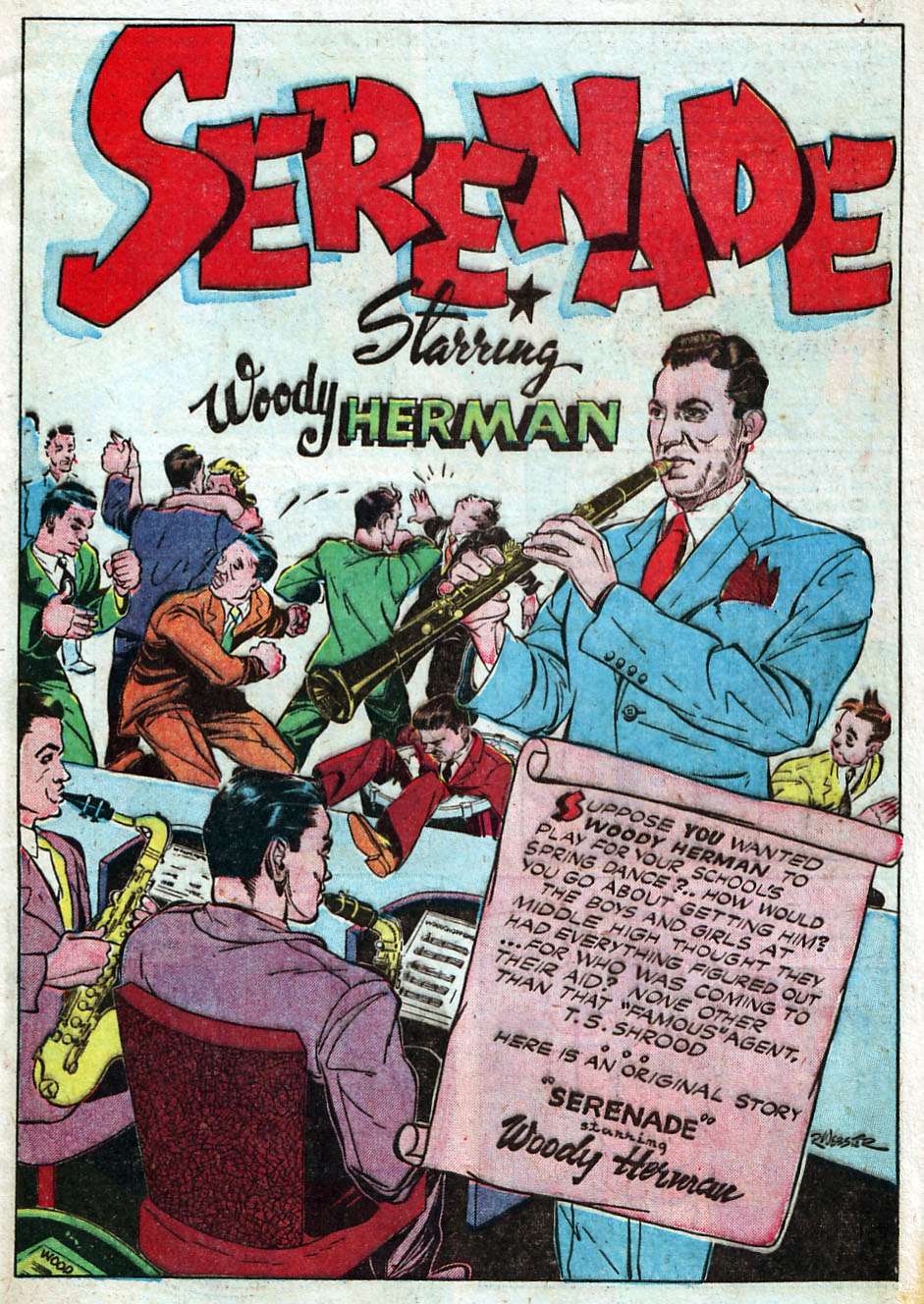
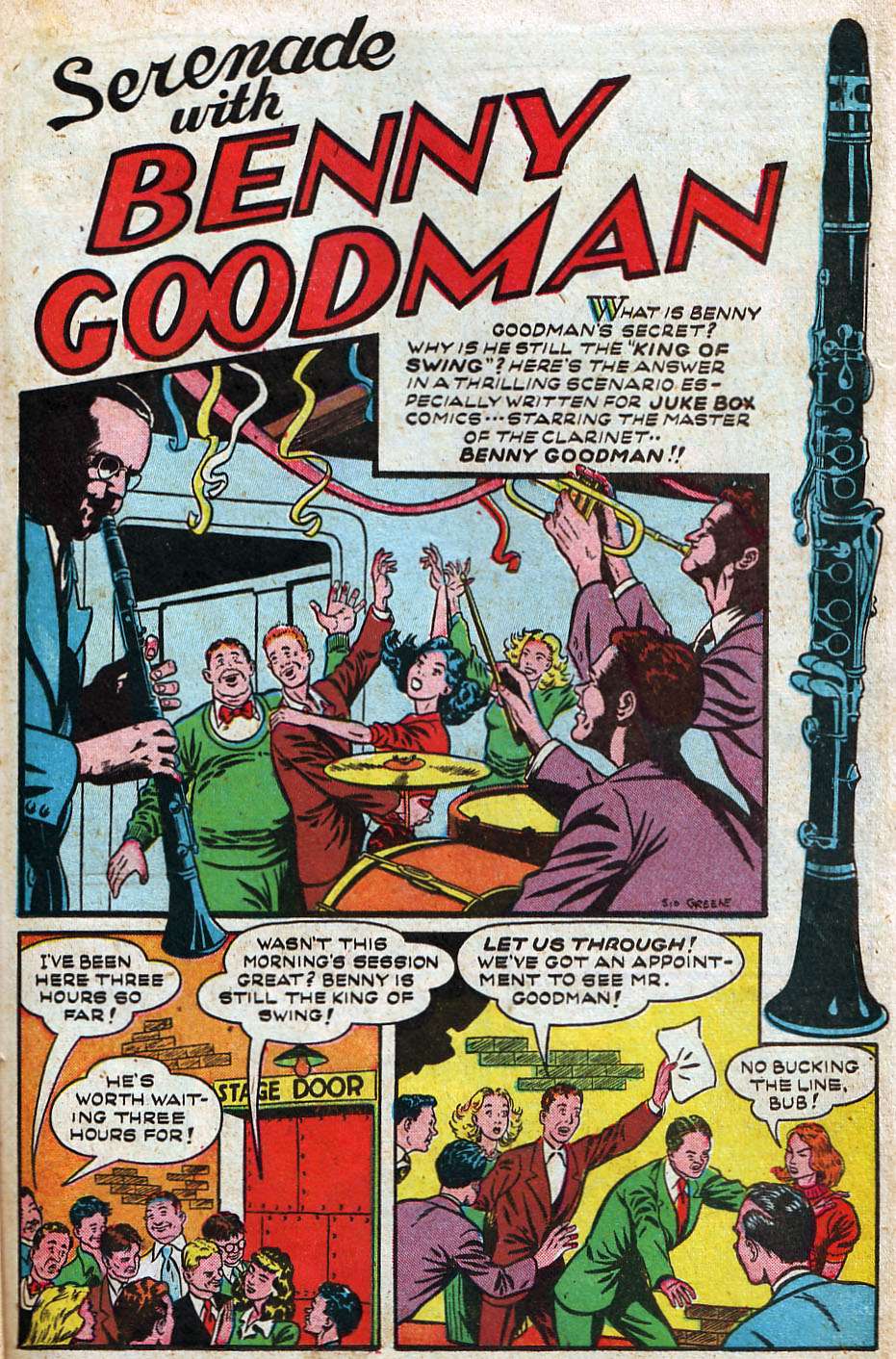
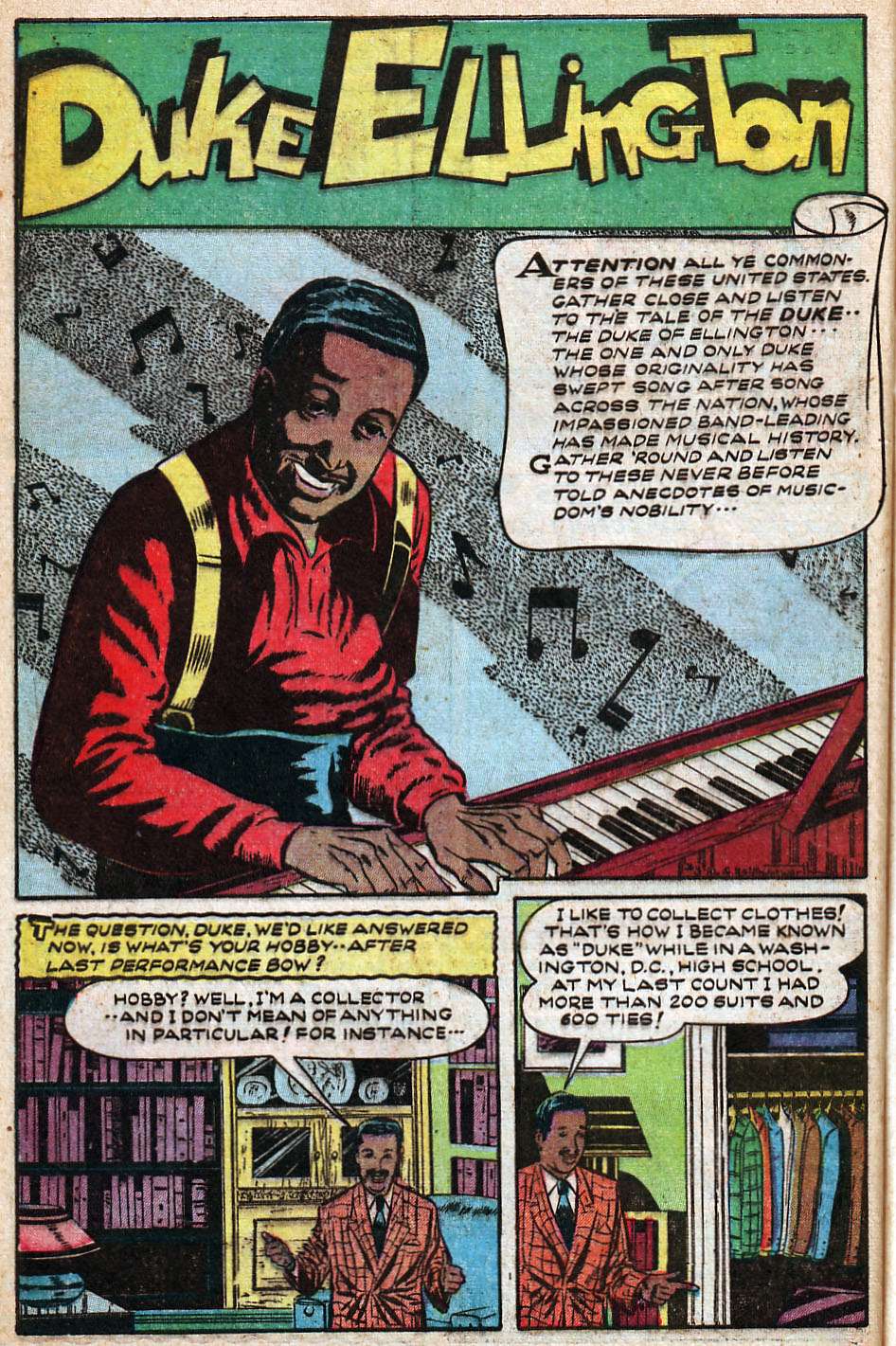
Jazz in Comics!
Friday, February 14, 2025
Sunday, February 2, 2025
Saturday, January 25, 2025
VA • The Best Sixties Album In The World... Ever
The Monkees, Sonny & Cher, Carole King, Cliff Richard & The Shadows, Del Shannon, The Four Seasons, Dusty Springfield, The Everly Brothers, Tommy James & The Shondells, Jeff Beck, The Move, The Kinks, Beach Boys, The Zombies, Manfred Mann, The Troggs, The Righteous Brothers, Gerry & The Pacemakers, Procul Harum, Glen Campbell, The Hollies, The Walker Brothers, Petula Clark, Andy Williams, The Tremeloes, Marvin Gaye, Otis Redding, Aretha Franklin, Dionne Warwick, The Supremes, The Four Tops, Martha Reeves & The Vandellas, Stevie Wonder, Sam & Dave, Tom Jones, Georgie Fame & The Blue Flames, The Small Faces, Cliff Bennett & The Rebel Rousers, Wilson Pickett, Eddie Floyd, James Brown, Fontella Bass, The Moody Blues, Van Morrison, The Byrds, The Animals, Percy Sledge, Patsy Cline, Louis Armstrong, Ben E. King.
Tuesday, January 7, 2025
VA • Jam Sessionː America's Jazz Ambassadors Embrace The World
After World War II, Voice of America radio broadcasts by Leonard Feather and Willis Conover helped to lay the foundation for subsequent tours. U.S. State Department sponsored the tours that sent America’s JAZZ AMBASSADORS around the world. They travelled from 1955 to the 70’s and visited such different places as the Soviet Union, Iraq, Iran, Jordan, Syria, Turkey, India, Thailand, Burma, Pakistan, Philippines, Ceylon, Japan, Ghana, Cameroon, Congo, Egypt, Senegal, Nigeria, Morocco, Kenya, Chile, Argentina and Europe. Everywhere they played they were very well received and did a fantastic job as "Good Will Jazz Ambassadors".
///////
Después de la Segunda Guerra Mundial, las transmisiones de radio de Voice of America de Leonard Feather y Willis Conover ayudaron a sentar las bases para giras posteriores. El Departamento de Estado de los EE.UU. patrocinó las giras que enviaron a los EMBAJADORES del JAZZ de Estados Unidos por todo el mundo. Viajaron desde 1955 hasta los años 70 y visitaron lugares tan diferentes como la Unión Soviética, Irak, Irán, Jordania, Siria, Turquía, India, Tailandia, Birmania, Pakistán, Filipinas, Ceilán, Japón, Ghana, Camerún, Congo, Egipto, Senegal, Nigeria, Marruecos, Kenia, Chile, Argentina y Europa. En todos los lugares donde tocaron fueron muy bien recibidos e hicieron un trabajo fantástico como "Embajadores de Buena Voluntad del Jazz".
Friday, December 6, 2024
VA • Let It Swingː A Jazz Christmas With Verve
Louis Armstrong, Ella Fitzgerald, Bill Evans, Jimmy Smith, Kenny Burrell, Roy Hargrove, Oscar Peterson, Christian McBride, Vince Guaraldi, Ramsey Lewis...
Saturday, September 28, 2024
Louis Armstrong, Master of Modernism
Nearly 100 years after bursting onto Chicago’s music scene under the tutelage of Joe "King" Oliver, Louis Armstrong is recognized as one of the most influential artists of the twentieth century. A trumpet virtuoso, seductive crooner, and consummate entertainer, Armstrong laid the foundation for the future of jazz with his stylistic innovations, but his story would be incomplete without examining how he struggled in a society seething with brutally racist ideologies, laws, and practices.
Thomas Brothers picks up where he left off with the acclaimed Louis Armstrong's New Orleans, following the story of the great jazz musician into his most creatively fertile years in the 1920s and early 1930s, when Armstrong created not one but two modern musical styles. Brothers wields his own tremendous skill in making the connections between history and music accessible to everyone as Armstrong shucks and jives across the page. Through Brothers's expert ears and eyes we meet an Armstrong whose quickness and sureness, so evident in his performances, served him well in his encounters with racism while his music soared across the airwaves into homes all over America.
Louis Armstrong, Master of Modernism blends cultural history, musical scholarship, and personal accounts from Armstrong's contemporaries to reveal his enduring contributions to jazz and popular music at a time when he and his bandmates couldn’t count on food or even a friendly face on their travels across the country. Thomas Brothers combines an intimate knowledge of Armstrong's life with the boldness to examine his place in such a racially charged landscape. In vivid prose and with vibrant photographs, Brothers illuminates the life and work of the man many consider to be the greatest American musician of the twentieth century.
Thomas Brothers (Author)
Tuesday, September 17, 2024
Saturday, September 14, 2024
Louis Armstrong and Paul Whiteman Two Kings of Jazz
A
dual biography of two great innovators in the history of jazz. One was
black, one was white—one is now legendary, the other nearly forgotten.
In Louis Armstrong and Paul Whiteman thejazz
scholar Joshua Berrett offers a provocative revision of the history of
early jazz by focusing on two of its most notable
practitioners—Whiteman, legendary in his day, and Armstrong, a legend
ever since.
Paul Whiteman’s fame was unmatched throughout the
twenties. Bix Beiderbecke, Bing Crosby, and Jimmy and Tommy Dorsey honed
their craft on his bandstand. Celebrated as the “King of Jazz” in 1930
in a Universal Studios feature film, Whiteman’s imperium has declined
considerably since. The legend of Louis Armstrong, in contrast, grows
ever more lustrous: for decades it has been Armstrong, not Whiteman, who
has worn the king’s crown.
This dual biography explores these
diverging legacies in the context of race, commerce, and the history of
early jazz. Early jazz, Berrett argues, was not a story of black
innovators and white usurpers. In this book, a much richer, more
complicated story emerges—a story of cross-influences, sidemen, sundry
movers and shakers who were all part of a collective experience that
transcended the category of race. In the world of early jazz, Berrett
contends, kingdoms had no borders.
Saturday, August 17, 2024
VA • 50s and 60s Jazz Hits
Ella Fitzgerald, Louis Armstrong, Oscar Peterson, Julie London, John Coltrane, Gerry Mulligan, Paul Desmond, Bill Evans, Gary McFarland, Sonny Stitt, Lee Konitz, Etta James, Charlie Parker, Anita O'Day, Billie Holiday …
Monday, June 10, 2024
VA • Jazz On A Spring Day Vol. II
Fats Waller, Chick Webb, Ella Fitzgerald, Mel Torme, Marty Paich, Billie Holiday, Count Basie, Louis Armstrong, Mr. Acker Bilk, Chris Barber, Julie London ...