Showing posts with label Blue Mitchell. Show all posts

Saturday, August 1, 2026

Bobby Hutcherson • Montara


Review from AllMusic (by Thom Jurek):
With the possible exception of Grover Washington's Feels So Good, no other album captured the spirit of jazz in 1975 like Bobby Hutcherson's Montara. Recorded in his hometown of L.A., Montara is the very sound of groove jazz coming out of fusion, and Latin jazz's tough salsa rhythms coming home to roost in something more warm and effluvial that would meet the populace where it was changing and mellowing out rather than making it sit up and take notice. That said, Montara is, like the Washington record, a masterpiece of the genre even though it isn't celebrated in the same way. Featuring a stellar cast of musicians -- among them Willie Bobo, Blue Mitchell, Bobby Matos, Ernie Watts, Harvey Mason, Plas Johnson, Fred Jackson, Larry Nash, and Chuck Domanico -- Montara is a portrait of Hutcherson's complex gift of subtlety and virtuosity. Whether it's the funky Weather Report dance of "Camel Rise," with Nash's electric piano and the horns weaving around one another in a soulful samba melody, the sweet soulful groove of the title track, where Hutcherson's solo lilts to the point of actually singing, the killer Cuban salsa of "La Malanga," done in complete minor-key frenzy (all the while without losing the easy, slippery grace of soul-jazz), the shimmering echoplexed electric piano and vibes interplay on "Love Song," or the steaming, burning gasoline orgy of Hutcherson's read of Santana's "Oye Como Va," with a killer flute line by Watts winding its way through a knotty bassline and multi-part percussion, the effect is the same: blissed-out moving and grooving for a summer day. Hutcherson's chameleon-like ability to shape-shift is truly remarkable as a sideman and especially as a leader. He never overplays, his charts are tight, and he always creates a band vibe. Almost all of his solo recordings reflect the strengths of the ensemble rather than his strengths as a soloist. Montara is one of the great feel-good jazz albums of the 1970s, one of the great Latin jazz albums of the 1970s, and one of the great groove jazz records. Seek it out without hesitation.
https://www.allmusic.com/album/montara-mw0000036961

///////

Reseña de AllMusic (por Thom Jurek):
Con la posible excepción de Feels So Good de Grover Washington, ningún otro álbum capturó el espíritu del jazz en 1975 como el Montara de Bobby Hutcherson. Grabado en su ciudad natal de Los Ángeles, Montara es el sonido mismo del groove jazz saliendo de la fusión, y los duros ritmos de salsa del jazz latino volviendo a casa para anidar en algo más cálido y efluente que se encontraría con el público donde se estaba transformando y relajando, en lugar de obligarlo a prestar atención. Dicho esto, Montara es, como el disco de Washington, una obra maestra del género aunque no sea celebrada de la misma manera. Con un elenco estelar de músicos — entre ellos Willie Bobo, Blue Mitchell, Bobby Matos, Ernie Watts, Harvey Mason, Plas Johnson, Fred Jackson, Larry Nash y Chuck Domanico — Montara es un retrato del complejo don de sutileza y virtuosismo de Hutcherson. Ya sea la danza funky al estilo Weather Report de "Camel Rise", con el piano eléctrico de Nash y los vientos entretejidos en una melodía de samba llena de alma, el dulce y anímico groove del tema titular, donde el solo de Hutcherson se inclina hasta el punto de realmente cantar, la asesina salsa cubana de "La Malanga", ejecutada en una frenética tonalidad menor (sin perder en ningún momento la gracia fácil y resbaladiza del soul-jazz), el interplay reluciente de piano eléctrico con echoplex y vibráfono en "Love Song", o la orgia de gasolina ardiente y humeante de la lectura de Hutcherson de "Oye Como Va" de Santana, con una línea de flauta asesina de Watts serpenteando a través de una línea de bajo intrincada y percusión de múltiples partes, el efecto es el mismo: un éxtasis de movimiento y groove para un día de verano. La capacidad camaleónica de Hutcherson para transformarse es verdaderamente notable tanto como sideman como especialmente como líder. Nunca toca de más, sus arreglos son ajustados y siempre crea un ambiente de banda. Casi todas sus grabaciones en solitario reflejan las fortalezas del ensemble más que las suyas como solista. Montara es uno de los grandes discos de jazz de buen rollo de los años 70, uno de los grandes discos de jazz latino de los años 70, y uno de los grandes discos de groove jazz. Búscalo sin vacilar.
https://www.allmusic.com/album/montara-mw0000036961


Friday, July 31, 2026

Jimmy Smith • Plain Talk


Plain Talk is an album by American jazz organist Jimmy Smith featuring performances recorded in 1960 but not released on the Blue Note label until 1968. The album was rereleased on CD combined with Open House (1960) in 1992 compiling all the recordings from the session.


Artist Biography
Jimmy Smith is an NEA Jazz Master Born James Oscar Smith in Norristown, Pennsylvania, USA. Smith was influenced by both gospel and blues. He first achieved prominence in the 1950s where his recordings became popular on jukeboxes before there were commonly used terms to describe his unique musical flavor. In the sixties and seventies he helped create the jazz style known as 'funk' or 'soul jazz'.

There had been earlier limited use of the electronic organ in jazz (notably by Fats Waller and Count Basie), though these early examples sometimes had a novelty feel. Smith is widely recognized as introducing the electric organ as a legitimate musical instrument, capable of virtuoso improvisation.

Smith employed a unique technique to emulate a string bass player on the organ. Although he played walking bass lines on the pedals on ballads, for uptempo tunes, he would play the bass line on the lower manual and use the pedals for emphasis on the attack of certain notes. His solos were characterised by percussive chords mixed with very fast melodic improvisation with the right hand. He generally used a drawbar registration of 868000000 or 888000000 on the lower manual, which he used for the bass line and comping chords. He used a similar registration on the upper manual, which he used for soloing, but with the addition of the Hammond's percussion circuit.

Smith was a prolific recording artist. He first recorded with the Blue Note label in 1956. His early albums with Blue Note sold very well, improving its financial viability and aiding the label's efforts to promote other artists. They include Home Cookin' , The Sermon!, Midnight Special, Prayer Meetin' , and Back at the Chicken Shack.

Jimmy Smith is an NEA Jazz Master

Smith signed to Verve Records label in 1963. Smith's albums with Verve include: The Cat, The Boss, Root Down, Peter & The Wolf, Any Number Can Win, The Incredible..., Bashin' , Got My Mojo Workin' , Christmas Cookin' , and Organ Grinder Swing.

It was in this period that he began a regular collaboration with Guitarist Wes Montgomery, with whom he recorded two albums: The Dynamic Duo with Wes Montgomery and Further Adventures Of Jimmy and Wes.

Smith recorded with a full orchestra and worked with arrangers and conductors such as Lalo Schifrin and Oliver Nelson. He also worked in small groups that featured many of the best jazz musicians of his era: Kenny Burrell, Donald “Duck” Bailey, Grady Tate, Lee Morgan, Lou Donaldson, Tina Brooks, Jackie McLean and Stanley Turrentine among them.

Smith had a career revival in the 'eighties and 'nineties, again recording for Blue Note and Verve, as well as for the Milestone label. There are also numerous recordings with other artists available including: Love And Peace: A Tribute To Horace Silver with Dee Dee Bridgewater (1995) and Blue Bash! with Kenny Burrell (1963).

His influence has been felt across multiple generations and musical styles; nearly every subsequent jazz organist owes a large debt to Smith. The Beastie Boys (who sampled the bassline from Smith's “Root Down (and Get It)”�”and saluted Smith in the lyrics�”for their own hit “Root Down”), Medeski, Martin & Wood, and The Hayden-Eckert Ensemble are among the better known contemporary bands that pay tribute to Smith's sensibilities and sound. The Acid Jazz movement also reflects Smith's influences.

Smith died on February 8, 2005, in Scottsdale, Arizona, USA.
https://musicians.allaboutjazz.com/jimmysmith
more ... https://www.allaboutjazz.com/jimmy-smith-master-of-the-hammond-b-3-jimmy-smith-by-mark-sabbatini.php

///////

Plain Talk es un álbum del organista de jazz estadounidense Jimmy Smith con actuaciones grabadas en 1960 pero que no se publicaron en el sello Blue Note hasta 1968. El álbum fue reeditado en CD junto con Open House (1960) en 1992, recopilando todas las grabaciones de la sesión.


Biografía del artista
Jimmy Smith es un Maestro de Jazz de NEA nacido James Oscar Smith en Norristown, Pennsylvania, USA. Smith fue influenciado tanto por el gospel como por el blues. Alcanzó prominencia por primera vez en la década de 1950, cuando sus grabaciones se hicieron populares en las gramolas antes de que existieran términos de uso común para describir su sabor musical único. En los años sesenta y setenta ayudó a crear el estilo de jazz conocido como'funk' o'soul jazz'.

Anteriormente había habido un uso limitado del órgano electrónico en el jazz (especialmente por Fats Waller y Count Basie), aunque estos primeros ejemplos a veces tenían una sensación de novedad. Smith es ampliamente reconocido por introducir el órgano eléctrico como un instrumento musical legítimo, capaz de improvisar virtuosamente.

Smith empleó una técnica única para emular a un bajista de cuerdas en el órgano. Aunque tocaba las líneas de bajo en los pedales de las baladas, para las melodías uptempo, tocaba la línea de bajo en el manual inferior y usaba los pedales para enfatizar el ataque de ciertas notas. Sus solos se caracterizaron por acordes percusivos mezclados con una improvisación melódica muy rápida con la mano derecha. Generalmente utilizaba un registro de barra de tiro de 86800000000 o 88800000000 en el manual inferior, que utilizaba para la línea de bajo y los acordes de compás. Utilizó un registro similar en el manual superior, que utilizó para los solos, pero con la adición del circuito de percusión de Hammond.

Smith fue un prolífico artista discográfico. Grabó por primera vez con el sello Blue Note en 1956. Sus primeros álbumes con Blue Note se vendieron muy bien, mejorando su viabilidad financiera y ayudando a los esfuerzos de la discográfica en la promoción de otros artistas. Entre ellas se incluyen Home Cookin' , The Sermon', Midnight Special, Prayer Meetingin' , y Back at the Chicken Shack.

Jimmy Smith es un Maestro de Jazz de la NEA

Smith firmó con el sello Verve Records en 1963. Los álbumes de Smith con Verve incluyen: The Cat, The Boss, Root Down, Peter & The Wolf, Any Number Can Win, The Incredible..., Bashin' , , Got My Mojo Workin' , Christmas Cookin' , y Organ Grinder Swing.

Fue en este período que comenzó una colaboración regular con el guitarrista Wes Montgomery, con quien grabó dos discos: El Dúo Dinámico con Wes Montgomery y Otras Aventuras de Jimmy y Wes.

Smith grabó con una orquesta completa y trabajó con arreglistas y directores como Lalo Schifrin y Oliver Nelson. También trabajó en pequeños grupos en los que participaron muchos de los mejores músicos de jazz de su época: Kenny Burrell, Donald "Pato" Bailey, Grady Tate, Lee Morgan, Lou Donaldson, Tina Brooks, Jackie McLean y Stanley Turrentine entre otros.

Smith tuvo un renacimiento de su carrera en los años ochenta y noventa, grabando de nuevo para Blue Note y Verve, así como para el sello Milestone. También hay numerosas grabaciones con otros artistas disponibles, incluyendo: Amor y Paz: Un homenaje a Horace Silver con Dee Dee Bridgewater (1995) y Blue Bash! con Kenny Burrell (1963).

Su influencia se ha sentido a través de múltiples generaciones y estilos musicales; casi todos los organistas de jazz posteriores tienen una gran deuda con Smith. The Beastie Boys (que probaron el bajo de "Root Down (and Get It)"�" de Smith y saludaron a Smith en el lyrics�"por su propio éxito "Root Down"), Medeski, Martin & Wood y The Hayden-Eckert Ensemble están entre las bandas contemporáneas más conocidas que rinden tributo a la sensibilidad y el sonido de Smith. El movimiento Acid Jazz también refleja las influencias de Smith.

Smith murió el 8 de febrero de 2005 en Scottsdale, Arizona, Estados Unidos.
https://musicians.allaboutjazz.com/jimmysmith
más... https://www.allaboutjazz.com/jimmy-smith-master-of-the-hammond-b-3-jimmy-smith-by-mark-sabbatini.php


Tuesday, July 28, 2026

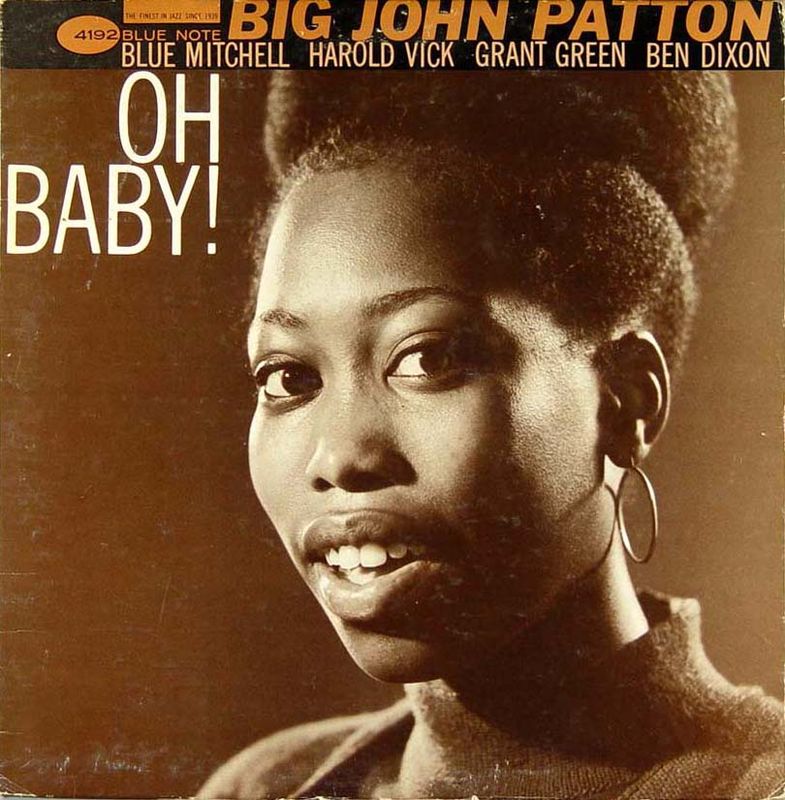
Big John Patton • Oh Baby


Review:
Patton's fourth album for Blue Note. Big John Patton with Grant Green on guitar and Harold Vick on tenor sax. With tunes like "Fat Judy" and "Good Juice," there is no worry about there being a groove. The addition of a trumpet (Blue Mitchell) means you have a horn section, and this tends to be a little much now and again. Although a little on the light side, thanks to Patton and Green, the groove does go down.
by Michael Erlewine
https://www.allmusic.com/album/oh-baby%21-mw0000766666

///////

Reseña:
El cuarto álbum de Patton para Blue Note. Big John Patton con Grant Green en la guitarra y Harold Vick en el saxo tenor. Con temas como "Fat Judy" y "Good Juice", no hay que preocuparse de que haya un ritmo. La adición de una trompeta (Blue Mitchell) significa que tienes una sección de trompetas, y esto tiende a ser un poco demasiado de vez en cuando. Aunque un poco en el lado de la luz, gracias a Patton y Green, el surco se reduce.
por Michael Erlewine
https://www.allmusic.com/album/oh-baby%21-mw0000766666


Friday, July 24, 2026

Horace Silver • Horace-Scope


Review
by Steve Huey
Horace-Scope is the third album by Horace Silver's classic quintet -- or most of it, actually, as drummer Louis Hayes was replaced by Roy Brooks starting with this session. The rhythmic drive and overall flavor of the group are still essentially the same, though, and Horace-Scope continues the tight, sophisticated-yet-swinging blueprint for hard bop pioneered on its two classic predecessors. The program is as appealing as ever, and even though not as many tunes caught on this time -- at least not on the level of a "Juicy Lucy" or "Sister Sadie" -- Silver's writing is tuneful and tasteful. The best-known selections are probably the lovely closing number "Nica's Dream," which had been around for several years but hadn't yet been recorded on a Silver LP, and the genial, laid-back opener "Strollin'." But really, every selection is full of soulful grooves and well-honed group interplay, the qualities that made this band perhaps the top hard bop outfit of the early '60s. Silver was in the midst of a hot streak that wouldn't let up for another few years, and Horace-Scope is another eminently satisfying effort from that period.
https://www.allmusic.com/album/horace-scope-mw0000309056

///////


Reseña
por Steve Huey
Horace-Scope es el tercer álbum del quinteto clásico de Horace Silver - o la mayoría, en realidad, ya que el baterista Louis Hayes fue reemplazado por Roy Brooks a partir de esta sesión. Sin embargo, el impulso rítmico y el sabor general del grupo siguen siendo esencialmente los mismos, y Horace-Scope continúa con el ajustado y sofisticado, a la vez que oscilante, proyecto de hard bop iniciado en sus dos predecesores clásicos. El programa es tan atractivo como siempre, y aunque esta vez no hay tantas melodías que hayan calado, al menos no al nivel de "Juicy Lucy" o "Sister Sadie", la escritura de Silver es afinada y de buen gusto. Las selecciones más conocidas son probablemente el encantador número de cierre "Nica's Dream", que había existido durante varios años pero que todavía no había sido grabado en un LP de Silver, y el genial y relajado comienzo "Strollin'". Pero en realidad, cada selección está llena de ritmos conmovedores y de una interacción grupal bien afinada, las cualidades que hicieron de esta banda quizás el mejor conjunto de hard bop de principios de los 60. Silver estaba en medio de una buena racha que no cesaría durante unos cuantos años, y Horace-Scope es otro esfuerzo eminentemente satisfactorio de ese período.
https://www.allmusic.com/album/horace-scope-mw0000309056


Thursday, July 23, 2026

Junior Cook-Blue Mitchell • Junior's Cookin'


Review by Jim Todd
This first solo release from tenor sax player Junior Cook came at the midpoint of his six-year tenure with the Horace Silver Band. It's a relaxed affair, paced a couple of notches below the intensity of a typical Silver date. Still, with Cook's front-line partner in the Silver group -- trumpeter Blue Mitchell -- on board, along with Silver's rhythm section, the 1961 session has a definite affinity with the hard bop style of the more famous parent group. There are also links to the cool tones of Miles Davis' early-'50s Blue Note releases and to the transitional work of the mid-'50s Max Roach-Clifford Brown Band. If the overall approach is subdued, this generally works to the music's benefit by bringing out the finer points of Cook's and Mitchell's' playing. Both players emphasize tone, phrasing, and an ability to sail their choruses elegantly along the current of the rhythm section. The writing here is not particularly distinctive, but what it lacks in originality, the players make up for with their audible pleasure in working through the familiar changes. The result, while not essential listening, is a satisfying and honest set that provides an appealing portrait of both Cook and Mitchell, two central, although not seminal, figures in the development of hard bop.
https://www.allmusic.com/album/juniors-cookin-mw0000048941

///////

Reseña de Jim Todd
Este primer lanzamiento en solitario del saxo tenor Junior Cook llegó a mediados de sus seis años de mandato con Horace Silver Band. Es un asunto relajado, con un ritmo un par de escalones por debajo de la intensidad de una típica cita plateada. Aún así, con el socio de primera línea de Cook en el grupo Silver, el trompetista Blue Mitchell, a bordo, junto con la sección rítmica de Silver, la sesión de 1961 tiene una afinidad definitiva con el estilo hard bop del grupo matriz más famoso. También hay enlaces a los tonos fríos de los lanzamientos de Blue Note de principios de los 50 de Miles Davis y al trabajo de transición de la banda Max Roach-Clifford Brown de mediados de los 50. Si el enfoque general es moderado, esto generalmente beneficia a la música al resaltar los puntos más finos de la interpretación de Cook y Mitchell. Ambos intérpretes enfatizan el tono, el fraseo y la capacidad de navegar sus coros con elegancia a lo largo de la corriente de la sección rítmica. La escritura aquí no es particularmente distintiva, pero lo que le falta en originalidad, los jugadores lo compensan con su placer audible al trabajar a través de los cambios familiares. El resultado, aunque no es esencial escucharlo, es un conjunto satisfactorio y honesto que proporciona un retrato atractivo tanto de Cook como de Mitchell, dos figuras centrales, aunque no fundamentales, en el desarrollo del hard bop.
https://www.allmusic.com/album/juniors-cookin-mw0000048941


Thursday, June 25, 2026

VA • The Hard Bop Years - Rudy Van Gelder Masters


Compilation of RVG's masters, 99 tracks.

Art Blakey, Grant Green, Wayne Shorter, Bobby Hutcherson, Kenny Burrell, Cannonball Adderley, Ike Quebec, Jimmy Smith, Joe Henderson, Horace Silver, Sonny Rollins, Clifford Jordan, Blue Mitchell, Thelonious Monk, J.J. Johnson, Freddie Hubbard, Lee Morgan, Jackie McLean, Lou Donaldson, Dexter Gordon, Stanley Turrentine ...


Thursday, June 18, 2026

Louie Bellson • Jam With Blue Mitchell


This CD reissue brings back one of Louie Bellson's better small-group dates for Pablo. In addition to the drummer/leader, his septet includes trumpeter Blue Mitchell (still in good form on one of his last recordings), the underrated but great tenor Pete Christlieb, pianist Ross Tompkins, guitarist Bob Bain, bassist Gary Pratt and percussionist Emil Richards. Most intriguing about the date (which mostly sticks to group originals) is that there is a three-song ballad medley comprised not of standards but of Bellson tunes. "Shave Tail" (an older song co-composed by Bellson and Charlie Shavers) is a highlight. ~ Scott Yanow, All Music Guide
https://www.allmusic.com/album/louis-bellson-jam-mw0000267485

///////


Esta reedición en CD recupera para Pablo una de las mejores citas de Louie Bellson con grupos reducidos. Además del baterista/líder, su septeto incluye al trompetista Blue Mitchell (todavía en buena forma en una de sus últimas grabaciones), el infravalorado pero gran tenor Pete Christlieb, el pianista Ross Tompkins, el guitarrista Bob Bain, el bajista Gary Pratt y el percusionista Emil Richards. Lo más intrigante de la fecha (que en su mayor parte se ciñe a originales del grupo) es que hay un popurrí de baladas de tres canciones compuesto no de estándares sino de melodías de Bellson. "Shave Tail" (una canción antigua compuesta conjuntamente por Bellson y Charlie Shavers) es uno de los temas más destacados. ~ Scott Yanow, All Music Guide
https://www.allmusic.com/album/louis-bellson-jam-mw0000267485


Wednesday, June 17, 2026

VA ‎• Blue Funk


Brother Jack McDuff, Blue Mitchell, Lou Donaldson, John Patton, Grant Green, Candido, Richard ''Groove'' Holmes, Ronnie Foster, Reuben Wilson, Bobby Hutcherson.


Monday, March 30, 2026

Melvin Rhyne • Organ-izing


Melvin Rhyne was born in Indianapolis in 1936 and started playing the piano shortly thereafter. At 19 years old, Rhyne started playing piano with then-unknown tenor saxophonist Rahsaan Roland Kirk but quickly switched over to the instrument that would make him famous: the Hammond B3 organ. Rhyne's piano skills translated to the organ fluently and before long he was backing famous blues players like B.B. King and T-Bone Walker. In 1959 when he was asked to join fellow Indianapolis musician Wes Montgomery's newly formed trio.

Rhyne then moved to Wisconsin and largely kept to himself for the next two decades. In 1991, however, Rhyne returned to the jazz scene, playing on Herb Ellis' album Roll Call, Brian Lynch's At the Main Event, and his own comeback The Legend. Rhyne continued to be prolific in the years to come, releasing eight more solo albums on the Criss Cross jazz label.

In 2008 Rhyne teamed up with fellow Indianapolis jazz musician Rob Dixon to form the Dixon-Rhyne Project, a boundary-pushing jazz quartet that also includes Chicago guitarist Fareed Haque and drummer Kenny Phelps. The quartet released the album Reinvention in 2008 on Indianapolis jazz label Owl Studios. Rhyne's later career trio included drummer Kenny Washington and guitarist Peter Bernstein in the same organ, guitar, drum formation of the original Wes Montgomery Trio.
https://www.allaboutjazz.com/musicians/melvin-rhyne/

Note: Melvin Rhyne passed away on March 5, 2013, Indianapolis, Indiana, United States.
 
///////
 
Melvin Rhyne nació en Indianápolis en 1936 y comenzó a tocar el piano poco después. A los 19 años, Rhyne comenzó a tocar el piano con el entonces desconocido saxofonista tenor Rahsaan Roland Kirk, pero rápidamente cambió al instrumento que lo haría famoso: el órgano Hammond B3. Las habilidades de Rhyne con el piano se tradujeron al órgano con fluidez y, en poco tiempo, estaba respaldando a famosos músicos de blues como BB King y T-Bone Walker. En 1959, cuando se le pidió que se uniera al trío recién formado del músico de Indianápolis Wes Montgomery.

Rhyne luego se mudó a Wisconsin y se mantuvo en gran medida solo durante las siguientes dos décadas. En 1991, sin embargo, Rhyne regresó a la escena del jazz, tocando en el álbum Roll Call de Herb Ellis, en At the Main Event de Brian Lynch y en su propio regreso The Legend. Rhyne continuó siendo prolífica en los años siguientes, lanzando ocho álbumes más en solitario con el sello Criss Cross jazz.

En 2008, Rhyne se asoció con su colega músico de jazz de Indianápolis Rob Dixon para formar The Dixon-Rhyne Project, un cuarteto de jazz que traspasa fronteras y que también incluye al guitarrista de Chicago Fareed Haque y al baterista Kenny Phelps. El cuarteto lanzó el álbum Reinvención en 2008 en el sello de jazz de Indianápolis Owl Studios. El trío posterior de Rhyne incluyó al baterista Kenny Washington y al guitarrista Peter Bernstein en la misma formación de órgano, guitarra y batería del Trío original de Wes Montgomery.
https://www.allaboutjazz.com/musicians/melvin-rhyne/

Nota: Melvin Rhyne falleció el 5 de marzo de 2013, Indianápolis, Indiana, Estados Unidos.


Thursday, March 26, 2026

Joe Zawinul • Money In The Pocket


Review from All About Jazz (by Chris May):
Recorded in late 1965, while keyboard player Joe Zawinul was still a member of saxophonist Cannonball Adderley's band, Money In The Pocket is a remarkable album -- remarkable in that it gives absolutely no hint of the shape shifts that would transform Zawinul's work a few years later. The first of three albums he recorded for Atlantic, it's a conventional mix of mid-1960s hard bop and soul jazz. "Money In The Pocket" itself, one of three Zawinul originals, made with tenor saxophonist Clifford Jordan and trumpeter Blue Mitchell, is classic Blue Note hard bop in everything but record label. Four other tracks recorded with a three-horn frontline -- tenor saxophonist Joe Henderson, baritone saxophonist Pepper Adams and Mitchell, with bassist Sam Jones and drummer Louis Hayes from the Adderley band -- take in bop and soul jazz. Jones' "Some More Of Dat" is a dead ringer for contemporaneous Adderley or pianist Horace Silver. All these tracks are good, but even by the standards of the time they are pretty ordinary. Zawinul's modal-flavored "Riverbed," though hardly radical, is the disc's most singular composition. There are, however, two ballad readings of note: "My One And Only Love" performed solo by Zawinul, and "Sharon's Waltz" with Jones and Hayes -- lyrical and just the right side of rococo, Zawinul's solos are delightful. Reissued as part of Warner Jazz's Atlantic Masters series, it isn't to be confused with the Adderley band's album of the same title.
https://www.allaboutjazz.com/money-in-the-pocket-joe-zawinul-review-by-chris-may

///////


Resena de All About Jazz (por Chris May):
Grabado a fines de 1965, mientras el pianista Joe Zawinul era todavia miembro del grupo del saxofonista Cannonball Adderley, Money In The Pocket es un album notable -- notable porque no da absolutamente ninguna pista de las transformaciones que cambiarian el trabajo de Zawinul pocos anos despues. El primero de tres albums que grabo para Atlantic, es una mezcla convencional de hard bop y soul jazz de mediados de los sesenta. El propio "Money In The Pocket", uno de los tres originales de Zawinul, realizado con el saxofonista tenor Clifford Jordan y el trompetista Blue Mitchell, es hard bop clasico al estilo Blue Note en todo menos en el sello discografico. Cuatro tracks mas grabados con una primera linea de tres cuernos -- el saxofonista tenor Joe Henderson, el saxofonista baritono Pepper Adams y Mitchell, con el bajista Sam Jones y el baterista Louis Hayes de la banda de Adderley -- transitan por el bop y el soul jazz. "Some More Of Dat" de Jones es casi indistinguible del Adderley o el pianista Horace Silver contemporaneos. Todos estos temas son buenos, aunque incluso para los estandares de la epoca resultan bastante ordinarios. El "Riverbed" de Zawinul, con sabor modal aunque no especialmente radical, es la composicion mas singular del disco. Sin embargo, hay dos lecturas de baladas notables: "My One And Only Love" interpretada en solitario por Zawinul, y "Sharon's Waltz" con Jones y Hayes -- liricas y justas en su preciosismo, las improvisaciones de Zawinul son deliciosas. Reeditado como parte de la serie Atlantic Masters de Warner Jazz, no debe confundirse con el album homonimo de la banda de Adderley.
https://www.allaboutjazz.com/money-in-the-pocket-joe-zawinul-review-by-chris-may


Friday, October 17, 2025

VA • New Blue Horns


At the time this music was released on Riverside, the six performances of blues by trumpeters had not been issued before. It was reissued on this album as part of the OJC series and since that time some of these selections have appeared as "bonus cuts" along with the other numbers recorded at the same sessions. However this album is worth getting, for it has excellent performances by Clark Terry (who uses pianist Thelonious Monk as one of his sidemen on "Fluegelin' the Blues"), Blue Mitchell, Nat Adderley, Kenny Dorham and two by Chet Baker. ~ Scott Yanow

///////


Cuando esta música se publicó en Riverside, las seis interpretaciones de blues a cargo de trompetistas no se habían publicado antes. Se reeditó en este álbum como parte de la serie OJC y, desde entonces, algunas de estas selecciones han aparecido como "cortes extra" junto con los demás temas grabados en las mismas sesiones. Sin embargo, vale la pena adquirir este álbum, ya que cuenta con excelentes interpretaciones de Clark Terry (quien cuenta con el pianista Thelonious Monk como uno de sus acompañantes en "Fluegelin' the Blues"), Blue Mitchell, Nat Adderley, Kenny Dorham y dos de Chet Baker. ~ Scott Yanow


Saturday, July 26, 2025

Stanley Turrentine • A Chip Off The Old Block


Review by Michael G. Nastos:
The circumstances surrounding the recording of this album are as important as the music you will hear and enjoy. Inspired by the songbook of Count Basie, tenor saxophonist Stanley Turrentine and his wife of four years, organist Shirley Scott, planned on recording with a septet, and went into the studio with that band on October 12, 1963, but those sessions were scrapped. On October 14, two tracks were finished and included here, but October 21 saw the band pared down to a quintet, and the results were acceptable. Trumpeter Blue Mitchell's contributions were quite desirable, he was the second lead voice in the ensemble, and success was attained. Turrentine and Mitchell played together in the 1954 edition of the Earl Bostic ensemble, and happily renew their musical friendship. The Basie evergreen "One O'Clock Jump" leads off the date swinging with Turrentine and Mitchell trading melody lines before an outstanding solo from the trumpeter. A first take from the larger ensemble is described by Bob Blumenthal in the liner notes as ragged, but perhaps further attempts would have smoothed out the scruffy mood. The tenor man sounds as if he is feeding the melody line to trombonist Tom McIntosh and baritone saxophonist Charles Davis ad lib instead of reading charts, although it doesn't sound all that uninspired. Neal Hefti's "Cherry Point" with the quintet is an easy swinging, tenor/organ trade off, in a much slower tempo with the septet, two minutes longer, a bit sluggish, perhaps too rich, but soulfully coming together at the coda. Dedicated to Nashville DJ Hoss Allen, the classic road time shuffle "Blues in Hoss' Flat" chips off many familiar phrases in the main frame, while Hefti's simmering "Midnight Blue" (not Kenny Burrell's version that Turrentine also played on) gives Scott room to subtract one color and shade the unison melody with the tenor and trumpeter. The lone ballad "Spring Can Really Hang You Up the Most" emphasizes Turrentine's soul quotient with Mitchell offering a marvelous countermelody. The spare approach of Basie is hard to ignore, and though not essential in Turrentine's discography, it is an interesting item that showcases his lighter side positively.

///////

Traducción Automática:
Reseña por Michael G. Nastos:
Las circunstancias que rodean la grabación de este álbum son tan importantes como la música que escuchará y disfrutará. Inspirado por el cancionero de Count Basie, el tenor saxofonista Stanley Turrentine y su esposa por cuatro años, la organista Shirley Scott, planearon grabar con un septeto, y entraron en el estudio con esa banda el 12 de octubre de 1963, pero esas sesiones fueron descartadas. El 14 de octubre, dos pistas fueron terminadas e incluidas aquí, pero el 21 de octubre vio a la banda reducida a un quinteto, y los resultados fueron aceptables. Las contribuciones de Trumpeter Blue Mitchell fueron bastante deseables, fue la segunda voz principal en el conjunto, y se logró el éxito. Turrentine y Mitchell jugaron juntos en la edición de 1954 del conjunto de Earl Bostic, y felizmente renovaron su amistad musical. El basie Evergreen "One O'Clock Jump" inicia la fecha oscilando con Turrentine y Mitchell intercambiando melodías antes de un excelente solo del trompetista. Bob Blumenthal describe una primera toma del conjunto más grande en las notas del liner como algo irregular, pero quizás otros intentos habrían suavizado el estado de ánimo desaliñado. El tenor suena como si estuviera alimentando la melodía del trombonista Tom McIntosh y del saxofonista barítono Charles Davis ad lib en lugar de leer gráficos, aunque no suena tan poco inspirado. El "Cherry Point" de Neal Hefti con el quinteto es un intercambio balanceado, de tenor / órgano, en un tempo mucho más lento con el septeto, dos minutos más, un poco lento, quizás demasiado rico, pero conmovedoramente unidos en la coda. Dedicado a Nashville DJ Hoss Allen, el clásico Road Shuffle "Blues in Hoss 'Flat" corta muchas frases familiares en el fotograma principal, mientras que Hefti hirviendo a fuego lento "Midnight Blue" (no la versión de Kenny Burrell en la que Turrentine también jugó) le da a Scott espacio para restar un color y sombrear la melodía al unísono con el tenor y el trompetista. La solitaria balada "Spring Can Really Hang You Up The Most" enfatiza el cociente de soul de Turrentine con Mitchell ofreciendo una maravillosa contramelodía. El enfoque de repuesto de Basie es difícil de ignorar, y aunque no es esencial en la discografía de Turrentine, es un elemento interesante que muestra positivamente su lado más ligero.


Charlie Rouse Quintet • Takin' Care Of Business


Wednesday, June 25, 2025

Lou Donaldson • Mr. Shing-A-Ling


 Artist Biography
Lou Donaldson is an NEA Jazz Master Lou Donaldson, alto saxophonist, recording star and entertainer extraordinaire was born in Badin, North Carolina on November 1, 1926. He is the child of parents, Lucy Wallace Donaldson, mother, and Louis Andrew Donaldson, Sr., father. His mother was a first grade teacher at Badin High School, Musical Director at the school, and a concert pianist who was a graduate of Cheney University. His father was a graduate of Livingstone College, an AME Zion minister, and insurance agent. Lou is the second of 4 children, between older sister Margaret and younger sister Elizabeth and brother William, all of whom ended up involved with music. Lou never studied piano because his mother had a switch that she would crack across the fingers when students missed a note. That turned him completely away from being a pianist. When he was about 9 years old, she heard him singing or humming all of the piano etudes that the students played and she took him aside and told him that he had more musical talent than anyone in the family and that he needed to play some type of instrument. She got a clarinet from the Band Director, Leo Gabriel, at the Alcoa Aluminum Plant Band. Although she knew nothing about the clarinet, she taught him basic music and they used the clarinet book to learn the fingerings and how to play the clarinet. Lou mastered the instrument and this ignited his pursuit of a career in music.

At age 15, Lou matriculated to North Carolina A& T College where he received a Bachelor's of Science degree and joined the marching band playing clarinet. After being drafted into the US Navy in 1945, he played in the Great Lakes Navy Band where, when playing for dances, he would also play the alto saxophone. After going into Chicago several times, he heard of Charlie Parker and, after checking him out, he decided that this was the style of playing he would make his own. Previously he had played like Johnny Hodges, or Tab Smith, or another saxophonist named Pete Brown. Returning from the military back to North Carolina A& T College, he played in the dance band led by Billy Tolles, who was a great saxophonist who played with several groups and with the Sabby Lewis Band during the summer months in Boston. Touring bands, such as Count Basie, Erskine Hawkins, Buddy Johnson, and Andy Kirk—all dance bands, used to come through Greensboro, North Carolina periodically four or five times a year. The students from the school would go down sometimes and sit in with the bands, all of which prompted the musicians in the band to tell them to come to New York. Lou never did go to New York then because he was also playing baseball which he loved dearly. But Illinois Jacquet came through with a tremendous band and Lou sat in with this band. The drummer was Poppa Joe Jones who, without any reservations, told Lou to come to New York and checked him in his hotel behind the Apollo Theater. Also, there was an Army band stationed in Greensboro that had several musicians of note: James Moody, Dave Burns, Joe Gale, and Walter Fuller and they insisted that Lou go to New York to establish himself as a musician. They assured him he would be welcomed and that he would be able to “cut the mustard”. Taking this advice, Lou went to New York in 1950 or late 49. Being a GI and a Veteran he enrolled in the Darrow Institute of Music, which was a GI school, and was paid a monthly stipend so that he could survive. While at the school, he played many small clubs in Harlem where he lived at 127th Street and 8th Avenue with his new wife, Maker. Maker was his longtime sweetheart from North Carolina and remained his wife and business partner for 56 years until her death in 2006. Together they raised two children—Lydia, deceased, who was a nurse and educational recruiter, and Dr. E. Carol Webster, clinical psychologist and author who resides in Fort Lauderdale and who, along with husband Charles, founded the African American Success Foundation that Lou very happily supports each year by doing a Jazz Benefit.

Once he moved to New York, Lou worked weekends in Jersey with Dud Bascomb's band. One night while working at Minton's Playhouse—the famous jazz club, he was approached by Alfred Lyons of Blue Note Records to make a recording and he suggested that Lou make a Charlie Parker- type recording which he did with the Milt Jackson Quartet. At that time, it was Milt Jackson, Percy Heath, John Lewis, and Kenny Clark. Later on this group would be called the Modern Jazz Quartet. The record was successful and the company asked him to make a record on his own and this is why he's most proud of his time at Blue Note Records— because this date started a career for him that actually made him bring several musicians to Blue Note Records and today he's very proud to have been the first to record these musicians— Horace Silver, Clifford Brown, Grant Green, John Patton, Blue Mitchell, Donald Byrd, Horace Parlan, Tommy Turrentine, Al Harewood, George Tucker, Jameel Nasser, and Curtis Fuller—with his group at Blue Note Records. Lou brought Gene Harris and the 3 Sounds from Washington DC to New York to record with him on the famous album called LD Plus 3 which was a big hit. His most famous group was Herman Foster on piano, Ray Baretto on conga, Peck Morrison on bass, and Dave Bailey on drums, which was the best move he made during his tenure on the label. This group recorded the famous record which is still selling today, Blues Walk—and on the back side, The Masquerade is Over. This solo is dearly considered by many disc jockeys as one of the top alto solos of all times and, along with Blues Walk, was used by many as a theme song. Another album Lou is very proud of is Lush Life, recorded for Blue Note with Duke Pearson as arranger and producer, that had several musicians who later become famous ?” Freddy Hubbard, on trumpet, Wayne Shorter on tenor saxophone, Pepper Adams on baritone saxophone, Al Harewood on drums, McCoy Tyner on piano, Jerry Dodgin on alto saxophone, Garnet Brown on trombone, and Ron Carter on bass.

After this recording, there was a big demand for Lou in Europe and he started to tour through the Wim Wigt Agency out of Wageningen, Holland in the Netherlands with his group—Herman Foster, piano, Nat Yarborough, drums, Jeff Fuller, bass, and Lou on alto saxophone —very successfully for years. Many dates and many records in between, he finally met the great Jimmy Smith and was prominent on the record, The Sermon. He often told Jimmy that his solo on that record made Jimmy famous. The organ sound was so powerful and commercial that he started making organ records. In 1968 he recorded, Alligator Boogaloo with Dr. Lonnie Smith on the organ, George Benson on guitar, Melvin Lasky on trumpet, Idris Mohammed (Leo Morris) on drums which was a hit record. It stayed on the Best Selling Billboard chart for 52 weeks, and put Lou into a good position musically and financially. He then continued to make these type of records with the great Charles Earland, the great Leon Spencer, Jr. Billy Gardner and Baby Face Willette. Then Lou began to sing blues and luckily came up with a big hit called Whiskey Drinkin' Woman, recorded on Wim Wigt's label, Timeless Records, that is still in great demand every time he plays a set.

In the mid 60's, Lou furthered his success as a musician and businessman. He set up his own tour of clubs—which was no easy feat in those days. Beginning in Rochester, NY, then to Buffalo, NY, and on to Pittsburgh, Pa.—where he worked two great clubs: Birdie's and Crawford Grill, then would head to Cleveland. All of these clubs were like two week stands and they weren't too far for Lou to drive because at that time he would have to carry an organ which he put on a U-Haul trailer. These places he booked and he would call ahead and keep booking so thathe could get more work and stay on the road. After Cleveland he would go to Columbus, right on the campus of Ohio State where one of his best friends, Warren Stephens, had a club—the Sacred Mushroom. Stephens also was an agent with the Ruth Bowen Agency and helped Lou get some gigs. Then Lou would move on to Dayton, Ohio to another club called Jilly's. Then onto Cincinnati, a few miles away from Dayton he would play two clubs—Babe Baker's and the Modern Jazz Room. From Cincinnati was another short jump to Louisville, Kentucky to the big club the Idle Hour. From there Lou would take old US 50 to Old St. Louis to the Riviera Club, the Gaslight Square Club, and a very famous club called Georgie's. Then he would head 7 miles away across the river to East St. Louis to the Blue Note Club owned by Leo Gooden, a good friend of his, where he met Oliver Nelson and recorded a great album that Oliver arranged for him called Rough House Blues.

After St Louis, Lou would drive a couple of hundred more miles to Kansas City where he worked the Blue Room on 18th and Vine—the very famous street in Kansas City, and several clubs for well known club owner Jimmy Willis. Then he would head into Wichita to Bill Reeves' Steakhouse where all the food was free so the band had a nice stay for two weeks. Then from there, Lou was on to Tulsa, Oklahoma to the Twilight club, which was on a mountain overlooking Tulsa, for good friend Lloyd Williams, and then on to Dallas where the band worked 3 or 4 clubs, such as Lark Club owned by Chuck Banks. But the most prominent one was Magruder's. Then Lou would work a nice club in Fort Worth, the Blue Flamingo, which was about 40 to 50 miles from there, and then would put a long set together and go all the way to Los Angeles, California and work the It Club, run by a famous promoter named John T McClain. Lou also worked the Zebra Lounge on that famous avenue that a lot of people don't like to talk about anymore, Central Avenue. Then the band went up to San Francisco and Oakland to play a club named Mister Major's. After the band had a chance to rest, Lou started the long trip back to New York by stopping in Colorado at Basin Street West and also another club in Denver called the KC Lounge. Coming back over the top, the band dropped into Chicago where most of the time Lou worked for a good friend, Joe Segal who had a club named the Jazz Showcase which Lou worked for many years, which is still there. He also worked two very good clubs— McKee's Lounge and had some one nighters at the Persian Ballroom on 63rd and Cottage Grove. Then Lou would take the next trip coming back toward New York to Detroit where he'd work Baker's Lounge, a very famous club still there, and also the Blue Note Club which was owned by a good friend, Clarence Eddings. After Detroit, the band typically deadheaded straight across to play Cleveland one more time in another place called Leo's Casino which was at 55th and Central in Cleveland, and also Corner Tavern, then owned by Don King. The band would come back and play another place in Pittsburgh and then come across the Pennsylvania Turnpike to Philly to play the Blue Note on Ridge Avenue, Club Harlem, and a few more. Then Lou would drive the 90 miles back to New York.

Lou is most proud of this tour because several other bands would call him during these years and he would give them the scheme of the clubs so they could also book them and play there. Sometimes he would be called by big promoters and people booking other groups to put their bands in these clubs because they didn't even know where these clubs were. Jack Whittemore, Miles Davis' manager, was famous for calling Lou to try to get Miles into some of these clubs even though they were so-called “ghetto clubs” because they were in poorer neighborhoods and Lou didn't know whether the great fans who frequented these clubs would relate to the groups that Miles, John Coltrane, and these types of musicians had. But Lou told them anyway and some got work in these clubs because of his help. Lou also remembers getting John Coltrane one of his first gigs in a place called Vernon's which was in New Orleans, Louisiana—and was also on Louisiana Avenue—and the manager was not too happy with the group. Also the Judge's Chamber in East St. Louis, Illinois where Lou had to talk the guy into paying Coltrane enough money to get him back to New York because he was unsatisfied with the group and was not going to pay up the money. These were the types of things even the great musicians had to face, but Lou eventually convinced the club to do the right thing and this got Coltrane back to New York.

During these memorable years, Lou had four distinct groups that he would use for the organ sound: one group was John Patton on organ, Bill Hardman on trumpet, Grant Green on guitar, and Ben Dixon on drums. Another group was Lonnie Smith on organ, Billy Kaye on drums, Mark Elf on guitar—and sometimes Melvin Sparks on guitar, and Joe Dukes on drums—the greatest organ drummer of all times. Later he had another group with Caesar Frazier on organ, Eric Johnson on guitar, and Billy Kaye on drums with Sweet Lou on alto. Another of Lou's groups had Charles Earland on organ, Jimmy Ponder on guitar, Blue Mitchell on trumpet, and Idris Muhammad on drums. These groups played mostly the so- called “ghetto clubs” where the fans really got into their music and sometimes they were booked even for dancing. It was a very successful set up and several other people like Hank Crawford, Jack McDuff, Groove Holmes, Sonny Stitt, and even Dizzy found out about these clubs and had a good run following this idea. Later in the ‘80's, Lou began to go to Europe again touring most of the countries playing jazz festivals and one nighters and even today remains in demand for these types of jobs when he's able to do them. He has continued to play in between commercial and jazz music—sort of modified in places where the avante garde or what is called ultra modern—might run into some problems with the audience. Using this system, he has survived and continues to work as much as he possibly can at his age. This octogenarian has to space his appearances to suit his health and availability. He works locally in New York, his home town, twice a year at the Village Vanguard and twice a year and the Birdland Club, as well as many jazz festivals, concerts, and one nighters throughout the country and around the world. He is very proud of his current group that boasts the musical excellence of Randy Johnston on guitar, Akiko Tsuruga on organ, Fukushi Tainaka on drums along with Lou on alto sax.

Lou was awarded the honorary Doctorate of Letters by North Carolina A& T University and a scholarship was established in his name that is awarded to the most gifted jazz musician at North Carolina A&T University each year. He was inducted into the International Jazz Hall of Fame and is the recipient of countless other honors and awards for his outstanding contributions to jazz.
https://musicians.allaboutjazz.com/loudonaldson

///////

Biografía del artista
Lou Donaldson es un maestro del jazz de NEA Lou Donaldson, saxofonista alto, estrella de la grabación y artista extraordinario que nació en Badin, Carolina del Norte el 1 de noviembre de 1926. Es hijo de los padres, Lucy Wallace Donaldson, madre, y Louis Andrew Donaldson, padre. Su madre era profesora de primer grado en Badin High School, Directora Musical en la escuela, y concertista de piano graduada de la Universidad de Cheney. Su padre se graduó de Livingstone College, ministro de AME Zion y agente de seguros. Lou es el segundo de 4 hijos, entre su hermana mayor Margaret y su hermana menor Elizabeth y su hermano William, todos los cuales terminaron involucrados con la música. Lou nunca estudió piano porque su madre tenía un interruptor que se rompía entre los dedos cuando los estudiantes perdían una nota. Eso le hizo dejar de ser pianista. Cuando tenía unos 9 años, ella lo escuchó cantar o tararear todos los estudios de piano que tocaban los estudiantes y lo llevó aparte y le dijo que tenía más talento musical que nadie en la familia y que necesitaba tocar algún tipo de instrumento. Obtuvo un clarinete del director de la banda, Leo Gabriel, en la Alcoa Aluminum Plant Band. Aunque ella no sabía nada sobre el clarinete, le enseñó música básica y usaron el libro de clarinete para aprender las digitaciones y cómo tocar el clarinete. Lou dominó el instrumento y esto encendió su búsqueda de una carrera en la música.

A la edad de 15 años, Lou se matriculó en el North Carolina A&T College donde recibió su licenciatura en Ciencias y se unió a la banda tocando clarinete. Después de ser reclutado en la Marina de los Estados Unidos en 1945, tocó en la Banda de la Marina de los Grandes Lagos donde, cuando tocaba para los bailes, también tocaba el saxofón alto. Después de ir a Chicago varias veces, oyó hablar de Charlie Parker y, después de comprobarlo, decidió que este era el estilo de juego que se haría suyo. Anteriormente había tocado como Johnny Hodges, o Tab Smith, u otro saxofonista llamado Pete Brown. Al regresar del ejército al North Carolina A&T College, tocó en la banda de baile liderada por Billy Tolles, quien fue un gran saxofonista que tocó con varios grupos y con la Sabby Lewis Band durante los meses de verano en Boston. Las bandas de gira, como Count Basie, Erskine Hawkins, Buddy Johnson, y Andy Kirk-todas las bandas de baile, solían venir a Greensboro, Carolina del Norte periódicamente cuatro o cinco veces al año. Los estudiantes de la escuela bajaban a veces y se sentaban con las bandas, lo que impulsaba a los músicos de la banda a decirles que vinieran a Nueva York. Lou nunca fue a Nueva York porque también jugaba al béisbol, algo que le encantaba. Pero Illinois Jacquet llegó con una banda tremenda y Lou se sentó con ella. El baterista fue Poppa Joe Jones quien, sin ninguna reservación, le dijo a Lou que viniera a Nueva York y lo registrara en su hotel detrás del Apollo Theater. Además, había una banda del Ejército estacionada en Greensboro que tenía varios músicos destacados: James Moody, Dave Burns, Joe Gale y Walter Fuller e insistieron en que Lou fuera a Nueva York para establecerse como músico. Le aseguraron que sería bienvenido y que podría "cortar la mostaza". Siguiendo este consejo, Lou fue a Nueva York en 1950 o a finales de los 49. Siendo un soldado y veterano, se inscribió en el Darrow Institute of Music, que era una escuela de soldados, y se le pagó un estipendio mensual para que pudiera sobrevivir. Mientras estaba en la escuela, tocaba en muchos clubes pequeños en Harlem, donde vivía en la calle 127 y la 8ª Avenida con su nueva esposa, Maker. Maker fue su novia de toda la vida desde Carolina del Norte y siguió siendo su esposa y socia de negocios durante 56 años hasta su muerte en 2006. Juntos criaron a dos hijos: Lydia, fallecida, que era enfermera y reclutadora educativa, y la Dra. E. Carol Webster, psicóloga clínica y autora que reside en Fort Lauderdale y que, junto con su esposo Charles, fundó la Fundación Afroamericana de Éxito, a la que Lou apoya muy felizmente todos los años haciendo un Jazz Benefit.

Una vez que se mudó a Nueva York, Lou trabajó los fines de semana en Jersey con la banda de Dud Bascomb. Una noche, mientras trabajaba en el Playhouse de Minton -el famoso club de jazz-, Alfred Lyons, de Blue Note Records, le propuso hacer una grabación y le sugirió a Lou que hiciera una grabación del tipo de Charlie Parker, lo que hizo con el Milt Jackson Quartet. En ese momento, eran Milt Jackson, Percy Heath, John Lewis y Kenny Clark. Más tarde este grupo se llamaría Modern Jazz Quartet. El disco fue un éxito y la compañía le pidió que grabara un disco por su cuenta y es por eso que está más orgulloso de su tiempo en Blue Note Records - porque esta fecha comenzó una carrera para él que le hizo traer a varios músicos a Blue Note Records y hoy está muy orgulloso de haber sido el primero en grabar a estos músicos - Horace Silver, Clifford Brown, Grant Green, John Patton, Blue Mitchell, Donald Byrd, Horace Parlan, Tommy Turrentine, Al Harewood, George Tucker, Jameel Nasser y Curtis Fuller, con su grupo en Blue Note Records. Lou trajo a Gene Harris y los 3 sonidos de Washington DC a Nueva York para grabar con él en el famoso álbum LD Plus 3 que fue un gran éxito. Su grupo más famoso fue Herman Foster al piano, Ray Baretto a la conga, Peck Morrison al bajo y Dave Bailey a la batería, que fue el mejor movimiento que hizo durante su mandato en el sello. Este grupo grabó el famoso disco que se sigue vendiendo hoy en día, Blues Walk-y en el reverso, The Masquerade is Over. Este solo es considerado por muchos disc-jockeys como uno de los mejores solos de contralto de todos los tiempos y, junto con Blues Walk, fue utilizado por muchos como tema principal. Otro álbum del que Lou está muy orgulloso es Lush Life, grabado para Blue Note con Duke Pearson como arreglista y productor, que tuvo varios músicos que más tarde se hicieron famosos?" Freddy Hubbard, en trompeta, Wayne Shorter en saxo tenor, Pepper Adams en saxo barítono, Al Harewood en batería, McCoy Tyner en piano, Jerry Dodgin en saxo alto, Garnet Brown en trombón y Ron Carter en bajo.

Después de esta grabación, hubo una gran demanda de Lou en Europa y comenzó a hacer giras por la Wim Wigt Agency en Wageningen, Holanda, con su grupo -Herman Foster, piano, Nat Yarborough, batería, Jeff Fuller, bajo y Lou en saxofón alto- con mucho éxito durante años. Muchas fechas y muchos discos en el medio, finalmente conoció al gran Jimmy Smith y fue prominente en el disco, El Sermón. A menudo le decía a Jimmy que su solo en ese disco le hacía famoso. El sonido del órgano era tan poderoso y comercial que comenzó a hacer discos de órgano. En 1968 grabó Alligator Boogaloo con el Dr. Lonnie Smith al órgano, George Benson a la guitarra, Melvin Lasky a la trompeta, Idris Mohammed (Leo Morris) a la batería, que fue un disco de éxito. Permaneció en la lista de los más vendidos durante 52 semanas, y puso a Lou en una buena posición musical y financiera. Luego continuó haciendo este tipo de discos con el gran Charles Earland, el gran Leon Spencer, Jr. Billy Gardner y Cara de Bebé Willette. Luego Lou comenzó a cantar blues y afortunadamente se le ocurrió un gran éxito llamado Whiskey Drinkin' Woman, grabado en el sello de Wim Wigt, Timeless Records, que sigue siendo muy solicitado cada vez que toca un set.

A mediados de los años 60, Lou amplió su éxito como músico y hombre de negocios. Organizó su propia gira de clubes, lo que no fue tarea fácil en aquellos días. Comenzando en Rochester, NY, luego en Buffalo, NY, y luego en Pittsburgh, Pa.-donde trabajó en dos grandes clubes: Birdie's y Crawford Grill, luego se dirigían a Cleveland. Todos estos clubes eran como stands de dos semanas y no estaban muy lejos para que Lou condujera porque en ese momento tendría que llevar un órgano que puso en un remolque de U-Haul. Estos lugares los reservaba y llamaba con anticipación y los seguía reservando para que pudiera conseguir más trabajo y mantenerse en la carretera. Después de Cleveland se iba a Columbus, justo en el campus de Ohio State, donde uno de sus mejores amigos, Warren Stephens, tenía un club: el Sacred Mushroom. Stephens también era agente de la Agencia Ruth Bowen y ayudó a Lou a conseguir algunos conciertos. Luego Lou se mudaría a Dayton, Ohio, a otro club llamado Jilly's. Luego, en Cincinnati, a pocos kilómetros de Dayton, tocaba en dos clubes: Babe Baker's y Modern Jazz Room. De Cincinnati fue otro salto corto a Louisville, Kentucky al gran club de la hora de descanso. Desde allí Lou llevaría la vieja US 50 a Old St. Louis al Riviera Club, al Gaslight Square Club y a un club muy famoso llamado Georgie's. Louis al Blue Note Club propiedad de Leo Gooden, un buen amigo suyo, donde conoció a Oliver Nelson y grabó un gran álbum que Oliver arregló para él llamado Rough House Blues.

Después de St. Louis, Lou conduciría un par de cientos de millas más hasta Kansas City, donde trabajó en el Blue Room de la calle 18 y Vine-la famosa calle de Kansas City, y en varios clubes para el conocido dueño del club, Jimmy Willis. Luego se dirigía a Wichita a Bill Reeves's Steakhouse donde toda la comida era gratis, así que la banda tuvo una agradable estancia durante dos semanas. Luego de ahí, Lou fue a Tulsa, Oklahoma al club Twilight, que estaba en una montaña con vistas a Tulsa, para el buen amigo Lloyd Williams, y luego a Dallas, donde la banda trabajaba en 3 o 4 clubes, como Lark Club, propiedad de Chuck Banks. Pero la más prominente era la de Magruder. Luego Lou trabajaría en un bonito club en Fort Worth, el Blue Flamingo, que estaba a unas 40 a 50 millas de allí, y luego armaría un largo set e iría hasta Los Ángeles, California y trabajaría en el It Club, dirigido por un famoso promotor llamado John T McClain. Lou también trabajó en el Zebra Lounge en esa famosa avenida de la que a mucha gente ya no le gusta hablar, Central Avenue. Luego la banda fue a San Francisco y Oakland a tocar en un club llamado Mister Major's. Después de que la banda tuvo la oportunidad de descansar, Lou comenzó el largo viaje de regreso a Nueva York parando en Colorado en Basin Street West y también en otro club en Denver llamado KC Lounge. Volviendo a la cima, la banda cayó en Chicago, donde la mayor parte del tiempo Lou trabajaba para un buen amigo, Joe Segal, que tenía un club llamado Jazz Showcase, en el que Lou trabajó durante muchos años, y que todavía está allí. También trabajó en dos clubes muy buenos - McKee's Lounge y tuvo algunos noctámbulos en el Persian Ballroom en la 63 y Cottage Grove. Luego Lou haría el siguiente viaje volviendo a Nueva York a Detroit donde trabajaría en Baker's Lounge, un club muy famoso que aún existe, y también en el Blue Note Club que era propiedad de un buen amigo, Clarence Eddings. Después de Detroit, la banda se dirigió directamente a Cleveland para tocar una vez más en otro lugar llamado Leo's Casino, que estaba en la calle 55 y Central en Cleveland, y también en Corner Tavern, entonces propiedad de Don King. La banda regresaba y tocaba en otro lugar en Pittsburgh y luego se cruzaba con el Pennsylvania Turnpike a Filadelfia para tocar el Blue Note en Ridge Avenue, el Club Harlem, y unos cuantos más. Entonces Lou conduciría las 90 millas de regreso a Nueva York.

Lou está muy orgulloso de esta gira porque varias otras bandas lo llamarían durante estos años y les daría el esquema de los clubes para que ellos también los reservaran y tocaran allí. A veces lo llamaban los grandes promotores y la gente que contrataba a otros grupos para que pusieran sus bandas en estos clubes porque ni siquiera sabían dónde estaban estos clubes. Jack Whittemore, el manager de Miles Davis, era famoso por llamar a Lou para tratar de meter a Miles en algunos de estos clubes a pesar de que eran los llamados "ghetto clubs" porque estaban en barrios pobres y Lou no sabía si los grandes fans que frecuentaban estos clubes se relacionarían con los grupos que Miles, John Coltrane y este tipo de músicos tenían. Pero Lou se lo dijo de todos modos y algunos consiguieron trabajo en estos clubes gracias a su ayuda. Lou también recuerda haberle conseguido a John Coltrane uno de sus primeros conciertos en un lugar llamado Vernon's que estaba en Nueva Orleans, Louisiana, y también en Louisiana Avenue, y el gerente no estaba muy contento con el grupo. Louis, Illinois, donde Lou tuvo que convencer al tipo para que le pagara a Coltrane suficiente dinero para que regresara a Nueva York porque no estaba satisfecho con el grupo y no iba a pagar el dinero. Este era el tipo de cosas que incluso los grandes músicos tenían que enfrentar, pero Lou finalmente convenció al club de que hiciera lo correcto y esto hizo que Coltrane regresara a Nueva York.

Durante estos años memorables, Lou tenía cuatro grupos distintos que utilizaría para el sonido del órgano: un grupo era John Patton en el órgano, Bill Hardman en la trompeta, Grant Green en la guitarra, y Ben Dixon en la batería. Otro grupo fue Lonnie Smith al órgano, Billy Kaye a la batería, Mark Elf a la guitarra-y a veces Melvin Sparks a la guitarra, y Joe Dukes a la batería-el mejor baterista de órgano de todos los tiempos. Más tarde tuvo otro grupo con Caesar Frazier al órgano, Eric Johnson a la guitarra, y Billy Kaye a la batería con Sweet Lou a la contralto. Otro de los grupos de Lou tenía a Charles Earland al órgano, Jimmy Ponder a la guitarra, Blue Mitchell a la trompeta e Idris Muhammad a la batería. Estos grupos tocaban sobre todo en los llamados "ghetto clubs", donde los aficionados se metían de lleno en su música y a veces se les reservaba incluso para bailar. Fue un montaje muy exitoso y otras personas como Hank Crawford, Jack McDuff, Groove Holmes, Sonny Stitt, e incluso Dizzy se enteraron de estos clubes y tuvieron una buena racha siguiendo esta idea. Más tarde, en los años 80, Lou comenzó a ir a Europa de nuevo de gira por la mayoría de los países tocando en festivales de jazz y en noches, y aún hoy en día sigue teniendo demanda para este tipo de trabajos cuando es capaz de hacerlo. Ha seguido tocando entre la música comercial y el jazz, algo así como modificada en lugares donde la vanguardia o lo que se llama ultramoderno podría tener problemas con el público. Usando este sistema, ha sobrevivido y continúa trabajando tanto como puede a su edad. Este octogenario tiene que espaciar sus apariciones para adaptarse a su salud y disponibilidad. Trabaja localmente en Nueva York, su ciudad natal, dos veces al año en el Village Vanguard y dos veces al año en el Birdland Club, así como en muchos festivales de jazz, conciertos y fiestas nocturnas en todo el país y en todo el mundo. Está muy orgulloso de su actual grupo que cuenta con la excelencia musical de Randy Johnston a la guitarra, Akiko Tsuruga al órgano, Fukushi Tainaka a la batería y Lou al saxo alto.

Lou recibió el Doctorado Honorario en Letras de la Universidad A&T de Carolina del Norte y se estableció una beca en su nombre que se otorga cada año al músico de jazz más talentoso de la Universidad A&T de Carolina del Norte. Fue admitido en el Salón de la Fama del Jazz Internacional y ha recibido innumerables otros honores y premios por sus destacadas contribuciones al jazz.


Monday, June 9, 2025

Stanley Turrentine • The Spoiler


Stanley William Turrentine was one of the most distinctive tenor saxophonists in jazz. Known for his big, warm, sound, “The Sugar Man” or the original “Mr. T” found inspiration in the blues and turned it into a hugely successful career with a #1 hit and four Grammy nominations — first in R&B and then in jazz.

Born on April 5, 1934 in Pittsburgh, a city that has produced more than its share of jazz masters, Turrentine hailed from a musical family. His saxophone-playing father was a big influence, as was his stride piano-playing mother and older brother, the late trumpeter Tommy Turrentine.

One of Stanley's earliest influences on sax was tenor great Illinois Jacquet. Jacquet once encouraged a 12-year old Stanley to sit in with him. At 17, Turrentine went on the road with bluesman Lowell Fulson. In 1953, he was hired by R&B saxman and bandleader Earl Bostic to replace John Coltrane.

A consummate musician who learned his craft through disparate experiences and influences, Turrentine received his only formal musical training during his military stint in the mid-'50s. In 1959, he jumped from the frying pan into the fire when he left the military and went straight into the band of the great drummer Max Roach.

Turrentine married organist Shirley Scott (left) in 1960. When they moved to Philadelphia, they befriended Hammond B-3 organ legend Jimmy Smith and Turrentine quickly immersed himself in the Smith's soulful jazz organ sound. He even recorded on Jimmy's epochal Blue Note album Midnight Special.

The organ-centered soul-jazz that Jimmy Smith and Shirley Scott concocted provided Turrentine the perfect gateway to cross over into pop territory. His first foray in this new, more radio-friendly music began in 1969 when he signed with Creed Taylor's slick and successful CTI label.

Turrentine's first album for CTI, Sugar, was released in 1970 and yielded the classic tune of the same name. He continued with a string a pop-laced crossover albums for CTI including the 1971 hit Don't Mess with Mr. T. His relative success, despite his continued ability to deliver in the straight-ahead jazz vein, led to a predictable critical backlash. Listen to L.A. Times jazz critic Don Heckman, bassist Ray Brown, and Stanley talk about the critical backlash he received after making pop-oriented hit albums

Nevertheless, Turrentine persevered on the ever-changing landscape of jazz, by tapping into his enduring, soulful sound and bluesy approach. He remained a perennial favorite among jazz fans well up to his untimely death on Sept. 12, 2000.

///////

Stanley William Turrentine fue uno de los saxofonistas tenores más distintivos del jazz. Conocido por su gran y cálido sonido, "The Sugar Man" o el original "Mr. T" encontró la inspiración en el blues y lo convirtió en una carrera de gran éxito con un éxito #1 y cuatro nominaciones a los Grammy - primero en R&B y luego en el jazz.

Nacido el 5 de abril de 1934 en Pittsburgh, una ciudad que ha producido más que su cuota de maestros de jazz, Turrentine provenía de una familia musical. Su padre, que tocaba el saxofón, fue una gran influencia, al igual que su madre, que tocaba el pianoforte, y su hermano mayor, el fallecido trompetista Tommy Turrentine.

Una de las primeras influencias de Stanley en el saxo fue el gran tenor de Illinois Jacquet. Jacquet animó una vez a un Stanley de 12 años a sentarse con él. A los 17, Turrentine se fue a la carretera con el trompetista Lowell Fulson. En 1953, fue contratado por el saxofonista y director de banda Earl Bostic para reemplazar a John Coltrane.

Un músico consumado que aprendió su oficio a través de experiencias e influencias dispares, Turrentine recibió su único entrenamiento musical formal durante su periodo militar a mediados de los 50. En 1959, saltó de la sartén al fuego cuando dejó el ejército y entró directamente en la banda del gran baterista Max Roach.

Turrentine se casó con la organista Shirley Scott (izquierda) en 1960. Cuando se mudaron a Filadelfia, se hicieron amigos de la leyenda del órgano B-3 de Hammond, Jimmy Smith, y Turrentine se sumergió rápidamente en el sonido conmovedor del órgano de jazz de Smith. Incluso grabó en el álbum de época de Jimmy, Blue Note, Midnight Special.

El soul-jazz centrado en el órgano que Jimmy Smith y Shirley Scott inventaron proporcionó a Turrentine la puerta perfecta para cruzar al territorio del pop. Su primera incursión en esta nueva música más radiofónica comenzó en 1969 cuando firmó con el ingenioso y exitoso sello CTI de Creed Taylor.

El primer álbum de Turrentine para CTI, Sugar, fue lanzado en 1970 y produjo la clásica melodía del mismo nombre. Continuó con una serie de álbumes de música pop para CTI, incluyendo el éxito de 1971 Don't Mess with Mr. T. Su relativo éxito, a pesar de su continua habilidad para tocar en la línea recta del jazz, le llevó a un previsible rechazo de la crítica. Escuche al crítico de jazz del L.A. Times Don Heckman, al bajista Ray Brown y a Stanley hablar de la reacción crítica que recibió después de hacer álbumes de éxito orientados al pop

Sin embargo, Turrentine perseveró en el siempre cambiante paisaje del jazz, aprovechando su duradero y conmovedor sonido y su enfoque bluesiano. Siguió siendo un favorito perenne entre los aficionados al jazz hasta su prematura muerte el 12 de septiembre de 2000.


Wednesday, June 4, 2025

Blue Mitchell Sextet • Blue Soul


Review by Michael G. Nastos  
Trumpeter Blue Mitchell left his home in Miami for a short stint in New York City, headed back to Florida, and then to Los Angeles before his brief but vital career as a jazz trumpeter ended. This sojourn identified his sound, initially branded by the warmth of the Southeast, burnished by the hustle and bustle of the Big Apple, and polished by the West Coast cool school demeanor. In 1959, as Mitchell returned to Miami, he connected with Detroit trombonist Curtis Fuller and Philadelphia tenor saxophonist Jimmy Heath to form one of the most potent three-horn front lines in jazz history. Few knew how good they were until after the fact, but this recording, the third album for Mitchell as a leader, has him and his mates in full flight. Drummer Philly Joe Jones has a lot to do with the solid booster rocket-like propulsion on this primarily hard bop date, and check out his calypso variations on the second chorus of the otherwise easy blues swing and ultra melodic "Waverley Street." Credit Mitchell's street smarts and highly developed melodic inventiveness as the focal point for this definitive session. In many ways, this is a parallel album to the Miles Davis classic Kind of Blue, with subtle undertones driven by fourth-gear swing. The set kicks off with the famous "Minor Vamp," of which Fuller's original take for the Savoy label has been remixed and layered, and is heard in the acid jazz dancehalls. It's a familiar sparse line, a two-note vamp tacked onto a lithe, perky melody that needs no critique -- it's simply great! More concisely rendered hard bop follows on "The Head," not complex by any means, but filled with plenty of soul. The hardest line crops up during "Top Shelf," featuring a memorable, cutting, precise solo by Heath. Fuller and Heath lay out so you can hear in full dimension the cozy and warm persona of Mitchell on the ballad "Park Avenue Petite," but especially on the bright, easy swinger "Blue Soul," which most accurately approaches Kind of Blue. In tribute to his then-boss, Horace Silver, "Nica's Dream" features Mitchell's muted trumpet over an underlying fresh bed of trombone and tenor sax. Even more so, Mitchell's deep blue horn shines on the standard "Polka Dots and Moonbeams," an organ of sheer beauty and one to be studied for those who need to learn that playing fewer notes more musically is an admirable quality. This is one of the most precious jazz recordings of a year that would soon give sway to the Blue Note sound, and is in many real and important ways as much of a prelude as any other statement. It's a must-have for all serious mainstream jazz fans.
https://www.allmusic.com/album/blue-soul-mw0000777916

///////


Reseña de Michael G. Nastos  
El trompetista Blue Mitchell dejó su hogar en Miami para pasar una breve temporada en la ciudad de Nueva York, regresó a Florida y luego a Los Ángeles antes de que terminara su breve pero vital carrera como trompetista de jazz. Esta estancia identificó su sonido, inicialmente marcado por la calidez del sureste, bruñido por el ajetreo de la Gran Manzana y pulido por el comportamiento de la escuela fría de la Costa Oeste. En 1959, cuando Mitchell regresó a Miami, se unió al trombonista de Detroit Curtis Fuller y al saxofonista tenor de Filadelfia Jimmy Heath para formar una de las líneas de tres coros más potentes de la historia del jazz. Pocos sabían lo buenos que eran hasta después, pero esta grabación, el tercer álbum de Mitchell como líder, lo tiene a él y a sus compañeros en pleno vuelo. El batería Philly Joe Jones tiene mucho que ver con la sólida propulsión tipo cohete en esta cita principalmente de hard bop, y fíjate en sus variaciones calipso en el segundo estribillo del por otra parte fácil blues swing y ultra melódico "Waverley Street". Hay que atribuir a la inteligencia callejera de Mitchell y a su desarrollada inventiva melódica el mérito de esta sesión definitiva. En muchos sentidos, se trata de un álbum paralelo al clásico Kind of Blue de Miles Davis, con sutiles matices impulsados por el swing de cuarta marcha. El conjunto arranca con la famosa "Minor Vamp", de la que la toma original de Fuller para el sello Savoy ha sido remezclada y puesta en capas, y se escucha en los salones de baile de jazz ácido. Se trata de una línea escasa y familiar, un vampiro de dos notas que se une a una melodía ágil y alegre que no necesita ser criticada: ¡es simplemente genial! A continuación, "The Head" es un tema de hard bop más conciso, que no es complejo ni mucho menos, pero que está lleno de alma. La línea más dura aparece en "Top Shelf", con un memorable, cortante y preciso solo de Heath. Fuller y Heath se disponen a escuchar en toda su dimensión la acogedora y cálida personalidad de Mitchell en la balada "Park Avenue Petite", pero sobre todo en el brillante y fácil swinger "Blue Soul", que se aproxima con mayor precisión a Kind of Blue. En homenaje a su entonces jefe, Horace Silver, "Nica's Dream" presenta la trompeta silenciada de Mitchell sobre un lecho fresco subyacente de trombón y saxo tenor. Aún más, la trompa azul profundo de Mitchell brilla en el estándar "Polka Dots and Moonbeams", un órgano de pura belleza y que debe ser estudiado por aquellos que necesitan aprender que tocar menos notas de forma más musical es una cualidad admirable. Esta es una de las grabaciones de jazz más preciosas de un año que pronto daría paso al sonido Blue Note, y es en muchos aspectos reales e importantes tanto un preludio como cualquier otra declaración. Es un disco imprescindible para todos los aficionados al jazz mainstream serio.
https://www.allmusic.com/album/blue-soul-mw0000777916