Showing posts with label Ben Dixon. Show all posts

Wednesday, July 29, 2026

Grant Green • Iron City


By DOUGLAS PAYNE
Published: April 1, 1998
For guitarist Grant Green (1931-79), the years between 1965 and 1969 were lost in a battle with drugs. His graceful, easily identifiable single note phrases had caught many listeners' attention with a wide variety of excellent Blue Note dates between 1960 and 1965. Seemingly able to master any style, he never once diminished the force or appeal of his own personality. Leaving Blue Note, he recorded two albums for Verve in 1965 (one remains unreleased), then wasn't heard from again until 1969. But somewhere in 1967, he teamed with former Lou Donaldson rhythm-mates John Patton (organ) and Ben Dixon (drums) and recorded, Iron City, his best ever organ-trio record.

Presumably recorded for then-thriving Prestige Records, Iron City was first issued in 1972 on Cobblestone Records and again in 1978 on Muse. Now that 32Jazz has introduced it on CD, a new generation of jazz listeners can hear how forceful the guitarist could be in the right funk. Freed from the constraints of well-rehearsed Blue Note staidness, Green and company let loose here in a rip-roaring, mostly up-tempo program of solid winners.

Green's own "Iron City" is one of his catchiest funk pieces and Patton and Dixon are down, deep in the groove. This trio even swings Luis Bonfa's sticky-sweet, overplayed "Samba de Orfeu" so hard its titled "Samba de Orpheus." "Old Man Moses," (which Green first covered in 1962 on the excellent Feelin' the Spirit ), is the disc's centerpiece. Stating the theme, the trio works itself into "A Love Supreme" groove and responds with praiseworthy playing that shows how well good heads can work the feet.

Patton is especially muscular and memorable here and, overall, pulls off one the best performances of his career (acid-jazzers could find plenty of meaty samples here too). "High Heeled Sneakers" and "Work Song" are the standard soul-jazz warhorses - but each gets thorough, no-holds-barred workouts from Green and crew. The moody blue of "Motherless Child" (another return to Feelin' the Spirit ) is also sensitively - and intuitively - handled by the trio, but in a way that does not compromise toward sentimentality.

The disc's sound is pristine and really brings out Patton's pedalwork and Dixon's subtle technique more than the old records did. Iron City is, if not Green's best organ-trio record, surely his last "great" recorded performance. After returning to active recording in 1969, he resorted to mostly mindless vamps, rehashed pet licks and, too often, the company of associates and material well beneath his talent. Iron City suggests that only the best was to still to come.

///////

Por DOUGLAS PAYNE
Publicado: 1 de abril de 1998
Para el guitarrista Grant Green (1931-79), los años entre 1965 y 1969 se perdieron en una batalla contra las drogas. Sus elegantes y fácilmente identificables frases de una sola nota habían llamado la atención de muchos oyentes con una amplia variedad de excelentes fechas de Blue Note entre 1960 y 1965. Aparentemente capaz de dominar cualquier estilo, nunca disminuyó la fuerza o el atractivo de su propia personalidad. Dejando Blue Note, grabó dos álbumes para Verve en 1965 (uno permanece inédito), y luego no se supo de él hasta 1969. Pero en algún momento de 1967, se unió a sus antiguos compañeros de ritmo de Lou Donaldson John Patton (órgano) y Ben Dixon (batería) y grabó Iron City, su mejor disco de órgano y trío.

Presumiblemente grabada para los entonces prósperos Prestige Records, Iron City se publicó por primera vez en 1972 en Cobblestone Records y de nuevo en 1978 en Muse. Ahora que 32Jazz lo ha presentado en CD, una nueva generación de oyentes de jazz puede escuchar lo enérgico que puede ser el guitarrista en el funk adecuado. Liberados de las limitaciones de la bien ensayada seriedad de Blue Note, Green y compañía se dejaron llevar por un programa de ganadores sólidos, en su mayoría a ritmo acelerado.

La propia "Ciudad de Hierro" de Green es una de sus piezas de funk más pegadizas y Patton y Dixon están en el fondo de la onda. Este trío incluso sacude el pegajoso y dulce "Samba de Orfeu" de Luis Bonfa con tanta fuerza que se titula "Samba de Orpheus". "Old Man Moses," (que Green cubrió por primera vez en 1962 en el excelente Feelin' the Spirit), es la pieza central del disco. En cuanto al tema, el trío se trabaja a sí mismo en el ritmo de "A Love Supreme" y responde con una interpretación loable que demuestra lo bien que las buenas cabezas pueden hacer funcionar los pies.

Patton es especialmente musculoso y memorable aquí y, en general, consigue una de las mejores actuaciones de su carrera (los acid jazzers también pueden encontrar muchas muestras de carne aquí). Las "Zapatillas de tacón alto" y la "Canción de trabajo" son los caballos de guerra estándar de soul-jazz - pero cada uno recibe entrenamiento completo y sin restricciones de Green y la tripulación. El azul malhumorado de "Motherless Child" (otro regreso a Feelin' the Spirit) también es manejado sensible e intuitivamente por el trío, pero de una manera que no compromete el sentimentalismo.

El sonido del disco es prístino y realmente resalta el pedaleo de Patton y la técnica sutil de Dixon más de lo que lo hacían los viejos discos. Iron City es, si no el mejor disco de órgano y trío de Green, seguramente su última "gran" actuación registrada. Después de regresar a la grabación activa en 1969, recurrió en su mayoría a vampiros descerebrados, volvió a lamer mascotas y, con demasiada frecuencia, a la compañía de asociados y material muy por debajo de su talento. Iron City sugiere que sólo lo mejor estaba por venir.


Tuesday, July 28, 2026

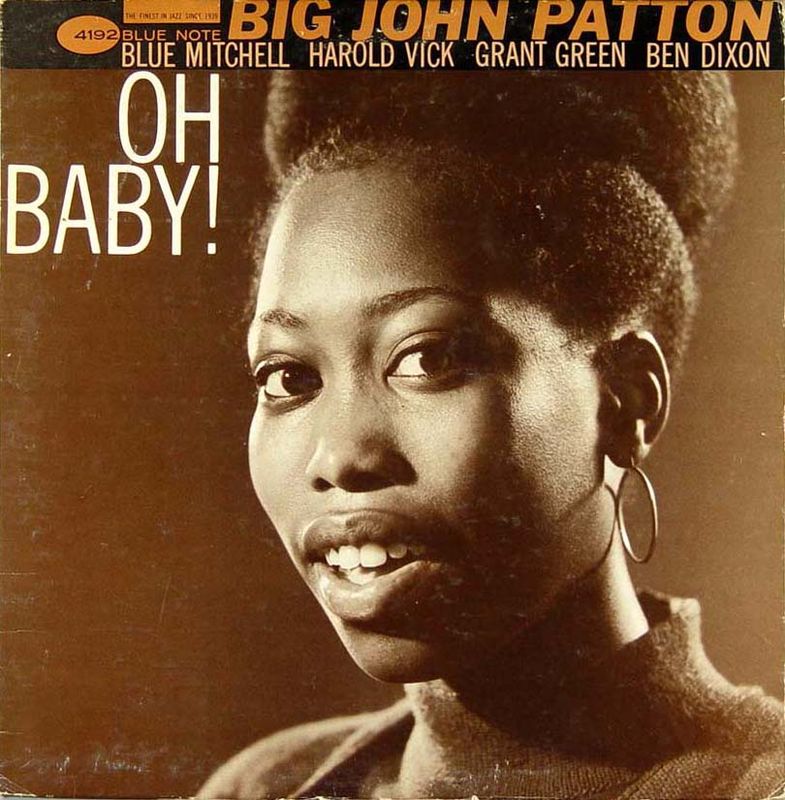
Big John Patton • Oh Baby


Review:
Patton's fourth album for Blue Note. Big John Patton with Grant Green on guitar and Harold Vick on tenor sax. With tunes like "Fat Judy" and "Good Juice," there is no worry about there being a groove. The addition of a trumpet (Blue Mitchell) means you have a horn section, and this tends to be a little much now and again. Although a little on the light side, thanks to Patton and Green, the groove does go down.
by Michael Erlewine
https://www.allmusic.com/album/oh-baby%21-mw0000766666

///////

Reseña:
El cuarto álbum de Patton para Blue Note. Big John Patton con Grant Green en la guitarra y Harold Vick en el saxo tenor. Con temas como "Fat Judy" y "Good Juice", no hay que preocuparse de que haya un ritmo. La adición de una trompeta (Blue Mitchell) significa que tienes una sección de trompetas, y esto tiende a ser un poco demasiado de vez en cuando. Aunque un poco en el lado de la luz, gracias a Patton y Green, el surco se reduce.
por Michael Erlewine
https://www.allmusic.com/album/oh-baby%21-mw0000766666


Friday, July 17, 2026

Don Wilkerson • Shoutin'


 Artist Biography
The archetypal big-toned Texas tenor of Don Wilkerson was unfortunately not documented on record as much as the quality of his music deserved; he was an excellent, earthy soul-jazz saxophonist capable of playing blues, ballads, bop, swing, and gospel-tinged R&B. Wilkerson was born in Moreauville, LA, in 1932, and first learned the alto sax; by his teens, he had moved to Houston and was accomplished enough on tenor to play with R&B outfits headed by Amos Milburn and Charles Brown. Wilkerson played on some of Ray Charles' earliest recording sessions in the mid-'50s, taking memorable solos on classics like "I Got a Woman," "This Little Girl of Mine," and "Hallelujah I Love Her So." He also led a band in Miami for a short time, and participated in numerous jam sessions with Cannonball Adderley. Adderley produced Wilkerson's first recording session, a 1960 date for Riverside titled The Texas Twister. After another short stint with Charles, he signed with Blue Note and recorded three stellar, soulful albums over 1962-1963: Elder Don, Preach, Brother!, and Shoutin', all of which featured Grant Green on guitar. Unfortunately, none was very successful, and Wilkerson didn't record any further as a leader. He remained in Houston for most of his life and passed away on July 18, 1986.
Steve Huey
https://www.allmusic.com/artist/don-wilkerson-mn0000161996/biography

///////

 Biografía del artista
El arquetípico tenor tejano de Don Wilkerson no estaba, por desgracia, tan documentado en los archivos como merecía la calidad de su música; era un excelente saxofonista de soul-jazz terrenal capaz de tocar blues, baladas, bop, swing y R&B con matices de gospel. Wilkerson nació en Moreauville, Los Ángeles, en 1932, y aprendió primero el saxo alto; en su adolescencia, se había mudado a Houston y tenía suficiente experiencia en el tenor como para tocar con equipos de R&B dirigidos por Amos Milburn y Charles Brown. Wilkerson tocó en algunas de las primeras sesiones de grabación de Ray Charles a mediados de los 50, haciendo memorables solos en clásicos como "I Got a Woman", "This Little Girl of Mine" y "Hallelujah I Love Her So". También dirigió una banda en Miami por un corto tiempo, y participó en numerosas jam sessions con Cannonball Adderley. Adderley produjo la primera sesión de grabación de Wilkerson, una fecha de 1960 para Riverside titulada "The Texas Twister". Después de otra corta temporada con Charles, firmó con Blue Note y grabó tres álbumes estelares y conmovedores durante 1962-1963: Elder Don, Preach, Brother!, y Shoutin', todos ellos con Grant Green a la guitarra. Por desgracia, ninguno tuvo mucho éxito, y Wilkerson no grabó más como líder. Permaneció en Houston la mayor parte de su vida y falleció el 18 de julio de 1986.
Steve Huey
https://www.allmusic.com/artist/don-wilkerson-mn0000161996/biography


Friday, June 12, 2026

Johnny Hodges & Wild Bill Davis • Joe's Blues


Editorial Reviews
Second installment in this four volume series from the celebrated jazzmen with deep Blues roots, a prolific musical team with exquisite chemistry. Volume Two includes the two complete albums Joe's Blues and Wings & Things, in which guitarist Grant Green plays with the two masters. Lonehill.

///////

Reseñas editoriales
Segunda entrega de esta serie de cuatro volúmenes de los célebres jazzmen con profundas raíces Blues, un prolífico equipo musical con exquisita química. El volumen dos incluye los dos álbumes completos Joe's Blues y Wings & Things, en los que el guitarrista Grant Green toca con los dos maestros. Lonehill
 

Wednesday, March 11, 2026

Don Wilkerson • The Complete Blue Note Sessions


By DAVID ADLER
One of the paragons of the "Texas tenor" style, Don Wilkerson gained his greatest notoriety as a soloist with Ray Charles throughout much of the 50s and 60s. Less known is Wilkerson’s limited work as a leader, the majority of which is collected on this two-disc package from Blue Note. Wilkerson made three albums for the label during the fruitful years of 1962 and 1963: Preach Brother!, Elder Don, and Shoutin’! All three records feature guitarist Grant Green, who certainly knows how to cook in such a setting. The first also boasts a classic Blue Note rhythm section: Sonny Clark on piano, Butch Warren on bass, and Billy Higgins on drums, with Jual Curtis sitting in on tambourine on "Dem Tambourines" and "Camp Meetin’." On the second album, Johnny Acea takes over on piano, with Lloyd Trotman on bass and Willie Bobo on drums. The last of the three sessions is particularly down and dirty, with Green, John Patton on organ and Ben Dixon on drums.
The prevailing ethos of Preach Brother! is simply summarized: blues, blues, and more blues. And not the fancied-up bebop variety, but straight-up shuffle and boogie and soul. Every track is a blues except for the closer, "Pigeon Peas," a funky thing in AABA form. The two later albums are a bit more compositionally varied. Wilkerson begins Elder Don with exquisitely singing tenor work on "Senorita Eula" and then salutes his fellow Texan Bob Wills with "San Antonio Rose." (Grant Green’s solo on the latter has to be heard to be believed.) From this point on there’s still plenty of blues, but Wilkerson breaks it up with originals like "Scrappy" and "Drawin’ a Tip." He also showcases a totally different aspect of his talent on the ballads "Poor Butterfly" and "Easy Living."

///////

 Por DAVID ADLER
Uno de los parangones del estilo "tenor de Texas", Don Wilkerson ganó su mayor notoriedad como solista con Ray Charles durante gran parte de los años 50 y 60. Menos conocido es el limitado trabajo de Wilkerson como líder, la mayoría del cual se recoge en este paquete de dos discos de Blue Note. Wilkerson hizo tres álbumes para la discográfica durante los fructíferos años de 1962 y 1963: Preach Brother!, Elder Don, y Shoutin'! Los tres discos cuentan con la participación del guitarrista Grant Green, que ciertamente sabe cómo cocinar en un ambiente así. El primero también cuenta con una sección rítmica clásica de Blue Note: Sonny Clark en el piano, Butch Warren en el bajo, y Billy Higgins en la batería, con Jual Curtis en la pandereta en "Dem Tambourines" y "Camp Meetin'". En el segundo álbum, Johnny Acea se hace cargo del piano, con Lloyd Trotman en el bajo y Willie Bobo en la batería. La última de las tres sesiones es particularmente baja y sucia, con Green, John Patton en el órgano y Ben Dixon en la batería.
El espíritu prevaleciente del Predicador Hermano! se resume simplemente: blues, blues y más blues. Y no la variedad de bebop de fantasía, sino el shuffle y el boogie y el soul. Cada canción es un blues excepto la más cercana, "Pigeon Peas", una cosa funky en forma de AABA. Los dos álbumes posteriores son un poco más variados en cuanto a la composición. Wilkerson comienza Elder Don con un exquisito trabajo de tenor en "Señorita Eula" y luego saluda a su compañero tejano Bob Wills con "San Antonio Rose". (El solo de Grant Green en esta última tiene que ser escuchado para ser creído.) A partir de aquí todavía hay mucho blues, pero Wilkerson lo rompe con originales como "Scrappy" y "Drawin' a Tip". También muestra un aspecto totalmente diferente de su talento en las baladas "Poor Butterfly" y "Easy Living".


Monday, January 26, 2026

Ray Draper • Tuba Sounds


“A Promise Derailed.” Such of phrase could easily have been etched on Ray Draper’s tombstone to describe the tubaist’s trials in life and music. Killed in a botched robbery at the tragic age of 42 his troubles both personal and musical hounded him for much of his life. But reading the original liners to this reissue penned by Ira Gitler it’s difficult to prognosticate such a future for Draper. Member of the All-City High School Symphony, a budding playwright and composer, and front man of a recording date for Prestige- all of these things point to bright and promising prospects as a musician. A careful inventory of Draper’s sidemen also speaks to his precocious talent. Even back in 57’ McLean and Waldron were heavy hitters and the relative newcomers Young, DeBrest and Dixon are also solid recruits. Taped at Rudy Van G’s original Hackensack studio (his parent’s living room) the fidelity adds even further to the fine proceedings.

The tunes on the date are a well-chosen mix of originals with a single standard thrown in as a nod to tradition. Draper’s potbellied horn is surprisingly agile on the changes, particularly on his own numbers “Jackie’s Dolly” and “Mimi’s Interlude.” Plump and viscous, it’s a sound that skates along the bedrock of the bass register while still managing to fire off quick salvos of notes. Young stays fairly understated, but still chimes in occasionally with fine solos, as on the latter composition and some intriguing exchanges, as on the opening “Terry Anne.” McLean’s devilish alto, brimming with youthful bravado, routinely dances rings around the leader’s fleshy figures. The rhythm section is usually relegated to its regular chores, but Waldron finds space both for a tune and several solo breaks.

Draper recorded several other dates as a leader and parlayed some work as a sideman for employers like McLean, Coltrane and others throughout the remainder of the 50s. The 60s and 70s also afforded him sporadic dates with folks like Archie Shepp and, but the occasional returns to music were always short-lived. Listening in on the promise he so evidently displays here it’s a shame Draper wasn’t able to persevere.
By Derek Taylor
February 1, 2001 
https://www.allaboutjazz.com/tuba-sounds-ray-draper-prestige-records-review-by-derek-taylor__6302

///////

«Una promesa truncada». Esta frase podría haber sido fácilmente grabada en la lápida de Ray Draper para describir las tribulaciones del tubista en la vida y en la música. Asesinado en un robo fallido a la trágica edad de 42 años, sus problemas personales y musicales le persiguieron durante gran parte de su vida. Pero al leer las notas originales de esta reedición, escritas por Ira Gitler, resulta difícil pronosticar un futuro así para Draper. Miembro de la All-City High School Symphony, dramaturgo y compositor en ciernes, y protagonista de una sesión de grabación para Prestige: todo ello apuntaba a un futuro brillante y prometedor como músico. Un inventario minucioso de los músicos que acompañaban a Draper también da cuenta de su talento precoz. Ya en 1957, McLean y Waldron eran pesos pesados, y los relativamente novatos Young, DeBrest y Dixon también eran reclutas sólidos. Grabado en el estudio original de Rudy Van G en Hackensack (el salón de sus padres), la fidelidad añade aún más valor al excelente trabajo.

Las canciones de la sesión son una mezcla bien elegida de temas originales con un único estándar incluido como guiño a la tradición. El saxofón barrigudo de Draper es sorprendentemente ágil en los cambios, especialmente en sus propios temas «Jackie's Dolly» y «Mimi's Interlude». Redondo y viscoso, es un sonido que se desliza sobre la base del registro grave del bajo, sin dejar de disparar rápidas salvas de notas. Young se mantiene bastante discreto, pero de vez en cuando interviene con buenos solos, como en la última composición y en algunos intercambios intrigantes, como en la apertura «Terry Anne». El saxo alto diabólico de McLean, rebosante de bravuconería juvenil, baila habitualmente alrededor de las figuras carnosas del líder. La sección rítmica suele quedar relegada a sus tareas habituales, pero Waldron encuentra espacio tanto para una melodía como para varios solos.

Draper grabó varias otras fechas como líder y aprovechó algunos trabajos como acompañante para empleadores como McLean, Coltrane y otros durante el resto de los años 50. Los años 60 y 70 también le proporcionaron fechas esporádicas con gente como Archie Shepp, pero los ocasionales regresos a la música siempre fueron efímeros. Al escuchar la promesa que tan evidentemente muestra aquí, es una pena que Draper no fuera capaz de perseverar.
Por Derek Taylor.
1 de febrero de 2001. 
https://www.allaboutjazz.com/tuba-sounds-ray-draper-prestige-records-review-by-derek-taylor__6302


Tuesday, September 30, 2025

Brother Jack McDuff • Goodnight , It's Time to Go + Honey Dripper


This release presents two complete original LPs by Brother Jack McDuff: Goodnight, It's Time to Go (Prestige PRLP7220), and The Honeydripper (Prestige PRLP7199). Both albums showcase the organist in a quartet format with the brilliant guitarist Grant Green. (This CD includes all of their quartet recordings together under the leadership of McDuff. They also participated on two other quartet albums, one under Green's name, and the other under Lou Donaldson's). As a bonus, “Godiva Brown”, a song that completes the Goodnight, It's Time to Go sessions but wasn't included on the original LP.


 Biography :
A marvelous bandleader and organist as well as capable arranger, "Brother" Jack McDuff has one of the funkiest, most soulful styles of all time on the Hammond B-3. His rock-solid basslines and blues-drenched solos are balanced by clever, almost pianistic melodies and interesting progressions and phrases. McDuff began as a bassist playing with Denny Zeitlin and Joe Farrell. He studied privately in Cincinnati and worked with Johnny Griffin in Chicago. He taught himself organ and piano in the mid-'50s, and began gaining attention working with Willis Jackson in the late '50s and early '60s, cutting high caliber soul-jazz dates for Prestige. McDuff made his recording debut as a leader for Prestige in 1960, playing in a studio pickup band with Jimmy Forrest. They made a pair of outstanding albums: Tough Duff and The Honeydripper. McDuff organized his own band the next year, featuring Harold Vick and drummer Joe Dukes. Things took off when McDuff hired a young guitarist named George Benson. They were among the most popular combos of the mid-'60s and made several excellent albums. McDuff's later groups at Atlantic and Cadet didn't equal the level of the Benson band, while later dates for Verve and Cadet were uneven, though generally good. McDuff experimented with electronic keyboards and fusion during the '70s, then in the '80s got back in the groove with the Muse session Cap'n Jack. While his health fluctuated throughout the '90s, McDuff released several discs on the Concord Jazz label before succumbing to heart failure on January 23, 2001, at the age of 74. ~ Ron Wynn and Bob Porter.

///////

Este lanzamiento presenta dos LPs originales completos del hermano Jack McDuff: Goodnight, It's Time to Go (Prestige PRLP7220), y The Honeydripper (Prestige PRLP7199). Ambos álbumes muestran al organista en formato de cuarteto con el brillante guitarrista Grant Green. (Este CD incluye todas las grabaciones de su cuarteto juntas bajo la dirección de McDuff. También participaron en otros dos álbumes de cuarteto, uno bajo el nombre de Green y el otro bajo el de Lou Donaldson). Como bonus, "Godiva Brown", una canción que completa las sesiones de Goodnight, It's Time to Go pero que no fue incluida en el LP original.


 Biografía :
Un maravilloso director de banda y organista así como un arreglista capaz, "Brother" Jack McDuff tiene uno de los estilos más funky y más conmovedor de todos los tiempos en el Hammond B-3. Sus líneas de bajo sólidas como el rock y sus solos empapados de blues están equilibrados por melodías inteligentes, casi pianísticas y progresiones y frases interesantes. McDuff comenzó como bajista tocando con Denny Zeitlin y Joe Farrell. Estudió de forma privada en Cincinnati y trabajó con Johnny Griffin en Chicago. Se enseñó a sí mismo a tocar el órgano y el piano a mediados de los años 50, y comenzó a llamar la atención trabajando con Willis Jackson a finales de los 50 y principios de los 60, cortando fechas de soul-jazz de alto calibre para Prestige. McDuff hizo su debut discográfico como líder para Prestige en 1960, tocando en una banda de estudio con Jimmy Forrest. Hicieron un par de álbumes excepcionales: Tough Duff y The Honeydripper. McDuff organizó su propia banda al año siguiente, con Harold Vick y el baterista Joe Dukes. Las cosas despegaron cuando McDuff contrató a un joven guitarrista llamado George Benson. Estaban entre los combos más populares de mediados de los 60 e hicieron varios álbumes excelentes. Los grupos posteriores de McDuff en Atlantic y Cadet no igualaron el nivel de la banda de Benson, mientras que las fechas posteriores de Verve y Cadet fueron desiguales, aunque en general buenas. McDuff experimentó con los teclados electrónicos y la fusión durante los años 70, luego en los 80 volvió a la onda con la sesión de Muse Cap'n Jack. Mientras que su salud fluctuó a lo largo de los años 90, McDuff publicó varios discos en el sello Concord Jazz antes de sucumbir a una insuficiencia cardíaca el 23 de enero de 2001, a la edad de 74 años. ~ Ron Wynn y Bob Porter


Thursday, June 12, 2025

John Patton • The Way I Feel


Review by Stephen Thomas Erlewine
For his third album, Big John Patton decided to expand his band to quintet. Retaining the services of his longtime colleagues, guitarist Grant Green and drummer Ben Dixon, he hired tenor saxophonist Fred Jackson (who also played on Along Came John) and trumpeter Richard Williams.
The combination of two horns can occasionally overshadow the groove Patton, Green, and Dixon lay down, but for the most part the musicians augment the music instead of detracting from it. Nevertheless, the combo never manages to match the peaks of Along Came John and Blue John.
There are several fine moments on the record, and Green and Patton are typically enjoyable, but the record overall is a slight disappointment after its two predecessors.
https://www.allmusic.com/album/the-way-i-feel-mw0000759052


Artist Biography
 Big John Patton was born July 12, 1935 in Kansas City, Missouri. A self-taught musician, he started playing the piano in 1948 and landed his first big gig touring with R&B sensation Lloyd Price from 1954-1959.
Upon his arrival in New York, around 1960, Patton began making the transition from piano to organ. Throughout the 1960's he recorded extensively for Blue Note Records as a leader and sideman, most notably with Grant Green and Lou Donaldson.
His music evolved to incorporate elements of modal and free jazz, without ever losing the basic, earthy groove that he brought to it from the beginning.
He wrote some organ jazz classics such as “Funky Mama” and “The Yodel.” His music will be remembered fondly by musicians and fans. During the late 60's Patton recorded some very adventurous music for the Blue Note label with artists such as Harold Alexander and George Coleman on lps such as Understanding and Accent on the Blues. Of particular note on the early sessions recorded for Blue Note both under his own name and also with George Braith, Don Wilkerson and Lou Donaldson was the superlative empathy he developed with guitarist Grant Green and drummer Ben Dixon - an organ trio whose work in the soul jazz genre remains unsurpassed to this day.
Since the resurgence in interest in music from this period Blue Note has unearthed many sessions that were buried in the vaults. LPs such as Blue John which was actually penciled for release, but never was, and two fantastic (and forward looking) albums Boogaloo and Memphis New York Spirit saw the light of day and showed the world more of this exceptional artist's work.
https://musicians.allaboutjazz.com/bigjohnpatton

///////

Reseña de Stephen Thomas Erlewine
Para su tercer álbum, Big John Patton decidió expandir su banda al quinteto. Reteniendo los servicios de sus antiguos colegas, el guitarrista Grant Green y el baterista Ben Dixon, contrató al saxofonista tenor Fred Jackson (que también tocó en Along Came John) y al trompetista Richard Williams.
La combinación de dos trompetas puede ocasionalmente eclipsar el ritmo que Patton, Green y Dixon establecen, pero en su mayor parte los músicos aumentan la música en lugar de restarle importancia. Sin embargo, el combo nunca consigue igualar los picos de Along Came John y Blue John.
Hay varios buenos momentos en el disco, y Green y Patton son típicamente agradables, pero el disco en general es una pequeña decepción después de sus dos predecesores.
https://www.allmusic.com/album/the-way-i-feel-mw0000759052


Biografía del artista
 Big John Patton nació el 12 de julio de 1935 en Kansas City, Missouri. Músico autodidacta, comenzó a tocar el piano en 1948 y consiguió su primer gran concierto de gira con la sensación del R&B Lloyd Price entre 1954 y 1959.
A su llegada a Nueva York, alrededor de 1960, Patton comenzó a hacer la transición del piano al órgano. A lo largo de los años 60 grabó extensamente para Blue Note Records como líder y sideman, sobre todo con Grant Green y Lou Donaldson.
Su música evolucionó para incorporar elementos del jazz modal y libre, sin perder nunca el groove básico y terrenal que le aportó desde el principio.
Escribió algunos clásicos del jazz de órgano como "Funky Mama" y "The Yodel". Su música será recordada con cariño por músicos y aficionados. A finales de los 60's Patton grabó música muy aventurera para el sello Blue Note con artistas como Harold Alexander y George Coleman en lps como Understanding y Accent on the Blues. De particular importancia en las primeras sesiones grabadas para Blue Note tanto bajo su propio nombre como con George Braith, Don Wilkerson y Lou Donaldson fue la superlativa empatía que desarrolló con el guitarrista Grant Green y el baterista Ben Dixon - un trío de órgano cuyo trabajo en el género de soul jazz sigue siendo insuperable hasta el día de hoy.
Desde el resurgimiento del interés por la música de este periodo, Blue Note ha desenterrado muchas de las sesiones que fueron enterradas en las bóvedas. LPs como Blue John, que en realidad fue escrito para su lanzamiento, pero nunca lo fue, y dos álbumes fantásticos (y con visión de futuro) Boogaloo y Memphis New York Spirit vieron la luz del día y mostraron al mundo más del trabajo de este artista excepcional.
https://musicians.allaboutjazz.com/bigjohnpatton


Wednesday, April 9, 2025

Baby Face Willette • Face To Face


While it's true that Baby Face Willette's Stop and Listen is widely regarded as his finest recording, this, his Blue Note debut from January of 1961, should not by any means be overlooked. After all, before this session he had the same lot as most Blue Note artists at the time; they played as sidemen on other's recordings before being allowed to headline their own dates. Willette performed on dates by Grant Green (Grant's First Stand) and Lou Donaldson (Here 'Tis). Face to Face boasts a mighty meat and potatoes soul-jazz lineup: Green on guitar, Fred Jackson on tenor, and drummer Ben Dixon. Comprised of six cuts, five of them are Willette originals. The evidence of the rough and rowdy side of Willette's playing is evident from the opener, "Swinging at Sugar Ray's." His approach to the B-3 is far more percussive than Jimmy Smith's, each note is a distinct punch; not only in his solos, but in his chord and head approaches. His solo is a nasty, knotty blues sprint that encompasses gospel licks and R&B fills, too. The other notable thing about the cut is Green's guitar break that shows a side of him we seldom got to hear early on, where he's bending strings, playing in the high register, and using intense single-note runs. It's nearly a breathless way to open a record. Things slow down on the blues "Goin' Down" that features a nice emotive solo by Jackson. The mambo-infused "Whatever Lola Wants" by Richard Adler and Jerry Ross comes next and includes some beautiful stop-and-and start moves in the melody, as well as beautiful call and response between Jackson and Willette, while Dixon's drums shift around the outside before the whole thing breaks down into a groover. The poppin' funky title track has one of those beautiful hard bop heads that's instantly memorable. Sure, it's not terribly sophisticated but it's full of soul and a relaxed yet quick group of changes before Jackson begins to blow. "Somethin' Strange" is pure blues, Chicago style, before moving into tough funky soul. The set closes with "High 'N' Low," a relaxed show-closing groove joint; it's all blues with fine contributions from Green, Jackson, and Willette. The two alternates are not necessarily revelatory, but they do keep the solid vibes happening for another 13 minutes or so. Certainly it's true that these compositions don't show a ton of imagination conceptually, but that doesn't mean anything. The group interplay here is the thing, it works seamlessly. The other notable is the looseness with which Green was playing on the date, and the true introduction of Willette's trademark approach to the B-3. That's all here. These tunes have their own little trademark knots and notches all over them. Highly recommended.  
https://www.allmusic.com/album/face-to-face-mw0000595874


Roosevelt "Baby Face" Willette (September 11, 1933 – April 1, 1971) was a hard bop and soul-jazz musician most known for playing Hammond organ. It is unclear whether he was born in Little Rock, Arkansas, or New Orleans, Louisiana.
Artist Biography by Steve Huey
Highly underrated as a soul-jazz organist due in large part to a scanty discography, Baby Face Willette remains a somewhat mysterious figure, a quiet, reserved man who disappeared from the jazz scene after the first half of the '60s. Born Roosevelt Willette on September 11, 1933 (there is some dispute as to whether he was born in New Orleans or Little Rock), his parents were heavily involved in the church, and thus his music had deep roots in gospel. Studying with his pianist uncle Fred Freeman, Willette played in several gospel groups as a teenage pianist and soon branched out into R&B, which gave him the opportunity to tour the country with numerous outfits. He settled in Chicago for a time and began concentrating on jazz organ in 1958, but didn't make much headway on the scene until he moved to New York and met Blue Note mainstays like Lou Donaldson and Grant Green. He played on Donaldson's Here 'Tis and Green's Grant's First Stand in January 1961, and the same month recorded his own debut, Face to Face. A few months later, he recorded the follow-up, Stop and Listen, which is generally regarded as his best work. After that initial burst of activity, Willette went on to form his own regular trio in 1963, and moved over to the Argo label, where he recorded two sessions in 1964: Mo-Roc and Behind the 8 Ball. He had a regular engagement at a South Side Chicago lounge from 1966-1971 (approximately), but largely vanished from the jazz scene afterwards and died in obscurity.
 
///////

Si bien es cierto que Stop and Listen, de Baby Face Willette, está considerado como su mejor grabación, este, su debut con Blue Note en enero de 1961, no debería pasarse por alto. Después de todo, antes de esta sesión tenía la misma suerte que la mayoría de los artistas de Blue Note de la época; tocaban como sidemen en las grabaciones de otros antes de que se les permitiera encabezar sus propias fechas. Willette actuó en fechas por Grant Green (Grant's First Stand) y Lou Donaldson (Here 'Tis). Face to Face cuenta con una poderosa alineación de soul-jazz de carne y patatas: Green en guitarra, Fred Jackson en tenor y el baterista Ben Dixon. Consta de seis cortes, cinco de los cuales son originales de Willette. La evidencia del lado áspero y bullicioso del juego de Willette es evidente en el primer partido, "Swinging at Sugar Ray's". Su acercamiento al B-3 es mucho más percusivo que el de Jimmy Smith, cada nota es un golpe distinto; no sólo en sus solos, sino también en su acorde y en sus acercamientos de cabeza. Su solo es un desagradable y nudoso sprint de blues que incluye lamidas de gospel y R&B también llena. La otra cosa notable del corte es la rotura de la guitarra de Green que muestra un lado de él que rara vez oímos desde el principio, donde dobla las cuerdas, toca en el registro alto, y usa intensas corridas de una sola nota. Es una forma casi sin aliento de abrir un disco. Las cosas se ralentizan en el blues "Goin' Down" que cuenta con un emotivo solo de Jackson. La infusión de mambo "Whatever Lola Wants" de Richard Adler y Jerry Ross viene a continuación e incluye algunos hermosos movimientos de parada y arranque en la melodía, así como una hermosa llamada y respuesta entre Jackson y Willette, mientras que los tambores de Dixon se mueven por el exterior antes de que todo se rompa en un groover. El poppin' funky título pista tiene uno de esos hermosos hard bop heads que es instantáneamente memorable. Claro, no es terriblemente sofisticado, pero está lleno de alma y un relajado pero rápido grupo de cambios antes de que Jackson empiece a soplar. "Somethin' Strange" es blues puro, al estilo de Chicago, antes de pasar a un alma funky. El set se cierra con "High 'N' Low", una relajada unión de ranura de cierre de show; todo es blues con finas contribuciones de Green, Jackson y Willette. Los dos alternos no son necesariamente reveladores, pero mantienen las vibraciones sólidas durante otros 13 minutos más o menos. Ciertamente es cierto que estas composiciones no muestran una tonelada de imaginación conceptual, pero eso no significa nada. La interacción del grupo aquí es la cosa, funciona a la perfección. El otro aspecto notable es la soltura con la que Green estaba jugando en la fecha, y la verdadera introducción del enfoque de la marca Willette en el B-3. Eso es todo aquí. Estas melodías tienen sus propios nudos y muescas por todas partes. Altamente recomendado.
https://www.allmusic.com/album/face-to-face-mw0000595874


Roosevelt "Baby Face" Willette (September 11, 1933 – April 1, 1971) was a hard bop and soul-jazz musician most known for playing Hammond organ. It is unclear whether he was born in Little Rock, Arkansas, or New Orleans, Louisiana.
Artist Biography by Steve Huey
Highly underrated as a soul-jazz organist due in large part to a scanty discography, Baby Face Willette remains a somewhat mysterious figure, a quiet, reserved man who disappeared from the jazz scene after the first half of the '60s. Born Roosevelt Willette on September 11, 1933 (there is some dispute as to whether he was born in New Orleans or Little Rock), his parents were heavily involved in the church, and thus his music had deep roots in gospel. Studying with his pianist uncle Fred Freeman, Willette played in several gospel groups as a teenage pianist and soon branched out into R&B, which gave him the opportunity to tour the country with numerous outfits. He settled in Chicago for a time and began concentrating on jazz organ in 1958, but didn't make much headway on the scene until he moved to New York and met Blue Note mainstays like Lou Donaldson and Grant Green. He played on Donaldson's Here 'Tis and Green's Grant's First Stand in January 1961, and the same month recorded his own debut, Face to Face. A few months later, he recorded the follow-up, Stop and Listen, which is generally regarded as his best work. After that initial burst of activity, Willette went on to form his own regular trio in 1963, and moved over to the Argo label, where he recorded two sessions in 1964: Mo-Roc and Behind the 8 Ball. He had a regular engagement at a South Side Chicago lounge from 1966-1971 (approximately), but largely vanished from the jazz scene afterwards and died in obscurity.


Friday, March 28, 2025

Lou Donaldson • Good Gracious!


Review by Stephen Thomas Erlewine
Good Gracious may be Lou Donaldson's record, but guitarist Grant Green and organist John Patton steal the show. Working with a tight, soulful groove laid down by drummer Ben Dixon, the guitarist and organist trade hot lines that often steal the thunder from Donaldson, who nevertheless turns in a robust, tuneful performance. Donaldson's tone is richer and fuller than it is on many of his early-'60s records, and he really connects with the laid-back R&B grooves and soul-jazz vamps on Good Gracious, turning in melodic, memorable solos. However, Grant and Patton take the songs even further with their intense solos and fills; Patton, in particular, sounds on fire even when the tempo is mellow. Good Gracious still falls prey to some of the lazy tempos that pop up on most Lou Donaldson records, but it remains one of his finest soul-jazz sessions.

///////

Reseña de Stephen Thomas Erlewine
Good Gracious puede ser el disco de Lou Donaldson, pero el guitarrista Grant Green y el organista John Patton roban el show. Trabajando con un ritmo firme y conmovedor establecido por el baterista Ben Dixon, el guitarrista y el organista intercambian líneas calientes que a menudo le roban el protagonismo a Donaldson, que sin embargo se convierte en una actuación robusta y afinada. El tono de Donaldson es más rico y completo que en muchos de sus discos de principios de los 60, y realmente conecta con los relajados ritmos del R&B y los vampiros del soul-jazz en Good Gracious, haciendo solos melódicos y memorables. Sin embargo, Grant y Patton llevan las canciones aún más lejos con sus intensos solos y rellenos; Patton, en particular, suena ardiente incluso cuando el tempo es suave. Good Gracious sigue siendo presa de algunos de los tempos perezosos que aparecen en la mayoría de los discos de Lou Donaldson, pero sigue siendo una de sus mejores sesiones de soul-jazz.


Friday, March 21, 2025

Sonny Phillips • My Black Flower


Review by Tom Schulte
Phillips marks Eddie Harris and Ahmad Jamal as his primary influences. Phillips studied under Jamal in the '50s and, like both players, he had a gentle, soulful ability. From Jamal, Phillips inherited or formulated a subtle, understated style of playing that used space and sounds akin to Miles Davis. It was in 1963 that Phillips toured as an organist with the great improviser Eddie Harris. On "My Black Flower," one can hear the beguiling, Jamal-inspired piano, and the organ fantasies are heard on "Me and Me Brudder." Another feature of this album is the inclusion of Latin rhythms, courtesy of conga and percussion journeyman Ralph Dorsey.

///////

Reseña de Tom Schulte
Phillips señala a Eddie Harris y Ahmad Jamal como sus principales influencias. Phillips estudió con Jamal en los años 50 y, como ambos jugadores, tenía una suave y conmovedora habilidad. De Jamal, Phillips heredó o formuló un estilo sutil y discreto de tocar que usaba el espacio y sonidos similares a los de Miles Davis. Fue en 1963 cuando Phillips fue de gira como organista con el gran improvisador Eddie Harris. En "Mi Flor Negra", se puede escuchar el seductor piano inspirado en Jamal, y las fantasías del órgano se escuchan en "Me and Me Brudder". Otra característica de este álbum es la inclusión de ritmos latinos, cortesía de Ralph Dorsey, el experto en conga y percusión.


Saturday, March 8, 2025

Lou Donaldson • The Natural Soul


Artist Biography
Lou Donaldson is an NEA Jazz Master Lou Donaldson, alto saxophonist, recording star and entertainer extraordinaire was born in Badin, North Carolina on November 1, 1926. He is the child of parents, Lucy Wallace Donaldson, mother, and Louis Andrew Donaldson, Sr., father. His mother was a first grade teacher at Badin High School, Musical Director at the school, and a concert pianist who was a graduate of Cheney University. His father was a graduate of Livingstone College, an AME Zion minister, and insurance agent. Lou is the second of 4 children, between older sister Margaret and younger sister Elizabeth and brother William, all of whom ended up involved with music. Lou never studied piano because his mother had a switch that she would crack across the fingers when students missed a note. That turned him completely away from being a pianist. When he was about 9 years old, she heard him singing or humming all of the piano etudes that the students played and she took him aside and told him that he had more musical talent than anyone in the family and that he needed to play some type of instrument. She got a clarinet from the Band Director, Leo Gabriel, at the Alcoa Aluminum Plant Band. Although she knew nothing about the clarinet, she taught him basic music and they used the clarinet book to learn the fingerings and how to play the clarinet. Lou mastered the instrument and this ignited his pursuit of a career in music.

At age 15, Lou matriculated to North Carolina A& T College where he received a Bachelor's of Science degree and joined the marching band playing clarinet. After being drafted into the US Navy in 1945, he played in the Great Lakes Navy Band where, when playing for dances, he would also play the alto saxophone. After going into Chicago several times, he heard of Charlie Parker and, after checking him out, he decided that this was the style of playing he would make his own. Previously he had played like Johnny Hodges, or Tab Smith, or another saxophonist named Pete Brown. Returning from the military back to North Carolina A& T College, he played in the dance band led by Billy Tolles, who was a great saxophonist who played with several groups and with the Sabby Lewis Band during the summer months in Boston. Touring bands, such as Count Basie, Erskine Hawkins, Buddy Johnson, and Andy Kirk—all dance bands, used to come through Greensboro, North Carolina periodically four or five times a year. The students from the school would go down sometimes and sit in with the bands, all of which prompted the musicians in the band to tell them to come to New York. Lou never did go to New York then because he was also playing baseball which he loved dearly. But Illinois Jacquet came through with a tremendous band and Lou sat in with this band. The drummer was Poppa Joe Jones who, without any reservations, told Lou to come to New York and checked him in his hotel behind the Apollo Theater. Also, there was an Army band stationed in Greensboro that had several musicians of note: James Moody, Dave Burns, Joe Gale, and Walter Fuller and they insisted that Lou go to New York to establish himself as a musician. They assured him he would be welcomed and that he would be able to “cut the mustard”. Taking this advice, Lou went to New York in 1950 or late 49. Being a GI and a Veteran he enrolled in the Darrow Institute of Music, which was a GI school, and was paid a monthly stipend so that he could survive. While at the school, he played many small clubs in Harlem where he lived at 127th Street and 8th Avenue with his new wife, Maker. Maker was his longtime sweetheart from North Carolina and remained his wife and business partner for 56 years until her death in 2006. Together they raised two children—Lydia, deceased, who was a nurse and educational recruiter, and Dr. E. Carol Webster, clinical psychologist and author who resides in Fort Lauderdale and who, along with husband Charles, founded the African American Success Foundation that Lou very happily supports each year by doing a Jazz Benefit.

Once he moved to New York, Lou worked weekends in Jersey with Dud Bascomb's band. One night while working at Minton's Playhouse—the famous jazz club, he was approached by Alfred Lyons of Blue Note Records to make a recording and he suggested that Lou make a Charlie Parker- type recording which he did with the Milt Jackson Quartet. At that time, it was Milt Jackson, Percy Heath, John Lewis, and Kenny Clark. Later on this group would be called the Modern Jazz Quartet. The record was successful and the company asked him to make a record on his own and this is why he's most proud of his time at Blue Note Records— because this date started a career for him that actually made him bring several musicians to Blue Note Records and today he's very proud to have been the first to record these musicians— Horace Silver, Clifford Brown, Grant Green, John Patton, Blue Mitchell, Donald Byrd, Horace Parlan, Tommy Turrentine, Al Harewood, George Tucker, Jameel Nasser, and Curtis Fuller—with his group at Blue Note Records. Lou brought Gene Harris and the 3 Sounds from Washington DC to New York to record with him on the famous album called LD Plus 3 which was a big hit. His most famous group was Herman Foster on piano, Ray Baretto on conga, Peck Morrison on bass, and Dave Bailey on drums, which was the best move he made during his tenure on the label. This group recorded the famous record which is still selling today, Blues Walk—and on the back side, The Masquerade is Over. This solo is dearly considered by many disc jockeys as one of the top alto solos of all times and, along with Blues Walk, was used by many as a theme song. Another album Lou is very proud of is Lush Life, recorded for Blue Note with Duke Pearson as arranger and producer, that had several musicians who later become famous ?” Freddy Hubbard, on trumpet, Wayne Shorter on tenor saxophone, Pepper Adams on baritone saxophone, Al Harewood on drums, McCoy Tyner on piano, Jerry Dodgin on alto saxophone, Garnet Brown on trombone, and Ron Carter on bass.

After this recording, there was a big demand for Lou in Europe and he started to tour through the Wim Wigt Agency out of Wageningen, Holland in the Netherlands with his group—Herman Foster, piano, Nat Yarborough, drums, Jeff Fuller, bass, and Lou on alto saxophone —very successfully for years. Many dates and many records in between, he finally met the great Jimmy Smith and was prominent on the record, The Sermon. He often told Jimmy that his solo on that record made Jimmy famous. The organ sound was so powerful and commercial that he started making organ records. In 1968 he recorded, Alligator Boogaloo with Dr. Lonnie Smith on the organ, George Benson on guitar, Melvin Lasky on trumpet, Idris Mohammed (Leo Morris) on drums which was a hit record. It stayed on the Best Selling Billboard chart for 52 weeks, and put Lou into a good position musically and financially. He then continued to make these type of records with the great Charles Earland, the great Leon Spencer, Jr. Billy Gardner and Baby Face Willette. Then Lou began to sing blues and luckily came up with a big hit called Whiskey Drinkin' Woman, recorded on Wim Wigt's label, Timeless Records, that is still in great demand every time he plays a set.

In the mid 60's, Lou furthered his success as a musician and businessman. He set up his own tour of clubs—which was no easy feat in those days. Beginning in Rochester, NY, then to Buffalo, NY, and on to Pittsburgh, Pa.—where he worked two great clubs: Birdie's and Crawford Grill, then would head to Cleveland. All of these clubs were like two week stands and they weren't too far for Lou to drive because at that time he would have to carry an organ which he put on a U-Haul trailer. These places he booked and he would call ahead and keep booking so thathe could get more work and stay on the road. After Cleveland he would go to Columbus, right on the campus of Ohio State where one of his best friends, Warren Stephens, had a club—the Sacred Mushroom. Stephens also was an agent with the Ruth Bowen Agency and helped Lou get some gigs. Then Lou would move on to Dayton, Ohio to another club called Jilly's. Then onto Cincinnati, a few miles away from Dayton he would play two clubs—Babe Baker's and the Modern Jazz Room. From Cincinnati was another short jump to Louisville, Kentucky to the big club the Idle Hour. From there Lou would take old US 50 to Old St. Louis to the Riviera Club, the Gaslight Square Club, and a very famous club called Georgie's. Then he would head 7 miles away across the river to East St. Louis to the Blue Note Club owned by Leo Gooden, a good friend of his, where he met Oliver Nelson and recorded a great album that Oliver arranged for him called Rough House Blues.

After St Louis, Lou would drive a couple of hundred more miles to Kansas City where he worked the Blue Room on 18th and Vine—the very famous street in Kansas City, and several clubs for well known club owner Jimmy Willis. Then he would head into Wichita to Bill Reeves' Steakhouse where all the food was free so the band had a nice stay for two weeks. Then from there, Lou was on to Tulsa, Oklahoma to the Twilight club, which was on a mountain overlooking Tulsa, for good friend Lloyd Williams, and then on to Dallas where the band worked 3 or 4 clubs, such as Lark Club owned by Chuck Banks. But the most prominent one was Magruder's. Then Lou would work a nice club in Fort Worth, the Blue Flamingo, which was about 40 to 50 miles from there, and then would put a long set together and go all the way to Los Angeles, California and work the It Club, run by a famous promoter named John T McClain. Lou also worked the Zebra Lounge on that famous avenue that a lot of people don't like to talk about anymore, Central Avenue. Then the band went up to San Francisco and Oakland to play a club named Mister Major's. After the band had a chance to rest, Lou started the long trip back to New York by stopping in Colorado at Basin Street West and also another club in Denver called the KC Lounge. Coming back over the top, the band dropped into Chicago where most of the time Lou worked for a good friend, Joe Segal who had a club named the Jazz Showcase which Lou worked for many years, which is still there. He also worked two very good clubs— McKee's Lounge and had some one nighters at the Persian Ballroom on 63rd and Cottage Grove. Then Lou would take the next trip coming back toward New York to Detroit where he'd work Baker's Lounge, a very famous club still there, and also the Blue Note Club which was owned by a good friend, Clarence Eddings. After Detroit, the band typically deadheaded straight across to play Cleveland one more time in another place called Leo's Casino which was at 55th and Central in Cleveland, and also Corner Tavern, then owned by Don King. The band would come back and play another place in Pittsburgh and then come across the Pennsylvania Turnpike to Philly to play the Blue Note on Ridge Avenue, Club Harlem, and a few more. Then Lou would drive the 90 miles back to New York.

Lou is most proud of this tour because several other bands would call him during these years and he would give them the scheme of the clubs so they could also book them and play there. Sometimes he would be called by big promoters and people booking other groups to put their bands in these clubs because they didn't even know where these clubs were. Jack Whittemore, Miles Davis' manager, was famous for calling Lou to try to get Miles into some of these clubs even though they were so-called “ghetto clubs” because they were in poorer neighborhoods and Lou didn't know whether the great fans who frequented these clubs would relate to the groups that Miles, John Coltrane, and these types of musicians had. But Lou told them anyway and some got work in these clubs because of his help. Lou also remembers getting John Coltrane one of his first gigs in a place called Vernon's which was in New Orleans, Louisiana—and was also on Louisiana Avenue—and the manager was not too happy with the group. Also the Judge's Chamber in East St. Louis, Illinois where Lou had to talk the guy into paying Coltrane enough money to get him back to New York because he was unsatisfied with the group and was not going to pay up the money. These were the types of things even the great musicians had to face, but Lou eventually convinced the club to do the right thing and this got Coltrane back to New York.

During these memorable years, Lou had four distinct groups that he would use for the organ sound: one group was John Patton on organ, Bill Hardman on trumpet, Grant Green on guitar, and Ben Dixon on drums. Another group was Lonnie Smith on organ, Billy Kaye on drums, Mark Elf on guitar—and sometimes Melvin Sparks on guitar, and Joe Dukes on drums—the greatest organ drummer of all times. Later he had another group with Caesar Frazier on organ, Eric Johnson on guitar, and Billy Kaye on drums with Sweet Lou on alto. Another of Lou's groups had Charles Earland on organ, Jimmy Ponder on guitar, Blue Mitchell on trumpet, and Idris Muhammad on drums. These groups played mostly the so- called “ghetto clubs” where the fans really got into their music and sometimes they were booked even for dancing. It was a very successful set up and several other people like Hank Crawford, Jack McDuff, Groove Holmes, Sonny Stitt, and even Dizzy found out about these clubs and had a good run following this idea. Later in the ‘80's, Lou began to go to Europe again touring most of the countries playing jazz festivals and one nighters and even today remains in demand for these types of jobs when he's able to do them. He has continued to play in between commercial and jazz music—sort of modified in places where the avante garde or what is called ultra modern—might run into some problems with the audience. Using this system, he has survived and continues to work as much as he possibly can at his age. This octogenarian has to space his appearances to suit his health and availability. He works locally in New York, his home town, twice a year at the Village Vanguard and twice a year and the Birdland Club, as well as many jazz festivals, concerts, and one nighters throughout the country and around the world. He is very proud of his current group that boasts the musical excellence of Randy Johnston on guitar, Akiko Tsuruga on organ, Fukushi Tainaka on drums along with Lou on alto sax.

Lou was awarded the honorary Doctorate of Letters by North Carolina A& T University and a scholarship was established in his name that is awarded to the most gifted jazz musician at North Carolina A&T University each year. He was inducted into the International Jazz Hall of Fame and is the recipient of countless other honors and awards for his outstanding contributions to jazz.
https://musicians.allaboutjazz.com/loudonaldson

///////

Biografía del artista
Lou Donaldson es un maestro del jazz de NEA Lou Donaldson, saxofonista alto, estrella de la grabación y artista extraordinario que nació en Badin, Carolina del Norte el 1 de noviembre de 1926. Es hijo de los padres, Lucy Wallace Donaldson, madre, y Louis Andrew Donaldson, padre. Su madre era profesora de primer grado en Badin High School, Directora Musical en la escuela, y concertista de piano graduada de la Universidad de Cheney. Su padre se graduó de Livingstone College, ministro de AME Zion y agente de seguros. Lou es el segundo de 4 hijos, entre su hermana mayor Margaret y su hermana menor Elizabeth y su hermano William, todos los cuales terminaron involucrados con la música. Lou nunca estudió piano porque su madre tenía un interruptor que se rompía entre los dedos cuando los estudiantes perdían una nota. Eso le hizo dejar de ser pianista. Cuando tenía unos 9 años, ella lo escuchó cantar o tararear todos los estudios de piano que tocaban los estudiantes y lo llevó aparte y le dijo que tenía más talento musical que nadie en la familia y que necesitaba tocar algún tipo de instrumento. Obtuvo un clarinete del director de la banda, Leo Gabriel, en la Alcoa Aluminum Plant Band. Aunque ella no sabía nada sobre el clarinete, le enseñó música básica y usaron el libro de clarinete para aprender las digitaciones y cómo tocar el clarinete. Lou dominó el instrumento y esto encendió su búsqueda de una carrera en la música.

A la edad de 15 años, Lou se matriculó en el North Carolina A&T College donde recibió su licenciatura en Ciencias y se unió a la banda tocando clarinete. Después de ser reclutado en la Marina de los Estados Unidos en 1945, tocó en la Banda de la Marina de los Grandes Lagos donde, cuando tocaba para los bailes, también tocaba el saxofón alto. Después de ir a Chicago varias veces, oyó hablar de Charlie Parker y, después de comprobarlo, decidió que este era el estilo de juego que se haría suyo. Anteriormente había tocado como Johnny Hodges, o Tab Smith, u otro saxofonista llamado Pete Brown. Al regresar del ejército al North Carolina A&T College, tocó en la banda de baile liderada por Billy Tolles, quien fue un gran saxofonista que tocó con varios grupos y con la Sabby Lewis Band durante los meses de verano en Boston. Las bandas de gira, como Count Basie, Erskine Hawkins, Buddy Johnson, y Andy Kirk-todas las bandas de baile, solían venir a Greensboro, Carolina del Norte periódicamente cuatro o cinco veces al año. Los estudiantes de la escuela bajaban a veces y se sentaban con las bandas, lo que impulsaba a los músicos de la banda a decirles que vinieran a Nueva York. Lou nunca fue a Nueva York porque también jugaba al béisbol, algo que le encantaba. Pero Illinois Jacquet llegó con una banda tremenda y Lou se sentó con ella. El baterista fue Poppa Joe Jones quien, sin ninguna reservación, le dijo a Lou que viniera a Nueva York y lo registrara en su hotel detrás del Apollo Theater. Además, había una banda del Ejército estacionada en Greensboro que tenía varios músicos destacados: James Moody, Dave Burns, Joe Gale y Walter Fuller e insistieron en que Lou fuera a Nueva York para establecerse como músico. Le aseguraron que sería bienvenido y que podría "cortar la mostaza". Siguiendo este consejo, Lou fue a Nueva York en 1950 o a finales de los 49. Siendo un soldado y veterano, se inscribió en el Darrow Institute of Music, que era una escuela de soldados, y se le pagó un estipendio mensual para que pudiera sobrevivir. Mientras estaba en la escuela, tocaba en muchos clubes pequeños en Harlem, donde vivía en la calle 127 y la 8ª Avenida con su nueva esposa, Maker. Maker fue su novia de toda la vida desde Carolina del Norte y siguió siendo su esposa y socia de negocios durante 56 años hasta su muerte en 2006. Juntos criaron a dos hijos: Lydia, fallecida, que era enfermera y reclutadora educativa, y la Dra. E. Carol Webster, psicóloga clínica y autora que reside en Fort Lauderdale y que, junto con su esposo Charles, fundó la Fundación Afroamericana de Éxito, a la que Lou apoya muy felizmente todos los años haciendo un Jazz Benefit.

Una vez que se mudó a Nueva York, Lou trabajó los fines de semana en Jersey con la banda de Dud Bascomb. Una noche, mientras trabajaba en el Playhouse de Minton -el famoso club de jazz-, Alfred Lyons, de Blue Note Records, le propuso hacer una grabación y le sugirió a Lou que hiciera una grabación del tipo de Charlie Parker, lo que hizo con el Milt Jackson Quartet. En ese momento, eran Milt Jackson, Percy Heath, John Lewis y Kenny Clark. Más tarde este grupo se llamaría Modern Jazz Quartet. El disco fue un éxito y la compañía le pidió que grabara un disco por su cuenta y es por eso que está más orgulloso de su tiempo en Blue Note Records - porque esta fecha comenzó una carrera para él que le hizo traer a varios músicos a Blue Note Records y hoy está muy orgulloso de haber sido el primero en grabar a estos músicos - Horace Silver, Clifford Brown, Grant Green, John Patton, Blue Mitchell, Donald Byrd, Horace Parlan, Tommy Turrentine, Al Harewood, George Tucker, Jameel Nasser y Curtis Fuller, con su grupo en Blue Note Records. Lou trajo a Gene Harris y los 3 sonidos de Washington DC a Nueva York para grabar con él en el famoso álbum LD Plus 3 que fue un gran éxito. Su grupo más famoso fue Herman Foster al piano, Ray Baretto a la conga, Peck Morrison al bajo y Dave Bailey a la batería, que fue el mejor movimiento que hizo durante su mandato en el sello. Este grupo grabó el famoso disco que se sigue vendiendo hoy en día, Blues Walk-y en el reverso, The Masquerade is Over. Este solo es considerado por muchos disc-jockeys como uno de los mejores solos de contralto de todos los tiempos y, junto con Blues Walk, fue utilizado por muchos como tema principal. Otro álbum del que Lou está muy orgulloso es Lush Life, grabado para Blue Note con Duke Pearson como arreglista y productor, que tuvo varios músicos que más tarde se hicieron famosos?" Freddy Hubbard, en trompeta, Wayne Shorter en saxo tenor, Pepper Adams en saxo barítono, Al Harewood en batería, McCoy Tyner en piano, Jerry Dodgin en saxo alto, Garnet Brown en trombón y Ron Carter en bajo.

Después de esta grabación, hubo una gran demanda de Lou en Europa y comenzó a hacer giras por la Wim Wigt Agency en Wageningen, Holanda, con su grupo -Herman Foster, piano, Nat Yarborough, batería, Jeff Fuller, bajo y Lou en saxofón alto- con mucho éxito durante años. Muchas fechas y muchos discos en el medio, finalmente conoció al gran Jimmy Smith y fue prominente en el disco, El Sermón. A menudo le decía a Jimmy que su solo en ese disco le hacía famoso. El sonido del órgano era tan poderoso y comercial que comenzó a hacer discos de órgano. En 1968 grabó Alligator Boogaloo con el Dr. Lonnie Smith al órgano, George Benson a la guitarra, Melvin Lasky a la trompeta, Idris Mohammed (Leo Morris) a la batería, que fue un disco de éxito. Permaneció en la lista de los más vendidos durante 52 semanas, y puso a Lou en una buena posición musical y financiera. Luego continuó haciendo este tipo de discos con el gran Charles Earland, el gran Leon Spencer, Jr. Billy Gardner y Cara de Bebé Willette. Luego Lou comenzó a cantar blues y afortunadamente se le ocurrió un gran éxito llamado Whiskey Drinkin' Woman, grabado en el sello de Wim Wigt, Timeless Records, que sigue siendo muy solicitado cada vez que toca un set.

A mediados de los años 60, Lou amplió su éxito como músico y hombre de negocios. Organizó su propia gira de clubes, lo que no fue tarea fácil en aquellos días. Comenzando en Rochester, NY, luego en Buffalo, NY, y luego en Pittsburgh, Pa.-donde trabajó en dos grandes clubes: Birdie's y Crawford Grill, luego se dirigían a Cleveland. Todos estos clubes eran como stands de dos semanas y no estaban muy lejos para que Lou condujera porque en ese momento tendría que llevar un órgano que puso en un remolque de U-Haul. Estos lugares los reservaba y llamaba con anticipación y los seguía reservando para que pudiera conseguir más trabajo y mantenerse en la carretera. Después de Cleveland se iba a Columbus, justo en el campus de Ohio State, donde uno de sus mejores amigos, Warren Stephens, tenía un club: el Sacred Mushroom. Stephens también era agente de la Agencia Ruth Bowen y ayudó a Lou a conseguir algunos conciertos. Luego Lou se mudaría a Dayton, Ohio, a otro club llamado Jilly's. Luego, en Cincinnati, a pocos kilómetros de Dayton, tocaba en dos clubes: Babe Baker's y Modern Jazz Room. De Cincinnati fue otro salto corto a Louisville, Kentucky al gran club de la hora de descanso. Desde allí Lou llevaría la vieja US 50 a Old St. Louis al Riviera Club, al Gaslight Square Club y a un club muy famoso llamado Georgie's. Louis al Blue Note Club propiedad de Leo Gooden, un buen amigo suyo, donde conoció a Oliver Nelson y grabó un gran álbum que Oliver arregló para él llamado Rough House Blues.

Después de St. Louis, Lou conduciría un par de cientos de millas más hasta Kansas City, donde trabajó en el Blue Room de la calle 18 y Vine-la famosa calle de Kansas City, y en varios clubes para el conocido dueño del club, Jimmy Willis. Luego se dirigía a Wichita a Bill Reeves's Steakhouse donde toda la comida era gratis, así que la banda tuvo una agradable estancia durante dos semanas. Luego de ahí, Lou fue a Tulsa, Oklahoma al club Twilight, que estaba en una montaña con vistas a Tulsa, para el buen amigo Lloyd Williams, y luego a Dallas, donde la banda trabajaba en 3 o 4 clubes, como Lark Club, propiedad de Chuck Banks. Pero la más prominente era la de Magruder. Luego Lou trabajaría en un bonito club en Fort Worth, el Blue Flamingo, que estaba a unas 40 a 50 millas de allí, y luego armaría un largo set e iría hasta Los Ángeles, California y trabajaría en el It Club, dirigido por un famoso promotor llamado John T McClain. Lou también trabajó en el Zebra Lounge en esa famosa avenida de la que a mucha gente ya no le gusta hablar, Central Avenue. Luego la banda fue a San Francisco y Oakland a tocar en un club llamado Mister Major's. Después de que la banda tuvo la oportunidad de descansar, Lou comenzó el largo viaje de regreso a Nueva York parando en Colorado en Basin Street West y también en otro club en Denver llamado KC Lounge. Volviendo a la cima, la banda cayó en Chicago, donde la mayor parte del tiempo Lou trabajaba para un buen amigo, Joe Segal, que tenía un club llamado Jazz Showcase, en el que Lou trabajó durante muchos años, y que todavía está allí. También trabajó en dos clubes muy buenos - McKee's Lounge y tuvo algunos noctámbulos en el Persian Ballroom en la 63 y Cottage Grove. Luego Lou haría el siguiente viaje volviendo a Nueva York a Detroit donde trabajaría en Baker's Lounge, un club muy famoso que aún existe, y también en el Blue Note Club que era propiedad de un buen amigo, Clarence Eddings. Después de Detroit, la banda se dirigió directamente a Cleveland para tocar una vez más en otro lugar llamado Leo's Casino, que estaba en la calle 55 y Central en Cleveland, y también en Corner Tavern, entonces propiedad de Don King. La banda regresaba y tocaba en otro lugar en Pittsburgh y luego se cruzaba con el Pennsylvania Turnpike a Filadelfia para tocar el Blue Note en Ridge Avenue, el Club Harlem, y unos cuantos más. Entonces Lou conduciría las 90 millas de regreso a Nueva York.

Lou está muy orgulloso de esta gira porque varias otras bandas lo llamarían durante estos años y les daría el esquema de los clubes para que ellos también los reservaran y tocaran allí. A veces lo llamaban los grandes promotores y la gente que contrataba a otros grupos para que pusieran sus bandas en estos clubes porque ni siquiera sabían dónde estaban estos clubes. Jack Whittemore, el manager de Miles Davis, era famoso por llamar a Lou para tratar de meter a Miles en algunos de estos clubes a pesar de que eran los llamados "ghetto clubs" porque estaban en barrios pobres y Lou no sabía si los grandes fans que frecuentaban estos clubes se relacionarían con los grupos que Miles, John Coltrane y este tipo de músicos tenían. Pero Lou se lo dijo de todos modos y algunos consiguieron trabajo en estos clubes gracias a su ayuda. Lou también recuerda haberle conseguido a John Coltrane uno de sus primeros conciertos en un lugar llamado Vernon's que estaba en Nueva Orleans, Louisiana, y también en Louisiana Avenue, y el gerente no estaba muy contento con el grupo. Louis, Illinois, donde Lou tuvo que convencer al tipo para que le pagara a Coltrane suficiente dinero para que regresara a Nueva York porque no estaba satisfecho con el grupo y no iba a pagar el dinero. Este era el tipo de cosas que incluso los grandes músicos tenían que enfrentar, pero Lou finalmente convenció al club de que hiciera lo correcto y esto hizo que Coltrane regresara a Nueva York.

Durante estos años memorables, Lou tenía cuatro grupos distintos que utilizaría para el sonido del órgano: un grupo era John Patton en el órgano, Bill Hardman en la trompeta, Grant Green en la guitarra, y Ben Dixon en la batería. Otro grupo fue Lonnie Smith al órgano, Billy Kaye a la batería, Mark Elf a la guitarra-y a veces Melvin Sparks a la guitarra, y Joe Dukes a la batería-el mejor baterista de órgano de todos los tiempos. Más tarde tuvo otro grupo con Caesar Frazier al órgano, Eric Johnson a la guitarra, y Billy Kaye a la batería con Sweet Lou a la contralto. Otro de los grupos de Lou tenía a Charles Earland al órgano, Jimmy Ponder a la guitarra, Blue Mitchell a la trompeta e Idris Muhammad a la batería. Estos grupos tocaban sobre todo en los llamados "ghetto clubs", donde los aficionados se metían de lleno en su música y a veces se les reservaba incluso para bailar. Fue un montaje muy exitoso y otras personas como Hank Crawford, Jack McDuff, Groove Holmes, Sonny Stitt, e incluso Dizzy se enteraron de estos clubes y tuvieron una buena racha siguiendo esta idea. Más tarde, en los años 80, Lou comenzó a ir a Europa de nuevo de gira por la mayoría de los países tocando en festivales de jazz y en noches, y aún hoy en día sigue teniendo demanda para este tipo de trabajos cuando es capaz de hacerlo. Ha seguido tocando entre la música comercial y el jazz, algo así como modificada en lugares donde la vanguardia o lo que se llama ultramoderno podría tener problemas con el público. Usando este sistema, ha sobrevivido y continúa trabajando tanto como puede a su edad. Este octogenario tiene que espaciar sus apariciones para adaptarse a su salud y disponibilidad. Trabaja localmente en Nueva York, su ciudad natal, dos veces al año en el Village Vanguard y dos veces al año en el Birdland Club, así como en muchos festivales de jazz, conciertos y fiestas nocturnas en todo el país y en todo el mundo. Está muy orgulloso de su actual grupo que cuenta con la excelencia musical de Randy Johnston a la guitarra, Akiko Tsuruga al órgano, Fukushi Tainaka a la batería y Lou al saxo alto.

Lou recibió el Doctorado Honorario en Letras de la Universidad A&T de Carolina del Norte y se estableció una beca en su nombre que se otorga cada año al músico de jazz más talentoso de la Universidad A&T de Carolina del Norte. Fue admitido en el Salón de la Fama del Jazz Internacional y ha recibido innumerables otros honores y premios por sus destacadas contribuciones al jazz.
https://musicians.allaboutjazz.com/loudonaldson
Traducción realizada con el traductor www.DeepL.com/Translator


Grant Green • Sunday Morning


Artist Biography by Michael Erlewine
A severely underrated player during his lifetime, Grant Green is one of the great unsung heroes of jazz guitar. He combined an extensive foundation in R&B with a mastery of bebop and simplicity that put expressiveness ahead of technical expertise. Green was a superb blues interpreter, and while his later material was predominantly blues and R&B, he was also a wondrous ballad and standards soloist. He was a particular admirer of Charlie Parker, and his phrasing often reflected it.
Grant Green was born in St. Louis in 1935 (although many records during his lifetime incorrectly listed 1931). He learned his instrument in grade school from his guitar-playing father, and was playing professionally by the age of thirteen with a gospel group. He worked gigs in his home town and in East St. Louis, Illinois -- playing in the '50s with Jimmy Forrest, Harry Edison, and Lou Donaldson -- until he moved to New York in 1960 at the suggestion of Donaldson. Green told Dan Morgenstern in a Down Beat interview: "The first thing I learned to play was boogie-woogie. Then I had to do a lot of rock & roll. It's all blues, anyhow."
During the early '60s, both his fluid, tasteful playing in organ/guitar/drum combos and his other dates for Blue Note established Green as a star, though he seldom got the critical respect given other players. He collaborated with many organists, among them Brother Jack McDuff, Sam Lazar, Baby Face Willette, Gloria Coleman, Big John Patton, and Larry Young. He was off the scene for a bit in the mid-'60s, but came back strong in the late '60s and '70s. Green played with Stanley Turrentine, Dave Bailey, Yusef Lateef, Joe Henderson, Hank Mobley, Herbie Hancock, McCoy Tyner, and Elvin Jones.
Sadly, drug problems interrupted his career in the '60s, and undoubtedly contributed to the illness he suffered in the late '70s. Green was hospitalized in 1978 and died a year later. Despite some rather uneven LPs near the end of his career, the great body of his work represents marvelous soul-jazz, bebop, and blues.
Although he mentions Charlie Christian and Jimmy Raney as influences, Green always claimed he listened to horn players (Charlie Parker and Miles Davis) and not other guitar players, and it shows. No other player has this kind of single-note linearity (he avoids chordal playing). There is very little of the intellectual element in Green's playing, and his technique is always at the service of his music. And it is music, plain and simple, that makes Green unique.
Green's playing is immediately recognizable -- perhaps more than any other guitarist. Green has been almost systematically ignored by jazz buffs with a bent to the cool side, and he has only recently begun to be appreciated for his incredible musicality. Perhaps no guitarist has ever handled standards and ballads with the brilliance of Grant Green. Mosaic, the nation's premier jazz reissue label, issued a wonderful collection The Complete Blue Note Recordings with Sonny Clark, featuring prime early '60s Green albums plus unissued tracks. Some of the finest examples of Green's work can be found there.
Artist Biography
Green was born on June 6, 1931 in St. Louis, Missouri. He first performed in a professional setting at the age of 13. His early influences were Charlie Christian and Charlie Parker; however, he played extensive R & B gigs in his home town and in East Saint Louis, IL while developing his jazz chops. His first recordings in St. Louis were with tenor saxophonist Jimmy Forrest for the Delmark label. Lou Donaldson discovered green playing in a bar in St. Louis. After touring together with Donaldson, Green arrived in New York around 1959-60. In a Down Beat interview from the early 60's, Green said “The first thing I learned to play was boogie-woogie. Then I had to do a lot of rock and roll. It's all blues, anyhow.”
Lou Donaldson introduced Green to Alfred Lion of Blue Note Records. Lion was so impressed that, rather than testing Green as a sideman, as was the usual Blue Note practice, he arranged for him to record as a bandleader first. This recording relationship was to last, with a few exceptions, throughout the 'sixties. From 1961 to 1965 Green made more Blue Note LPs as leader and sideman than anyone else. Green was named best new star in the Down Beat critics' poll, 1962. As a result, his influence spread wider than New York. Green's first session as a leader did not meet the approval of Lion and was shelved, not to be released until 2002 as First Session. Green's first issued album as a leader was Grant's First Stand. This was followed in the same year by two more Blue Note releases: Green Street and Grantstand. He often provided support to many of other great musicians on Blue Note. These included saxophonists Hank Mobley, Ike Quebec, Stanley Turrentine and Harold Vick, as well as organists Larry Young and Big John Patton.
Sunday Mornin' , The Latin Bit and Feelin' the Spirit are all loose concept albums, each taking a musical theme or style: Gospel, Latin and spirituals respectively. Green always carried off his more commercial dates with artistic success during this period. Idle Moments (1963), featuring Joe Henderson and Bobby Hutcherson, and Solid (1964) are acclaimed as two of Green's best recordings. Many of Green's Blue Note recordings, including a series of sessions with pianist Sonny Clark were not released during his lifetime. In 1966 Green left Blue Note and recorded for several other labels, including Verve. From 1967 to 1969 Grant was inactive due to personal problems. In 1969 Green, having relocated to Detroit, returned with a new funk-influenced band. His recordings from this period include the commercially successful Green is Beautiful and Live at the Lighthouse. Grant left Blue Note again in 1974 and once again recorded sporadically for different labels.
Green spent much of 1978 in hospital and, against the advice of doctors, went back on the road. While in New York to play an engagement at George Benson's Breezin' Lounge, Green collapsed in his car of a heart attack on January 31, 1979. He was buried in his hometown of St. Louis, Missouri, and was survived by six children.
 
///////
 
Biografía del artista por Michael Erlewine
Un jugador severamente subestimado durante su vida, Grant Green es uno de los grandes héroes anónimos de la guitarra de jazz. Combinó una amplia base en R&B con un dominio del bebop y la simplicidad que puso la expresividad por encima de la experiencia técnica. Green fue un magnífico intérprete de blues, y aunque su material posterior fue predominantemente blues y R&B, también fue un maravilloso solista de balada y estándares. Era un admirador particular de Charlie Parker, y su fraseo a menudo lo reflejaba.
Grant Green nació en St. Louis en 1935 (aunque muchos registros durante su vida mencionan incorrectamente 1931). Aprendió su instrumento en la escuela primaria de su padre guitarrista, y tocaba profesionalmente a la edad de trece años con un grupo de gospel. Trabajó en conciertos en su ciudad natal y en East St. Louis, Illinois -- tocando en los años 50 con Jimmy Forrest, Harry Edison y Lou Donaldson -- hasta que se mudó a Nueva York en 1960 por sugerencia de Donaldson. Green le dijo a Dan Morgenstern en una entrevista con Down Beat: "Lo primero que aprendí a tocar fue el boogie-boogie. Entonces tuve que hacer mucho rock & roll. Todo es blues, de todos modos."
A principios de los años 60, tanto su fluida y sabrosa interpretación en combos de órgano/guitarra/batería como sus otras fechas para Blue Note establecieron a Green como una estrella, aunque rara vez obtuvo el respeto de la crítica dado a otros músicos. Colaboró con muchos organistas, entre ellos Jack McDuff, Sam Lazar, Baby Face Willette, Gloria Coleman, Big John Patton y Larry Young. Estuvo fuera de escena por un tiempo a mediados de los 60, pero regresó con fuerza a finales de los 60 y 70. Green tocó con Stanley Turrentine, Dave Bailey, Yusef Lateef, Joe Henderson, Hank Mobley, Herbie Hancock, McCoy Tyner y Elvin Jones.
Lamentablemente, los problemas de drogas interrumpieron su carrera en los años 60, y sin duda contribuyeron a la enfermedad que sufrió a finales de los 70. Green fue hospitalizado en 1978 y murió un año después. A pesar de algunos LPs bastante desiguales cerca del final de su carrera, el gran cuerpo de su obra representa un maravilloso soul-jazz, bebop y blues.
Aunque menciona a Charlie Christian y Jimmy Raney como influencias, Green siempre dijo que escuchaba a los trompetistas (Charlie Parker y Miles Davis) y no a otros guitarristas, y se nota. Ningún otro jugador tiene este tipo de linealidad de nota única (evita tocar los acordes). Hay muy poco del elemento intelectual en el toque de Green, y su técnica está siempre al servicio de su música. Y es la música, simple y llanamente, lo que hace que Green sea único.
El toque de Green es inmediatamente reconocible, quizás más que cualquier otro guitarrista. El verde ha sido casi sistemáticamente ignorado por los aficionados al jazz con una inclinación hacia el lado frío, y sólo recientemente ha empezado a ser apreciado por su increíble musicalidad. Quizás ningún guitarrista ha manejado nunca los estándares y baladas con la brillantez de Grant Green. Mosaic, el sello de reedición de jazz más importante del país, publicó una maravillosa colección The Complete Blue Note Recordings con Sonny Clark, que incluye álbumes de los primeros años de la década de los'60, además de temas no publicados. Algunos de los mejores ejemplos del trabajo de Green se pueden encontrar allí.
Biografía del artista
Green nació el 6 de junio de 1931 en St. Louis, Missouri. Se presentó por primera vez en un ambiente profesional a la edad de 13. Sus primeras influencias fueron Charlie Christian y Charlie Parker; sin embargo, tocó en extensos conciertos de R & B en su ciudad natal y en East Saint Louis, IL, mientras desarrollaba sus habilidades de jazz. Sus primeras grabaciones en St. Louis fueron con el saxofonista tenor Jimmy Forrest para el sello Delmark. Lou Donaldson descubrió el verde jugando en un bar de St. Louis. Después de viajar con Donaldson, Green llegó a Nueva York alrededor de 1959-60. En una entrevista de Down Beat de principios de los 60, Green dijo: "Lo primero que aprendí a tocar fue el boogie-woogie. Luego tuve que hacer mucho rock and roll. Todo es blues, de todos modos."
Lou Donaldson presentó a Green a Alfred Lion de Blue Note Records. Lion quedó tan impresionado que, en lugar de probar a Green como sideman, como era la práctica habitual de Blue Note, se las arregló para que grabara primero como líder de banda. Esta relación de grabación iba a durar, con algunas excepciones, a lo largo de los años sesenta. De 1961 a 1965 Green hizo más LPs de Blue Note como líder y sideman que cualquier otro. Green fue nombrada mejor nueva estrella en la encuesta de los críticos de Down Beat de 1962. Como resultado, su influencia se extendió más allá de Nueva York. La primera sesión de Green como líder no contó con la aprobación del León y fue archivada, por lo que no fue lanzada hasta 2002 como Primera Sesión. El primer álbum que publicó Green como líder fue "Grant's First Stand". Esto fue seguido en el mismo año por otras dos versiones de Blue Note: Green Street y Grantstand. A menudo proporcionó apoyo a muchos otros grandes músicos en Blue Note. Entre ellos se encontraban los saxofonistas Hank Mobley, Ike Quebec, Stanley Turrentine y Harold Vick, así como los organistas Larry Young y Big John Patton.
The Latin Bit y Feelin' the Spirit son álbumes de concepto sueltos, cada uno con un tema o estilo musical: Evangelio, latín y espirituales respectivamente. Green siempre se llevó sus citas más comerciales con éxito artístico durante este periodo. Idle Moments (1963), con Joe Henderson y Bobby Hutcherson, y Solid (1964) son aclamados como dos de las mejores grabaciones de Green. Muchas de las grabaciones de Blue Note de Green, incluyendo una serie de sesiones con el pianista Sonny Clark no fueron lanzadas durante su vida. En 1966 Green dejó Blue Note y grabó para varios otros sellos, entre ellos Verve. De 1967 a 1969 Grant estuvo inactivo debido a problemas personales. En 1969 Green, después de haberse mudado a Detroit, regresó con una nueva banda influenciada por la música funk. Sus grabaciones de este período incluyen el comercialmente exitoso Green is Beautiful y Live at the Lighthouse. Grant dejó Blue Note de nuevo en 1974 y grabó esporádicamente para diferentes sellos.
Green pasó gran parte de 1978 en el hospital y, en contra de los consejos de los médicos, volvió a la carretera. Mientras estaba en Nueva York para tocar en el Breezin' Lounge de George Benson, Green se desplomó en su coche de un ataque al corazón el 31 de enero de 1979. Fue enterrado en su ciudad natal de St. Louis, Missouri, y le sobrevivieron seis hijos.
Traducción realizada con el traductor www.DeepL.com/Translator