Showing posts with label Grant Green. Show all posts

Friday, September 25, 2026

Sonny Stitt • Soul People


A very distinctive tenor with a hard, passionate tone and an emotional style that was still tied to chordal improvisation, Booker Ervin was a true original. He was originally a trombonist, but taught himself tenor while in the Air Force (1950-1953). After studying music in Boston for two years, he made his recording debut with Ernie Fields' R&B band (1956). Ervin gained fame while playing with Charles Mingus (off and on during 1956-1962), holding his own with the volatile bassist and Eric Dolphy. He also led his own quartet, worked with Randy Weston on a few occasions in the '60s, and spent much of 1964-1966 in Europe before dying much too young from kidney disease. Ervin, who is on several notable Charles Mingus records, made dates of his own for Bethlehem, Savoy, and Candid during 1960-1961, along with later sets for Pacific Jazz and Blue Note. His nine Prestige sessions of 1963-1966 (including The Freedom Book, The Song Book, The Blues Book, and The Space Book) are among the high points of his career. ~ Scott Yanow
 
///////
 
Booker Ervin, un tenor muy característico con un tono duro y apasionado y un estilo emocional que seguía ligado a la improvisación de acordes, era un verdadero original. Originalmente era trombonista, pero aprendió a tocar el tenor mientras estaba en las Fuerzas Aéreas (1950-1953). Después de estudiar música en Boston durante dos años, hizo su debut discográfico con la banda de R&B de Ernie Fields (1956). Ervin adquirió fama cuando tocó con Charles Mingus (de forma intermitente durante 1956-1962), manteniéndose a la altura del volátil bajista y de Eric Dolphy. También dirigió su propio cuarteto, trabajó con Randy Weston en algunas ocasiones en los años 60 y pasó gran parte de 1964-1966 en Europa antes de morir demasiado joven por una enfermedad renal. Ervin, que aparece en varios discos notables de Charles Mingus, realizó fechas propias para Bethlehem, Savoy y Candid durante 1960-1961, junto con conjuntos posteriores para Pacific Jazz y Blue Note. Sus nueve sesiones de Prestige de 1963-1966 (incluyendo The Freedom Book, The Song Book, The Blues Book y The Space Book) se encuentran entre los puntos más altos de su carrera. ~ Scott Yanow


Thursday, September 24, 2026

Grant Green • Green Street


Review by Michael G. Nastos
As a trio, this edition of guitarist Grant Green's many ensembles has to rank with the best he had ever fronted. Recorded on April Fool's Day of 1961, the band and music are no joke, as bassist Ben Tucker and drummer Dave Bailey understand in the most innate sense how to support Green, lay back when needed, or strut their own stuff when called upon. Still emerging as an individualist, Green takes further steps ahead, without a pianist, saxophonist, or most importantly an organist. His willpower drives this music forward in a refined approach that definitely marks him as a distinctive, immediately recognizable player. It is also a session done in a period when Green was reeling in popular demand, as this remarkably is one of six recordings he cut for Blue Note as a leader in 1961, not to mention other projects as a sideman. To say his star was rising would be an understatement. The lean meatiness of this group allows all three musicians to play with little hesitation, no wasted notes, and plenty of soul. Another aspect of this studio date is the stereo separation of Green's guitar in one speaker, perhaps not prevalent in modern recordings, but very much in use then. Check out the atypical (for Green) ballad "'Round About Midnight," as the guitarist trims back embellishments to play this famous melody straight, with a slight vibrato, occasional trills, and a shuffled bridge. The trio cops an attitude similar to Dizzy Gillespie for the introduction to "Alone Together," with clipped melody notes and a bass filler from Tucker. Three of Green's originals stamp his personal mark on rising original soulful post-bop sounds, as "No. 1 Green Street" has basic B-flat, easy-grooving tenets similar to his previously recorded tune "Miss Ann's Tempo." Two interesting key changes and chord accents identify the outstanding "Grant's Dimensions" beyond its core bop bridge and jam configuration not the least of which contains a hefty bass solo from the criminally underrated Tucker and Bailey trading fours. "Green with Envy" should be familiar to fans of Horace Silver, as it is almost identically based on the changes of "Nica's Dream," a neat adaptation full of stop-starts and stretched-out improvising over ten minutes. (The alternate take of this one on the expanded CD reissue is a full two minutes shorter.) If this is not a definitive jazz guitar trio, they have not yet been born, and Green Street stands as one of Grant Green's best recordings of many he produced in the ten prolific years he was with the Blue Note label.

///////

Reseña de Michael G. Nastos
Como trío, esta edición de los muchos conjuntos del guitarrista Grant Green tiene que clasificarse entre los mejores que jamás haya liderado. Grabada el Día de los Inocentes de 1961, la banda y la música no son una broma, ya que el bajista Ben Tucker y el baterista Dave Bailey entienden en el sentido más innato cómo apoyar a Green, recostarse cuando es necesario o pavonearse cuando se les pide. Aún emergiendo como un individualista, Green da más pasos adelante, sin un pianista, saxofonista o, lo que es más importante, un organista. Su fuerza de voluntad impulsa esta música hacia adelante en un enfoque refinado que definitivamente lo marca como un intérprete distintivo e inmediatamente reconocible. También es una sesión realizada en un período en el que Green estaba ganando demanda popular, ya que esta es notablemente una de las seis grabaciones que grabó para Blue Note como líder en 1961, sin mencionar otros proyectos como acompañante. Decir que su estrella estaba en ascenso sería quedarse corto. La magra carnosidad de este grupo permite a los tres músicos tocar con poca vacilación, sin desperdiciar notas y con mucha alma. Otro aspecto de esta fecha de estudio es la separación estéreo de la guitarra de Green en un altavoz, quizás no frecuente en las grabaciones modernas, pero muy en uso entonces. Echa un vistazo a la balada atípica (para Green) "'Round About Midnight", mientras el guitarrista recorta adornos para tocar esta famosa melodía directamente, con un ligero vibrato, trinos ocasionales y un puente arrastrado. El trío adopta una actitud similar a Dizzy Gillespie para la introducción de "Alone Together", con notas de melodía recortadas y un relleno de bajo de Tucker. Tres de los originales de Green dejan su huella personal en el aumento de los sonidos conmovedores originales post-bop, ya que "No. 1 Green Street" tiene principios básicos de Si bemol y fácil de ranurar similares a su melodía grabada anteriormente " Miss Ann's Tempo."Dos interesantes cambios de tonalidad y acentos de acordes identifican las sobresalientes' Grant's Dimensions ' más allá de su puente bop central y la configuración de jam, entre las cuales no menos importante contiene un fuerte solo de bajo de los criminalmente subestimados Tucker y Bailey trading fours. "Green with Envy" debería ser familiar para los fanáticos de Horace Silver, ya que se basa casi idénticamente en los cambios de "Nica's Dream", una adaptación ordenada llena de paradas y arranques e improvisación prolongada durante diez minutos. (La toma alternativa de esta en la reedición ampliada del CD es dos minutos más corta.) Si este no es un trío definitivo de guitarras de jazz, aún no han nacido, y Green Street se erige como una de las mejores grabaciones de Grant Green de las muchas que produjo en los diez prolíficos años que estuvo con el sello Blue Note.


Bobby Hutcherson • The Kicker


Bobby Hutcherson recorded frequently for Blue Note in the 1960s, though this session remained unissued until 1999. The first half features the vibraphonist in a cooking hard bop session with Joe Henderson and Duke Pearson, starting with an energetic take on the normally slow ballad "If Ever I Would Leave You" and a sizzling Hutcherson original, "For Duke P." Guitarist Grant Green is added for the second half, beginning with the first recording of Henderson's "The Kicker," which became well known from it's later rendition on Horace Silver's highly successful release Song for My Father. Because this is part of Blue Note's limited-edition Jazz Connoisseur series, don't delay in picking it up. ~ Ken Dryden, AMG

It's interesting to note that in the liner notes to Grant Green's The Matador, described this session as "somewhat disappointing." Now, Cuscuna has mostly just praise for The Kicker, though he does point out similar to the amazon review that this was a much more straightforward Hutcherson than most of the public was used to.

I'm rather surprised as Hutcherson did play on some avante garde sessions with Eric Dolphy, Andrew Hill, Jackie McLean, and Archie Shepp, but for every avante garde session, there was another like Grant Green's Idle Moments, or his Streets of Dreams ( with Larry Young and Elvin Jones ). And, Hutcherson recorded several straight ahead sessions himself like 1966 session called Stick-Up! with Billy Higgins. That one is beautiful, straight ahead jazz. And albums like Patterns ( with James Spaulding and Joe Chambers ) are relatively straightforward.

Anyways, The Kicker. The album is great. The same lineup as Grant Green's Idle Moments ( with Green appearing on only 3/6 tracks ), The Kicker perhaps lacks the intamacy of Idle Moments, but shines much brighter. There are obviously easy comparisons to both. They were recorded with the same personel, a month apart. Songs contributions come from Joe Chambers ( who's not on the session ), Duke Pearson ( who is ), Joe Henderson ( two here ), and Bobby H ( 1 ), plus a standard to finish it off.

The standard is If Ever I would Leave You, and it's quite pretty. But it's the second song, Mirrors, by Joe Chambers that really caught my eye. It's slow and sensuous, and kind of has that Joe Chambers style to it. It's interesting to hear it though with Al Harewood on drums. For Duke P. is for Duke Pearson ( though was only named by Hutcherson for this release in 1999 ), is great... medium to up tempo and has some ultra-cool vibes playing. The last three songs each have Green on them which changes the scene a bit. Joe Henderson's, The Kicker has been recorded by just about everone, and is given a good, standard treatment here. Step Lightly is something pretty like what we would have found on Idle Moments. Bedouin was already familiar to bass player, Bob Cranshaw, and Grant Green as they played it on Green's The Matador. It's interesting to hear both versions. Above all, The Kicker is great Bobby H. Like I said, it may not be as great as Idle Moments... though what is? There is some great playing by everyone here. Joe Henderson was really coming to his own, and his tenor sax playing is unique and perfect for this setting. Bobby Hutcherson is always good, whether straight ahead or avante garde. Green rules. And Duke Pearson, Al Harewood, and Bob Cranshaw make for a kickin' rhythm section. I love Pearson in particular and find his piano playing to be quite subtle and fun to listen to in the mix. Focusing on his playing is great. So get the album. It's a good one. Especially for one that took 35 years to release! ~ Frank Bock

///////

Bobby Hutcherson grabó con frecuencia para Blue Note en la década de 1960, aunque esta sesión no se publicó hasta 1999. La primera mitad presenta al vibrafonista en una sesión de cocina hard bop con Joe Henderson y Duke Pearson, comenzando con una toma energética de la normalmente lenta balada "If Ever I Would Leave You" y un original de Hutcherson, "For Duke P.". El guitarrista Grant Green se añade para la segunda mitad, comenzando con la primera grabación de "The Kicker" de Henderson, que se hizo muy conocida por su posterior interpretación en el exitoso lanzamiento de Song for My Father de Horace Silver. Como esto forma parte de la serie Jazz Connoisseur de edición limitada de Blue Note, no te demores en recogerlo. ~ Ken Dryden, AMG

Es interesante notar que en las notas de Grant Green en The Matador, describió esta sesión como "algo decepcionante". Ahora, Cuscuna sólo tiene elogios para The Kicker, aunque señala de manera similar a la crítica amazónica que este fue un Hutcherson mucho más directo de lo que la mayoría del público estaba acostumbrado.

Me sorprende bastante como Hutcherson tocó en algunas sesiones de vanguardia con Eric Dolphy, Andrew Hill, Jackie McLean y Archie Shepp, pero para cada sesión de vanguardia, hubo otra como la de Grant Green's Idle Moments, o sus Streets of Dreams ("Calles de Sueños") ("Streets of Dreams") ("Calles de Sueños de Grant Green") ("Idle Moments"). Y, Hutcherson grabó varias sesiones en línea recta, como la sesión de 1966 llamada Stick-Up! con Billy Higgins. Ese es un hermoso jazz de frente. Y álbumes como Patterns (con James Spaulding y Joe Chambers) son relativamente sencillos.

De todos modos, The Kicker. El álbum es genial. La misma alineación que Grant Green's Idle Moments (con Green apareciendo sólo en 3/6 pistas), The Kicker quizás carece de la inutilidad de Idle Moments, pero brilla mucho más brillante. Obviamente, hay comparaciones fáciles con ambos. Fueron grabados con el mismo personaje, con un mes de diferencia. Las contribuciones de las canciones provienen de Joe Chambers ("quien no está en la sesión"), Duke Pearson ("quien está"), Joe Henderson ("dos aquí"), y Bobby H ("1"), más un estándar para terminar la sesión.

El estándar es Si alguna vez te dejo, y es bastante bonito. Pero es la segunda canción, Mirrors, de Joe Chambers, la que realmente me llamó la atención. Es lento y sensual, y tiene el estilo de Joe Chambers. Es interesante oírlo con Al Harewood a la batería. Para Duke P. es para Duke Pearson (aunque sólo fue nombrado por Hutcherson para este lanzamiento en 1999), es grandioso.... de medio a alto tempo y tiene algunas vibraciones ultra-cool jugando. Las últimas tres canciones tienen Green en cada una de ellas, lo que cambia un poco la escena. Joe Henderson's, The Kicker ha sido grabado por casi todos, y se le da un buen tratamiento estándar aquí. Step Lightly es algo parecido a lo que habríamos encontrado en Idle Moments. El beduino ya estaba familiarizado con el bajista Bob Cranshaw y Grant Green cuando lo tocaron en El Matador de Green. Es interesante escuchar ambas versiones. Sobre todo, The Kicker es un gran Bobby H. Como dije, puede que no sea tan grande como Idle Moments... aunque ¿qué es? Hay una gran actuación de todos aquí. Joe Henderson estaba realmente llegando a lo suyo, y su saxo tenor es único y perfecto para este escenario. Bobby Hutcherson siempre es bueno, ya sea en línea recta o de vanguardia. Reglas verdes. Y Duke Pearson, Al Harewood y Bob Cranshaw son una sección rítmica muy buena. Me encanta Pearson en particular y su piano es muy sutil y divertido de escuchar en la mezcla. Centrarse en su forma de tocar es genial. Así que coge el álbum. Es uno bueno. ¡Especialmente para uno que tardó 35 años en salir! ~ Frank Bock


Monday, September 14, 2026

'Big' John Patton • The Organization! The Best of 'Big' John Patton


Artist Biography
 Big John Patton was born July 12, 1935 in Kansas City, Missouri. A self-taught musician, he started playing the piano in 1948 and landed his first big gig touring with R&B sensation Lloyd Price from 1954-1959.
Upon his arrival in New York, around 1960, Patton began making the transition from piano to organ. Throughout the 1960's he recorded extensively for Blue Note Records as a leader and sideman, most notably with Grant Green and Lou Donaldson.
His music evolved to incorporate elements of modal and free jazz, without ever losing the basic, earthy groove that he brought to it from the beginning.
He wrote some organ jazz classics such as “Funky Mama” and “The Yodel.” His music will be remembered fondly by musicians and fans. During the late 60's Patton recorded some very adventurous music for the Blue Note label with artists such as Harold Alexander and George Coleman on lps such as Understanding and Accent on the Blues. Of particular note on the early sessions recorded for Blue Note both under his own name and also with George Braith, Don Wilkerson and Lou Donaldson was the superlative empathy he developed with guitarist Grant Green and drummer Ben Dixon - an organ trio whose work in the soul jazz genre remains unsurpassed to this day.
Since the resurgence in interest in music from this period Blue Note has unearthed many sessions that were buried in the vaults. LPs such as Blue John which was actually penciled for release, but never was, and two fantastic (and forward looking) albums Boogaloo and Memphis New York Spirit saw the light of day and showed the world more of this exceptional artist's work.
https://musicians.allaboutjazz.com/bigjohnpatton

///////

Biografía del artista
 Big John Patton nació el 12 de julio de 1935 en Kansas City, Missouri. Músico autodidacta, comenzó a tocar el piano en 1948 y consiguió su primer gran concierto de gira con la sensación del R&B Lloyd Price entre 1954 y 1959.
A su llegada a Nueva York, alrededor de 1960, Patton comenzó a hacer la transición del piano al órgano. A lo largo de los años 60 grabó extensamente para Blue Note Records como líder y sideman, sobre todo con Grant Green y Lou Donaldson.
Su música evolucionó para incorporar elementos del jazz modal y libre, sin perder nunca el groove básico y terrenal que le aportó desde el principio.
Escribió algunos clásicos del jazz de órgano como "Funky Mama" y "The Yodel". Su música será recordada con cariño por músicos y aficionados. A finales de los 60's Patton grabó música muy aventurera para el sello Blue Note con artistas como Harold Alexander y George Coleman en lps como Understanding y Accent on the Blues. De particular importancia en las primeras sesiones grabadas para Blue Note tanto bajo su propio nombre como con George Braith, Don Wilkerson y Lou Donaldson fue la superlativa empatía que desarrolló con el guitarrista Grant Green y el baterista Ben Dixon - un trío de órgano cuyo trabajo en el género de soul jazz sigue siendo insuperable hasta el día de hoy.
Desde el resurgimiento del interés por la música de este periodo, Blue Note ha desenterrado muchas de las sesiones que fueron enterradas en las bóvedas. LPs como Blue John, que en realidad fue escrito para su lanzamiento, pero nunca lo fue, y dos álbumes fantásticos (y con visión de futuro) Boogaloo y Memphis New York Spirit vieron la luz del día y mostraron al mundo más del trabajo de este artista excepcional.
https://musicians.allaboutjazz.com/bigjohnpatton


Tuesday, September 8, 2026

Grant Green • Solid


Review by Steve Huey  

Solid is a companion piece to the Grant Green classic Matador, recorded about a month later with the same rhythm section, and also not issued until 1979. Green is once again accompanied by the Coltrane supporting team of pianist McCoy Tyner and drummer Elvin Jones, plus bassist Bob Cranshaw; this time, however, Green is also joined on the front line by James Spaulding on alto sax and Joe Henderson on tenor. Both saxophonists really seem to light a fire under the proceedings, for in comparison with the relatively subdued Matador, Solid is a bright, hard-charging affair. There's a little modal jazz, but Solid's repertoire is chiefly complex hard bop, full of challenging twists and turns that the players burn through with enthusiasm. Green didn't tackle this kind of material -- or play with this kind of group -- very often, and it's a treat to hear him do so on both counts. The compositions -- highlighted by Duke Pearson's "Minor League," Henderson's "The Kicker," and a storming, ten-minute exploration of George Russell's "Ezz-Thetic" -- provoke some intricate improvisations from Green, and his perfectly controlled soloing is an interesting contrast with the passionate Spaulding and Henderson. Tyner and Jones are once again telepathic in their support, elevating the whole package to one of Green's strongest jazz outings and a unique standout in his catalog. [Oddity: the CD bonus track "Wives and Lovers" seems to be the same one included on Matador, where it was a better fit.]

https://www.allmusic.com/album/solid-mw0000645822

/////////


Reseña de Steve Huey  

Solid es una pieza que acompaña al clásico de Grant Green, Matador, grabado aproximadamente un mes después con la misma sección rítmica, y que tampoco se publicó hasta 1979. Green vuelve a estar acompañado por el equipo de apoyo de Coltrane formado por el pianista McCoy Tyner y el baterista Elvin Jones, además del bajista Bob Cranshaw; esta vez, sin embargo, a Green también se le unen en primera línea James Spaulding al saxo alto y Joe Henderson al tenor. Ambos saxofonistas parecen encender el fuego de los procedimientos, ya que en comparación con el relativamente apagado Matador, Solid es un asunto brillante y cargado. Hay un poco de jazz modal, pero el repertorio de Solid es sobre todo hard bop complejo, lleno de giros y vueltas desafiantes que los intérpretes recorren con entusiasmo. Green no aborda este tipo de material - o toca con este tipo de grupo - muy a menudo, y es un placer escucharlo en ambos casos. Las composiciones, entre las que destacan "Minor League" de Duke Pearson, "The Kicker" de Henderson, y una tormentosa exploración de diez minutos de "Ezz-Thetic" de George Russell, provocan algunas intrincadas improvisaciones de Green, y sus solos perfectamente controlados son un interesante contraste con los apasionados Spaulding y Henderson. Tyner y Jones, una vez más, se muestran telepáticos en su apoyo, elevando todo el paquete a una de las salidas de jazz más sólidas de Green y a un lugar destacado en su catálogo. [Curiosidad: el bonus track del CD "Wives and Lovers" parece ser el mismo que se incluyó en Matador, donde encajaba mejor].

https://www.allmusic.com/album/solid-mw0000645822


www.bluenote.com/grant-green ...


Thursday, September 3, 2026

Lee Morgan • Best of


Review by Richard S. Ginell
Curious listeners who encounter Lee Morgan for the first time through this single-disc anthology will come away mightily impressed, even inspired, but they will be hearing only the first part of the story. The album picks up on his teenage whiz kid days circa 1957, then jumps ahead to his renaissance in 1963-1965 as the high priest of hard bop boogaloo. Besides showcasing Morgan's brash, crackling, infinitely expressive trumpet playing, the album does a good job of emphasizing his abundant, still-underrated gifts as a composer -- with "The Sidewinder," of course, but also the strikingly lovely bossa nova "Ceora" and the near standard "Speedball." With its three bonus tracks, "I Remember Clifford," "Cornbread," and especially "Mr. Kenyatta," the CD version adds compelling corroborating evidence of Morgan's originality. The major hang-up, alas, is that the album cuts off the time line at 1965, thus leaving out Morgan's gradual move away from boilerplate hard bop toward modal, progressive explorations that reached an exciting peak on 1970's Live at the Lighthouse. The selections included here will no doubt satisfy those who would want to keep this tremendous talent locked into a single airtight box -- and frankly, it would be difficult to dispute any of the choices on their own terms. But the rest of Morgan's tragically aborted evolution deserves representation on a set like this.
https://www.allmusic.com/album/the-best-of-lee-morgan-mw0000198488

/////////


Reseña de Richard S. Ginell
Los oyentes curiosos que se encuentren con Lee Morgan por primera vez a través de esta antología de un solo disco saldrán muy impresionados, incluso inspirados, pero sólo escucharán la primera parte de la historia. El álbum se remonta a sus días de adolescente alrededor de 1957, y luego salta a su renacimiento en 1963-1965 como sumo sacerdote del hard bop boogaloo. Además de mostrar el descarado, crepitante e infinitamente expresivo toque de trompeta de Morgan, el álbum hace un buen trabajo al enfatizar sus abundantes y aún subestimadas dotes como compositor - con "The Sidewinder", por supuesto, pero también la sorprendentemente encantadora bossa nova "Ceora" y el casi estándar "Speedball". Con sus tres temas extra, "I Remember Clifford", "Cornbread" y, sobre todo, "Mr. Kenyatta", la versión en CD añade pruebas convincentes que corroboran la originalidad de Morgan. El mayor problema, por desgracia, es que el álbum corta la línea de tiempo en 1965, dejando de lado el gradual alejamiento de Morgan del hard bop caldera hacia exploraciones modales y progresivas que alcanzaron un emocionante pico en el Live at the Lighthouse de 1970. Las selecciones incluidas aquí sin duda satisfarán a aquellos que quieran mantener este tremendo talento encerrado en una sola caja hermética - y francamente, sería difícil discutir cualquiera de las opciones en sus propios términos. Pero el resto de la evolución trágicamente abortada de Morgan merece ser representada en un conjunto como éste.
https://www.allmusic.com/album/the-best-of-lee-morgan-mw0000198488


www.bluenote.com/lee-morgan ...


Jimmy Forrest • Black Forrest


Biography by Scott Yanow
A fine all-round tenor player, Jimmy Forrest is best-known for recording "Night Train," a song that he "borrowed" from the last part of Duke Ellington's "Happy Go Lucky Local." While in high school in St. Louis, Forrest worked with pianist Eddie Johnson, the legendary Fate Marable, and the Jeter-Pillars Orchestra. In 1938, he went on the road with Don Albert and then was with Jay McShann's Orchestra (1940-1942). In New York, Forrest played with Andy Kirk (1942-1948) and Duke Ellington (1949) before returning to St. Louis. After recording "Night Train," Forrest became a popular attraction and recorded a series of jazz-oriented R&B singles. Among his most important later associations were with Harry "Sweets" Edison (1958-1963), Count Basie's Orchestra (1972-1977), and Al Grey, with whom he co-led a quintet until his death. Forrest recorded for United (reissued by Delmark), Prestige/New Jazz (1960-1962), and Palo Alto (1978).
https://www.allmusic.com/artist/jimmy-forrest-mn0000354769/biography

///////


Biografía de Scott Yanow
Jimmy Forrest, un excelente tenor polifacético, es más conocido por haber grabado "Night Train", una canción que "tomó prestada" de la última parte de "Happy Go Lucky Local" de Duke Ellington. Mientras estudiaba en el instituto de St. Louis, Forrest trabajó con el pianista Eddie Johnson, el legendario Fate Marable y la Orquesta Jeter-Pillars. En 1938, salió de gira con Don Albert y luego estuvo con la Orquesta de Jay McShann (1940-1942). En Nueva York, Forrest tocó con Andy Kirk (1942-1948) y Duke Ellington (1949) antes de regresar a San Luis. Tras grabar "Night Train", Forrest se convirtió en una atracción popular y grabó una serie de singles de R&B orientados al jazz. Entre sus asociaciones posteriores más importantes se encuentran las de Harry "Sweets" Edison (1958-1963), la Orquesta de Count Basie (1972-1977) y Al Grey, con quien codirigió un quinteto hasta su muerte. Forrest grabó para United (reeditado por Delmark), Prestige/New Jazz (1960-1962) y Palo Alto (1978).
https://www.allmusic.com/artist/jimmy-forrest-mn0000354769/biography


Saturday, August 22, 2026

Rusty Bryant • Returns


Review by S
Rusty Bryant, a veteran R&B tenor player, was somewhat forgotten at the time of his debut Prestige album, but due to the commercial success of this recording, Bryant would record seven more sessions for Prestige during the next five years. Actually, this date is a bit surprising, with Bryant sticking exclusively to alto and sometimes using an electrified model similar to what Lou Donaldson was playing at the time. The music (mostly blues-oriented originals) is enjoyable, with plenty of boogaloos and soulful vamps. In addition to Bryant, the main soloists are guitarist Grant Green, in excellent form, and organist Sonny Phillips.


Artist Biography by Steve Huey
The muscular, groove-oriented tenor of Rusty Bryant was heard to best effect on his funky soul-jazz albums for Prestige in the late '60s and early '70s, though he'd actually been leading bands since the '50s. Born Royal G. Bryant in Huntington, WV, on November 25, 1929, he grew up in Columbus, OH, where he became an important part of the local jazz scene, playing a robust, wailing tenor sax inspired by the likes of Gene Ammons and Sonny Stitt. He first worked as a sideman with Tiny Grimes and Stomp Gordon, and began leading his own bands in 1951. In the mid-'50s, Bryant signed with the Dot label and landed a major R&B hit with "All Night Long," a double-time cover of "Night Train." Bryant toured the country, but his association with Dot only lasted for a few sessions (including some where he attempted to introduce vocalist Nancy Wilson), and he soon returned to Columbus, where he was content to play on a strictly local basis. After around a decade, he returned to recording in 1968 on Groove Holmes' classic That Healin' Feelin', and began leading his own sessions again for Prestige, beginning with 1969's Rusty Bryant Returns, an anomaly where he played a Lou Donaldson-inspired, sometimes-electrified alto. His next few albums -- including Night Train Now!, Soul Liberation, Fire Eater, and Wildfire -- successfully updated his sound for the times, and became cult classics among acid jazz aficionados for their strong, funky grooves. Bryant returned for a couple of albums in the early '80s before settling back into his hometown once again. He passed away on March 25, 1991.

///////

Revisado por S
Rusty Bryant, un veterano tenor de R&B, fue olvidado en el momento de su álbum debut Prestige, pero debido al éxito comercial de esta grabación, Bryant grabaría siete sesiones más para Prestige durante los próximos cinco años. En realidad, esta fecha es un poco sorprendente, con Bryant pegándose exclusivamente a la contralto y a veces usando un modelo electrificado similar al que Lou Donaldson estaba tocando en ese momento. La música (en su mayoría originales orientados al blues) es agradable, con un montón de boogaloos y vampiros llenos de alma. Además de Bryant, los principales solistas son el guitarrista Grant Green, en excelente forma, y el organista Sonny Phillips.


Biografía del artista por Steve Huey
El tenor musculoso y orientado al groove de Rusty Bryant fue escuchado con el mejor efecto en sus álbumes de soul-jazz funky para Prestige a finales de los'60 y principios de los'70, aunque en realidad había estado dirigiendo bandas desde los'50. Nacido como Royal G. Bryant en Huntington, WV, el 25 de noviembre de 1929, creció en Columbus, OH, donde se convirtió en una parte importante de la escena del jazz local, tocando un saxo tenor robusto y llorón inspirado por gente como Gene Ammons y Sonny Stitt. Primero trabajó como sideman con Tiny Grimes y Stomp Gordon, y comenzó a dirigir sus propias bandas en 1951. A mediados de los 50, Bryant firmó con el sello Dot y consiguió un gran éxito de R&B con "All Night Long", una versión doble de "Night Train". Bryant recorrió el país, pero su relación con Dot sólo duró unas pocas sesiones (incluyendo algunas en las que intentó presentar a la vocalista Nancy Wilson), y pronto regresó a Columbus, donde se conformó con tocar a nivel estrictamente local. Después de alrededor de una década, volvió a grabar en 1968 en el clásico de Groove Holmes That Healin' Feelin', y comenzó a dirigir sus propias sesiones de nuevo para Prestige, comenzando con Rusty Bryant Returns de 1969, una anomalía en la que tocó una contralto inspirada en Lou Donaldson, a veces electrificada. Sus próximos álbumes - incluyendo Night Train Now, Soul Liberation, Fire Eater y Wildfire - actualizaron con éxito su sonido para la época, y se convirtieron en clásicos de culto entre los aficionados al acid jazz por sus ritmos fuertes y funky. Bryant regresó por un par de álbumes a principios de los'80 antes de volver a su ciudad natal una vez más. Falleció el 25 de marzo de 1991.


Friday, August 14, 2026

VA • 100 Hard Bop Classics


Art Blakey, Stan Getz, Clifford Brown, Tina Brooks, Joe Henderson, Donald Byrd, Grant Green, J.J. Johnson, Horace Silver, Thelonious Monk, Dr. Lonnie Smith, Freddie Hubbard, Sarah Vaughan, Dexter Gordon, Lee Morgan, Clifford Brown, Jackie McLean, Sonny Clark, Cannonball Adderley, Stanley Turrentine, Kenny Dorham, Sonny Rollins, Hank Mobley, Paul Chambers, Dizzy Reece ...


Donald Byrd • I'm Tryin' to Get Home


Review
by Scott Yanow
A follow-up to trumpeter Donald Byrd's hit A New Perspective, this LP also features an eight-voice choir conducted by Coleridge Perkinson and arrangements by Duke Pearson and the leader. The vocalists have a larger role than in the earlier date and Byrd's quintet (with tenor saxophonist Stanley Turrentine and pianist Herbie Hancock) is augmented by organist Freddie Roach, guitarist Grant Green and a dozen brass players. But despite some strong moments, the date (which resulted in no real hits) does not quite reach the heights of A New Perspective although it has plenty of interesting moments.
https://www.allmusic.com/album/im-tryin-to-get-home-mw0000204876

///////


Reseña
por Scott Yanow
Continuación del exitoso A New Perspective del trompetista Donald Byrd, este LP cuenta también con un coro a ocho voces dirigido por Coleridge Perkinson y arreglos de Duke Pearson y el líder. Los vocalistas tienen un papel más importante que en la primera fecha y el quinteto de Byrd (con el saxofonista tenor Stanley Turrentine y el pianista Herbie Hancock) se ve aumentado por el organista Freddie Roach, el guitarrista Grant Green y una docena de músicos de metal. Pero a pesar de algunos momentos fuertes, la fecha (que no dio lugar a ningún éxito real) no alcanza las alturas de A New Perspective, aunque tiene muchos momentos interesantes.
https://www.allmusic.com/album/im-tryin-to-get-home-mw0000204876


Wednesday, July 29, 2026

Grant Green • Iron City


By DOUGLAS PAYNE
Published: April 1, 1998
For guitarist Grant Green (1931-79), the years between 1965 and 1969 were lost in a battle with drugs. His graceful, easily identifiable single note phrases had caught many listeners' attention with a wide variety of excellent Blue Note dates between 1960 and 1965. Seemingly able to master any style, he never once diminished the force or appeal of his own personality. Leaving Blue Note, he recorded two albums for Verve in 1965 (one remains unreleased), then wasn't heard from again until 1969. But somewhere in 1967, he teamed with former Lou Donaldson rhythm-mates John Patton (organ) and Ben Dixon (drums) and recorded, Iron City, his best ever organ-trio record.

Presumably recorded for then-thriving Prestige Records, Iron City was first issued in 1972 on Cobblestone Records and again in 1978 on Muse. Now that 32Jazz has introduced it on CD, a new generation of jazz listeners can hear how forceful the guitarist could be in the right funk. Freed from the constraints of well-rehearsed Blue Note staidness, Green and company let loose here in a rip-roaring, mostly up-tempo program of solid winners.

Green's own "Iron City" is one of his catchiest funk pieces and Patton and Dixon are down, deep in the groove. This trio even swings Luis Bonfa's sticky-sweet, overplayed "Samba de Orfeu" so hard its titled "Samba de Orpheus." "Old Man Moses," (which Green first covered in 1962 on the excellent Feelin' the Spirit ), is the disc's centerpiece. Stating the theme, the trio works itself into "A Love Supreme" groove and responds with praiseworthy playing that shows how well good heads can work the feet.

Patton is especially muscular and memorable here and, overall, pulls off one the best performances of his career (acid-jazzers could find plenty of meaty samples here too). "High Heeled Sneakers" and "Work Song" are the standard soul-jazz warhorses - but each gets thorough, no-holds-barred workouts from Green and crew. The moody blue of "Motherless Child" (another return to Feelin' the Spirit ) is also sensitively - and intuitively - handled by the trio, but in a way that does not compromise toward sentimentality.

The disc's sound is pristine and really brings out Patton's pedalwork and Dixon's subtle technique more than the old records did. Iron City is, if not Green's best organ-trio record, surely his last "great" recorded performance. After returning to active recording in 1969, he resorted to mostly mindless vamps, rehashed pet licks and, too often, the company of associates and material well beneath his talent. Iron City suggests that only the best was to still to come.

///////

Por DOUGLAS PAYNE
Publicado: 1 de abril de 1998
Para el guitarrista Grant Green (1931-79), los años entre 1965 y 1969 se perdieron en una batalla contra las drogas. Sus elegantes y fácilmente identificables frases de una sola nota habían llamado la atención de muchos oyentes con una amplia variedad de excelentes fechas de Blue Note entre 1960 y 1965. Aparentemente capaz de dominar cualquier estilo, nunca disminuyó la fuerza o el atractivo de su propia personalidad. Dejando Blue Note, grabó dos álbumes para Verve en 1965 (uno permanece inédito), y luego no se supo de él hasta 1969. Pero en algún momento de 1967, se unió a sus antiguos compañeros de ritmo de Lou Donaldson John Patton (órgano) y Ben Dixon (batería) y grabó Iron City, su mejor disco de órgano y trío.

Presumiblemente grabada para los entonces prósperos Prestige Records, Iron City se publicó por primera vez en 1972 en Cobblestone Records y de nuevo en 1978 en Muse. Ahora que 32Jazz lo ha presentado en CD, una nueva generación de oyentes de jazz puede escuchar lo enérgico que puede ser el guitarrista en el funk adecuado. Liberados de las limitaciones de la bien ensayada seriedad de Blue Note, Green y compañía se dejaron llevar por un programa de ganadores sólidos, en su mayoría a ritmo acelerado.

La propia "Ciudad de Hierro" de Green es una de sus piezas de funk más pegadizas y Patton y Dixon están en el fondo de la onda. Este trío incluso sacude el pegajoso y dulce "Samba de Orfeu" de Luis Bonfa con tanta fuerza que se titula "Samba de Orpheus". "Old Man Moses," (que Green cubrió por primera vez en 1962 en el excelente Feelin' the Spirit), es la pieza central del disco. En cuanto al tema, el trío se trabaja a sí mismo en el ritmo de "A Love Supreme" y responde con una interpretación loable que demuestra lo bien que las buenas cabezas pueden hacer funcionar los pies.

Patton es especialmente musculoso y memorable aquí y, en general, consigue una de las mejores actuaciones de su carrera (los acid jazzers también pueden encontrar muchas muestras de carne aquí). Las "Zapatillas de tacón alto" y la "Canción de trabajo" son los caballos de guerra estándar de soul-jazz - pero cada uno recibe entrenamiento completo y sin restricciones de Green y la tripulación. El azul malhumorado de "Motherless Child" (otro regreso a Feelin' the Spirit) también es manejado sensible e intuitivamente por el trío, pero de una manera que no compromete el sentimentalismo.

El sonido del disco es prístino y realmente resalta el pedaleo de Patton y la técnica sutil de Dixon más de lo que lo hacían los viejos discos. Iron City es, si no el mejor disco de órgano y trío de Green, seguramente su última "gran" actuación registrada. Después de regresar a la grabación activa en 1969, recurrió en su mayoría a vampiros descerebrados, volvió a lamer mascotas y, con demasiada frecuencia, a la compañía de asociados y material muy por debajo de su talento. Iron City sugiere que sólo lo mejor estaba por venir.


Tuesday, July 28, 2026

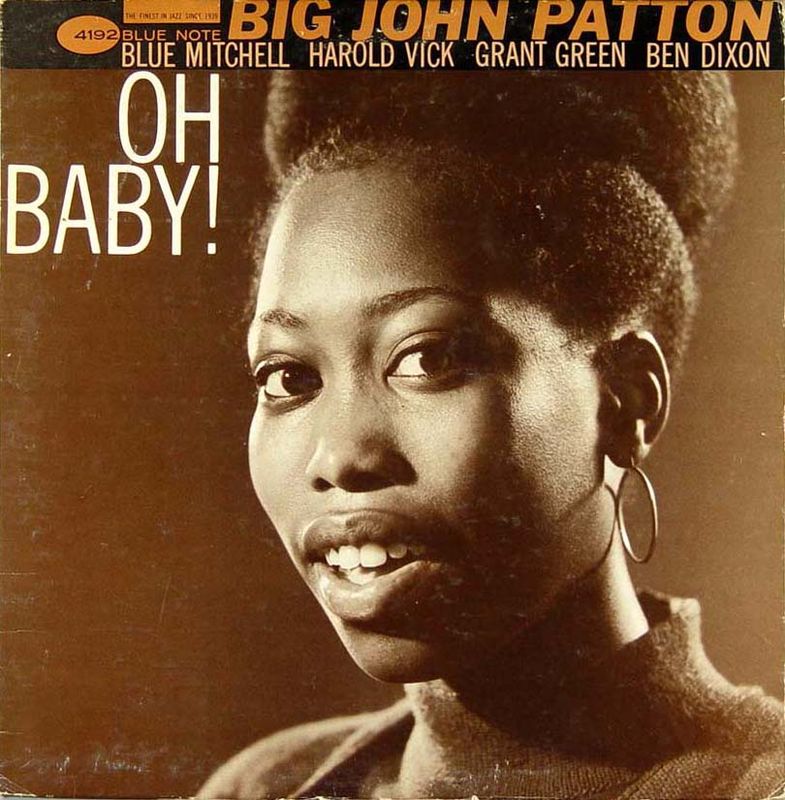
Big John Patton • Oh Baby


Review:
Patton's fourth album for Blue Note. Big John Patton with Grant Green on guitar and Harold Vick on tenor sax. With tunes like "Fat Judy" and "Good Juice," there is no worry about there being a groove. The addition of a trumpet (Blue Mitchell) means you have a horn section, and this tends to be a little much now and again. Although a little on the light side, thanks to Patton and Green, the groove does go down.
by Michael Erlewine
https://www.allmusic.com/album/oh-baby%21-mw0000766666

///////

Reseña:
El cuarto álbum de Patton para Blue Note. Big John Patton con Grant Green en la guitarra y Harold Vick en el saxo tenor. Con temas como "Fat Judy" y "Good Juice", no hay que preocuparse de que haya un ritmo. La adición de una trompeta (Blue Mitchell) significa que tienes una sección de trompetas, y esto tiende a ser un poco demasiado de vez en cuando. Aunque un poco en el lado de la luz, gracias a Patton y Green, el surco se reduce.
por Michael Erlewine
https://www.allmusic.com/album/oh-baby%21-mw0000766666


Friday, July 17, 2026

Don Wilkerson • Shoutin'


 Artist Biography
The archetypal big-toned Texas tenor of Don Wilkerson was unfortunately not documented on record as much as the quality of his music deserved; he was an excellent, earthy soul-jazz saxophonist capable of playing blues, ballads, bop, swing, and gospel-tinged R&B. Wilkerson was born in Moreauville, LA, in 1932, and first learned the alto sax; by his teens, he had moved to Houston and was accomplished enough on tenor to play with R&B outfits headed by Amos Milburn and Charles Brown. Wilkerson played on some of Ray Charles' earliest recording sessions in the mid-'50s, taking memorable solos on classics like "I Got a Woman," "This Little Girl of Mine," and "Hallelujah I Love Her So." He also led a band in Miami for a short time, and participated in numerous jam sessions with Cannonball Adderley. Adderley produced Wilkerson's first recording session, a 1960 date for Riverside titled The Texas Twister. After another short stint with Charles, he signed with Blue Note and recorded three stellar, soulful albums over 1962-1963: Elder Don, Preach, Brother!, and Shoutin', all of which featured Grant Green on guitar. Unfortunately, none was very successful, and Wilkerson didn't record any further as a leader. He remained in Houston for most of his life and passed away on July 18, 1986.
Steve Huey
https://www.allmusic.com/artist/don-wilkerson-mn0000161996/biography

///////

 Biografía del artista
El arquetípico tenor tejano de Don Wilkerson no estaba, por desgracia, tan documentado en los archivos como merecía la calidad de su música; era un excelente saxofonista de soul-jazz terrenal capaz de tocar blues, baladas, bop, swing y R&B con matices de gospel. Wilkerson nació en Moreauville, Los Ángeles, en 1932, y aprendió primero el saxo alto; en su adolescencia, se había mudado a Houston y tenía suficiente experiencia en el tenor como para tocar con equipos de R&B dirigidos por Amos Milburn y Charles Brown. Wilkerson tocó en algunas de las primeras sesiones de grabación de Ray Charles a mediados de los 50, haciendo memorables solos en clásicos como "I Got a Woman", "This Little Girl of Mine" y "Hallelujah I Love Her So". También dirigió una banda en Miami por un corto tiempo, y participó en numerosas jam sessions con Cannonball Adderley. Adderley produjo la primera sesión de grabación de Wilkerson, una fecha de 1960 para Riverside titulada "The Texas Twister". Después de otra corta temporada con Charles, firmó con Blue Note y grabó tres álbumes estelares y conmovedores durante 1962-1963: Elder Don, Preach, Brother!, y Shoutin', todos ellos con Grant Green a la guitarra. Por desgracia, ninguno tuvo mucho éxito, y Wilkerson no grabó más como líder. Permaneció en Houston la mayor parte de su vida y falleció el 18 de julio de 1986.
Steve Huey
https://www.allmusic.com/artist/don-wilkerson-mn0000161996/biography


Saturday, July 11, 2026

Friday, July 10, 2026

VA • Jazz Groove


Dr. Lonnie Smith, Bobbi Humphrey, Donald Byrd, Jimmy McGriff, Grant Green, Brother Jack McDuff, Jimmy Smith, Return To Forever, Gary Bartz, Pat Martino, Kenny Burrell, Roy Ayers, Lou Donaldson, Don Byron …