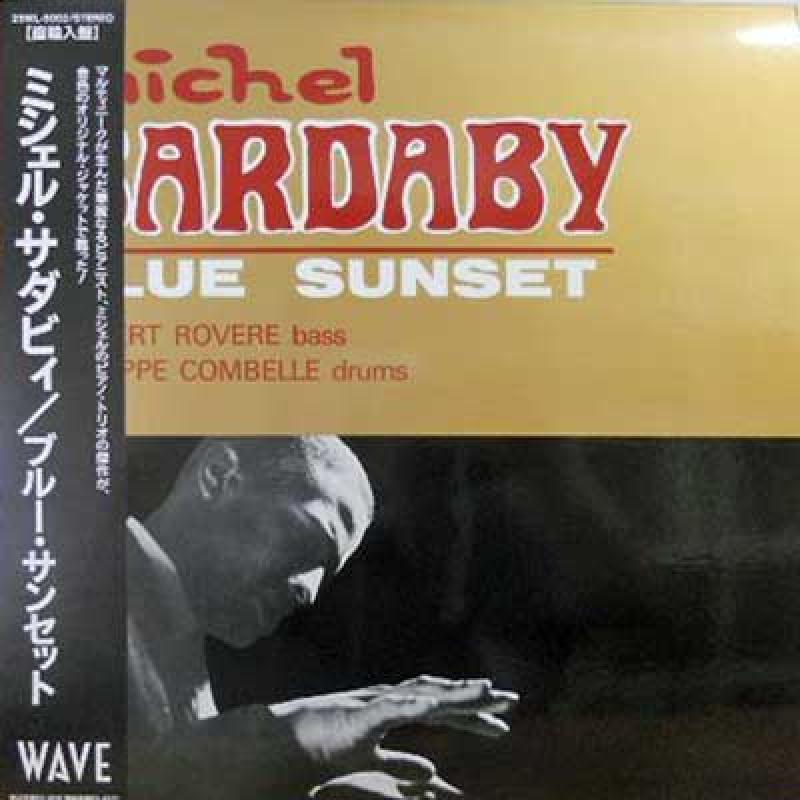
Michel Sardaby es un pianista nacido en 1935 en
Fort-de-France, Isla Martinica, un departamento de ultramar francés ubicado al
norte de Santa Lucía, en aguas del Mar del Caribe. El pequeño Michel aprendió a
tocar el piano a los 5 años en una brasseria que su padre regentaba en dicha
localidad y cuando solo contaba con 10 ya era un experto pianista dotado de una
habilidad y un lirismo que llamó la atención de la gente de su entorno.
Su carrera comienza en los años cincuenta coincidiendo con el momento en que
su familia se traslada a vivir a Paris. Estudia piano en la Ecole Boulle y para
cuando acaba con su formación se encuentra en una ciudad en pleno apogeo
jazzístico. Es el año 1956, momento en el cual la presencia de músicos
norteamericanos era muy frecuente en la capital francesa donde, además, existía
una amplísimo tejido musical en forma de locales nocturnos y clubs de jazz. Ese
generoso escenario da a Michel la oportunidad de tocar con algunos de los más
destacados miembros de la élite del jazz estadounidense como Dexter Gordon,
T-Bone Walker, Sonny Criss, Kenny Clarke, Ben Webster, JJ Johnson, Chet Baker,
Art Taylor, Jimmy Gourley y también con muchas de las figuras más destacadas
del jazz europeo como Guy Lafitte, Rene Thomas y Pierre Michelot.
Su formato favorito y el más habitual en la gran mayoría de sus grabaciones es el trio, siempre con unas secciones rítmicas muy poderosas y bien escogidas. En Night Cap, su debut en el año 1970 ya contó con Percy Heath y Connie Kay. Para Gail (1974) Sardaby se hizo con los servicios de Richard Davis y Billy Hart y en Going Places (1984) tocó junto a Rufus Reid y Smitty Marvin Smith. En Classics and Ballads (1996) le acompañarían Buster Williams y Ben Riley y en Intense Moment (1997), quizás uno de sus trabajos más inspirados de esa década, Reggie Johnson y John Betsch . Todo y así Sardaby se siente también cómodo trabajando con un quinteto como demostró en el precioso directo Straight On (1992), el larga duración que le reportó uno de sus mayores éxitos junto a Gail. Otros trabajos de Sardaby son Blue Sunset (1970), Night Blossom (1990), Karen (2003) y At Home Tribute to my Father (2004).
http://jazzfunkbossaok.blogspot.com.ar/2011/03/caribbean-duet-1984-de-michel-sardaby-y.html

Michel Sardaby
From Wikipedia, the free encyclopedia
Michel Sardaby (born 4 September 1935) is a French jazz pianist.
Born in Fort-de-France, Martinique, he moved to Paris, where in March 1967, he was one of the pianists, the others being Joe "Stride" Turner, Errol Parker, Claude Bolling, Stuart de Silva, and Aaron Bridgers, accompanied on some tracks by bassist John Lamb, among others, who recorded the 90-minute session known as Tape for Billy, dedicated to Billy Strayhorn, who was in hospital. Duke Ellington, also in Paris, personally supervised the recording, although he didn't actually perform on it himself, and wanted to use the proceeds from its sale to create a Billy Strayhorn scholarship in Paris, similar to the one at Juilliard in New York.
In 1970, he led a trio comprising Percy Heath and Connie Kay which appeared on his debut album, Night Cap.
A 1972 New York recording has him leading a line-up comprising Richard Davis, Billy Cobham and Ray Barretto (Sound Hills Records 1997).
His 1974 album, Gail, won the 1976 Prix Boris Vian.[3] For his 1989 album, Going Places, he was accompanied by Rufus Reid and Marvin "Smitty" Smith, and in 1993, he recorded with his quintet comprising Ralph Moore, Louis Smith, Peter Washington and Tony Reedus.

Review by Stephen Thomas Erlewine
Good Deal is a typically fine record from the Three Sounds, who were beginning to hit their stride when this session was recorded in May of 1959. Like most of their records, it's laidback -- even when the group works a swinging tempo, there's a sense of ease that keeps the mood friendly, relaxed and mellow. Balancing standards like "Satin Doll," "Soft Winds" and "That's All" with bop ("Robbin's Nest" ), calypso ("St. Thomas" ) and originals, the Three Sounds cover a lot of stylistic territory, putting their distinctive stamp on each song. It's very accessible, pleasant soul-jazz and mainstream hard bop, but Gene Harris' masterful technique means that Good Deal rewards close listening as well.