Friday, September 11, 2026

Alessio Menconi • Solo Ballad


Alessio Menconi was born in Genoa – Italy, he approached guitar when he was 10 as self-taught.
Considered a prodigy, he start in 1986 is professional career with best italian musicians.
In 1992 he won the award as “Best Soloist” in Gran Prix du Jazz”. In 1993 he participated in “Eddie Lang festival”contest (the most important competitions for guitarists in Italy), winning the first prize as best italian jazz guitarist.
He play in tour in Europe, Asia, Africa, North, South and Central America and recorded in over 50 cds with several musicians. In 1995 Paolo Conte call him for play in several world tour until 2004 and he recorded four cds.
In the same period Billy Cobham wanted him since to play with him in several concerts..In the same year, he have been selected in Paris to play with “ONJ” (orchestre national du jazz) In 2003, He partecipated as only italian to the cd “Voodoo crossing-a tribute to Jimi Hendrix” with Robben Ford, Steve Lukather, Hiram Bullock ,Larry Coryell and many others. Lately is leaded of his own trio and of his solo project with whom just made cds He is the jazz guitar teacher in the conservatory of music in Genoa and he teaches also in conservatorys of Livorno, Cuneo and La Spezia

Actually is one of much important and wanted guitar player in Italy and other countries in Europe.
-In 2009 he takes “Jazz lighthouse” Career award.
-In 2011 he was included (as only italian) in a cd compilations of world best jazz guitarist.
-In 2013 his cd “Sketches of Miles” was included in a compilations of best 100 international jazz records of the year.

He played in:
Italy, Switzerland, France, Brazil, Ecuador, Croatia, Russia, Palestine, Uk, Spain, Usa, Austria, Hungary, Guatemala, Belgium, Luxemburg, Holland, Poland, Nicaragua, El Salvador, Argentina, Uruguay,  Greece, Macedonia, India, China, Japan, Hong Kong,  Zambia, South Africa, Germany and Canada.

Some of the most important musicians he have been playing with: Paolo Conte, Billy Cobham, Jimmy Cobb, Jeff Berlin,  Toninho Horta, Adrienne West, Shawnn Monteiro, Marcio Montarroyos, Stefano Bollani, Danny Gottlieb, Enrico Rava, Tullio De Piscopo, Daniel Humair, Albert “Tootie” Heath, Red Holloway, Franco Cerri, Flavio Boltro, Gary Husband, Paolo Fresu, Carl Anderson, Franco Ambrosetti, Gary Bartz and many others…
https://www.alessiomenconi.com/alessio-menconi-biography-biografia/


////////


Alessio Menconi nació en Génova - Italia, se acercó a la guitarra cuando tenía 10 años como autodidacta.
Considerado un prodigio, comienza en 1986 su carrera profesional con los mejores músicos italianos.
En 1992 ganó el premio como "Mejor Solista" en el Gran Prix du Jazz". En 1993 participó en el "Eddie Lang festival" (el concurso más importante para guitarristas en Italia), ganando el primer premio como mejor guitarrista de jazz italiano.
Tocó en giras por Europa, Asia, África, América del Norte, del Sur y Central y grabó más de 50 CDs con varios músicos. En 1995 Paolo Conte le llamó para tocar en varias giras mundiales hasta 2004 y grabó cuatro cds.
En el mismo periodo, Billy Cobham le pidió que tocara con él en varios conciertos. En el mismo año, fue seleccionado en París para tocar con la "ONJ" (orchestre national du jazz). En 2003, participó como único italiano en el CD "Voodoo crossing-a tribute to Jimi Hendrix" con Robben Ford, Steve Lukather, Hiram Bullock, Larry Coryell y muchos otros. Últimamente dirige su propio trío y su proyecto en solitario con el que acaba de grabar un CD. Es profesor de guitarra de jazz en el conservatorio de música de Génova y enseña también en los conservatorios de Livorno, Cuneo y La Spezia.

Actualmente es uno de los guitarristas más importantes y solicitados en Italia y otros países de Europa.
-En 2009 recibe el premio a la trayectoria "Jazz lighthouse".
-En 2011 fue incluido (como único italiano) en un cd recopilatorio de los mejores guitarristas de jazz del mundo.
-En 2013 su cd "Sketches of Miles" fue incluido en una recopilación de los 100 mejores discos de jazz internacionales del año.

Ha tocado en:
Italia, Suiza, Francia, Brasil, Ecuador, Croacia, Rusia, Palestina, Uk, España, Usa, Austria, Hungría, Guatemala, Bélgica, Luxemburgo, Holanda, Polonia, Nicaragua, El Salvador, Argentina, Uruguay, Grecia, Macedonia, India, China, Japón, Hong Kong, Zambia, Sudáfrica, Alemania y Canadá.

Algunos de los músicos más importantes con los que ha tocado son Paolo Conte, Billy Cobham, Jimmy Cobb, Jeff Berlin, Toninho Horta, Adrienne West, Shawnn Monteiro, Marcio Montarroyos, Stefano Bollani, Danny Gottlieb, Enrico Rava, Tullio De Piscopo, Daniel Humair, Albert "Tootie" Heath, Red Holloway, Franco Cerri, Flavio Boltro, Gary Husband, Paolo Fresu, Carl Anderson, Franco Ambrosetti, Gary Bartz y muchos otros...

https://www.alessiomenconi.com/alessio-menconi-biography-biografia/


www.alessiomenconi.com ...


Colaborador / Contributor:  Pere


Thursday, September 10, 2026

Herbie Mann & Phil Woods • Beyond Brooklyn


Review by Scott Yanow
Flutist Herbie Mann's last record date brought him back to his roots, playing bop-oriented jazz. Actually, he co-led the session with an old friend, altoist Phil Woods, who he did not have many opportunities to play with after the 1950s. The results are delightful, with some bop standards, a few Latin tunes, and some basic originals comprising the program. The instrumentation changes from track to track, with two different rhythm sections being used and guest appearances from Gil Goldstein on accordion and trombonist Jay Ashby. Mann, who spontaneously recorded the closing "Time After Time" at a slightly later date when he was already seriously ill, sounds in prime form throughout this happy set. His final musical chapter is well worth savoring.

///////

Revisión por Scott Yanow
La última fecha de la grabación del flautista Herbie Mann lo devolvió a sus raíces, tocando jazz orientado a bop. En realidad, co-dirigió la sesión con un viejo amigo, el altoista Phil Woods, con quien no tuvo muchas oportunidades de jugar después de los años cincuenta. Los resultados son deliciosos, con algunos estándares de bop, algunas melodías latinas y algunos originales básicos que comprenden el programa. La instrumentación cambia de pista a pista, con dos secciones de ritmo diferentes que se utilizan y apariciones como invitado de Gil Goldstein en el acordeón y trombonista Jay Ashby. Mann, quien grabó espontáneamente el "Tiempo después del Tiempo" de cierre en una fecha un poco más tarde cuando ya estaba gravemente enfermo, suena en forma privilegiada a lo largo de este conjunto feliz. Su último capítulo musical merece la pena saborearlo.


Karsten Houmark Quartet • Four


During the years Danish guitarist/composer Karsten Houmark has played with a.o. Dave Liebman, Adam Nussbaum, Palle Mikkelborg, Bo Stief and The Danish Radio Big Band. The titles on this disc are all Houmark originals superbly performed by the leader in the company of famed countrymen Thomas Clausen, Lennart Ginman and Jonas Johansen. The opening track "Four" holds a threat and a cheerfulness with demonic undercurrents that let the music go on the loose in a disciplined way. Life is a challenge, the music wants it all, including lovely solos and a beautiful ending ...
https://www.storyvillerecords.com/products/four-stcd4197

///////


A lo largo de los años, el guitarrista y compositor danés Karsten Houmark ha tocado con, entre otros, Dave Liebman, Adam Nussbaum, Palle Mikkelborg, Bo Stief y la Danish Radio Big Band. Los títulos de este disco son todos originales de Houmark, magníficamente interpretados por el líder en compañía de sus afamados compatriotas Thomas Clausen, Lennart Ginman y Jonas Johansen. El tema que abre el disco, "Four", encierra una amenaza y una alegría con trasfondos demoníacos que dejan que la música vaya por libre de forma disciplinada. La vida es un reto, la música lo quiere todo, incluyendo encantadores solos y un hermoso final ...
https://www.storyvillerecords.com/products/four-stcd4197


www.storyvillerecords.com ....


Don Patterson • Why Not


Biograph:
Inspired to switch from piano to organ by Jimmy Smith, Don Patterson was one of the Hammond B-3's most bop-rooted players, able to play bluesy soul-jazz grooves or break out of the pocket for some nimble, sharply defined solo lines. Though he led numerous recording dates for Prestige and later Muse, he was best-known as Sonny Stitt's favorite organist, proving eminently compatible with the Parker-influenced saxophonist. Patterson was born in Columbus, OH, on July 22, 1936, and began studying piano as a child. His first major influence was Erroll Garner, and some of that flavor remained in his playing even after he heard Jimmy Smith in 1956 and changed instruments. Patterson made his professional debut on the organ in 1959, and played with a number of groups before Stitt discovered him. The association helped make Patterson's name, and he began recording for Prestige in 1964, often with a trio featuring guitarist Pat Martino and drummer Billy James. Patterson also played with numerous other soul-jazz sax greats over the course of the '60s, before settling in Gary, IN, toward the end of the decade. Drug addiction curtailed his recording activities somewhat, as only a few sporadic sessions for Muse appeared during the '70s. He did revive his career somewhat after moving to Philadelphia, but his health worsened, forcing him to take dialysis frequently; he died on February 10, 1988.

///////

Biografía:
Inspirado por Jimmy Smith para pasar del piano al órgano, Don Patterson fue uno de los intérpretes más arraigados del Hammond B-3, capaz de tocar ritmos de soul-jazz o de salir del bolsillo para obtener líneas solistas ágiles y bien definidas. Aunque dirigió numerosas grabaciones para Prestige y más tarde para Muse, era más conocido como el organista favorito de Sonny Stitt, demostrando ser eminentemente compatible con el saxofonista influenciado por Parker. Patterson nació en Columbus, OH, el 22 de julio de 1936, y comenzó a estudiar piano de niño. Su primera gran influencia fue Erroll Garner, y parte de ese sabor permaneció en su forma de tocar incluso después de escuchar a Jimmy Smith en 1956 y cambiar de instrumento. Patterson debutó profesionalmente en el órgano en 1959, y tocó con varios grupos antes de que Stitt lo descubriera. La asociación ayudó a hacer el nombre de Patterson, y comenzó a grabar para Prestige en 1964, a menudo con un trío que incluía al guitarrista Pat Martino y al baterista Billy James. Patterson también tocó con muchos otros grandes del saxo soul-jazz durante los años 60, antes de establecerse en Gary, IN, hacia el final de la década. La adicción a las drogas redujo un poco sus actividades de grabación, ya que sólo unas pocas sesiones esporádicas de Muse aparecieron durante los 70. Revivió un poco su carrera después de mudarse a Filadelfia, pero su salud empeoró, forzándolo a tomar diálisis frecuentemente; murió el 10 de febrero de 1988.
 

Eric Gale • Forecast


Biography:
Eric Gale was a top studio guitar man, and a first call session player on many dates from the '50's through the '90's. His reliable accompaniment can be appreciated on scores of records as a sideman, and through his own efforts as leader.

Born Sept. 20, 1938 in Brooklyn of Barbadian parents, Gale studied chemistry at Niagara University. He took up the double bass when he was 12 years old and also played tenor saxophone, trombone and tuba before he chose the guitar. The basis of his style was formed on the 50s and 60s R&B circuit.

He was with the Drifters, Jackie Wilson, the Flamingos and Maxine Brown, before playing in the 60s with King Curtis, Jimmy Smith, David “Fathead” Newman, Mongo Santamaria and Aretha Franklin.

In the early 70s Gale became the house guitarist with Creed Taylor's new CTI Records label. Gale’s association with Creed Taylor began when the celebrated producer was working at Verve Records. Curiously, their first sessions together, on August 18 and October 24, 1966, were part of a Johnny Hodges album titled “Blue Notes;” a very peculiar name for a Verve LP!

During the A&M/CTI years, Eric Gale was heard on albums by Herbie Mann, Soul Flutes, Richard Barbary, Quincy Jones, and J.J. Johnson & Kai Winding. When CTI became a completely independent label, he became the house guitarist for one of its subsidiary labels, Kudu Records, appearing on the first album issued under the Kudu logo: Johnny Hammond’s “Breakout.” Many other sessions followed and, on January 1973, Creed Taylor finally allowed him to record as a leader.His album “Forecast,” was well received and gained him broader recognition outside of just his sideman role.

Even after Eric Gale signed with Columbia, he continued to record as a sideman for Creed. Besides performing as rhythm guitarist on George Benson’s sessions which yielded the albums “Good King Bad,” “Benson & Farrell,” and “Pacific Fire,” he appeared as a featured soloist on Bob James’ last album for CTI, “BJ 4,” as well as on Lalo Schifrin’s two albums for CTI in 1976, “Black Widow,” and “Towering Toccata.”

For Kudu, Gale kept recording until 1977, on albums by Grover Washington, Jr. (Soul Box, Mister Magic, Feels So Good, A Secret Place), Esther Phillips (Capricorn Princess), Idris Muhammad (House of The Rising Sun, Turn This Mutha Out), and Hank Crawford (I Hear A Symphony, Hank Crawford’s Back, Tico Rico). Then, in September 1981, he was reunited again with Creed Taylor during the sessions for “Silk,” the second album by the all-star project Fuse One.

He was in 1975, a founder of the influential funk band Stuff along with artists including Steve Gadd, Cornell Dupree and Richard Tee. They played regularly at Mikell's in Manhattan with only minimal rehearsal, and released four popular albums for Warner Brothers.

In the early 90s he performed as a regular band member in several US television shows. Gale thought like a frontline musician and played like a saxophonist. Gale’s big popularity in Japan is mainly the result of many tours with the legendary Stuff group (which did a best-selling live album at Yubin-Chokin Hall in 1978), Sadao Watanabe (How’s Everything ” Live at Budokan in 1980) and Dave Grusin (Grusin and The NY-LA Dream Band, also at Budokan, in 1982).

Gale was presented by bassist/producer Ron Carter on a strictly jazz date in 1987, for the album “In A Jazz Tradition.” With tenor saxophonist Houston Person, organist Lonnie Smith, and drummer Grady Tate completing the quintet, the music is soul-jazz with a strong dose of bebop. Since Eric Gale rarely recorded in this type of freewheeling group, the swinging set was his definitive jazz recording.

He continued to tour Japan regularly, sometimes three times a year, until 1993.In 1994, soon after performing on Al Jarreau’s “Tenderness” album (fortunately documented on video), Gale passed away on May 25, 1994, in Baja, California.
https://musicians.allaboutjazz.com/ericgale

///////

Biografía:
Eric Gale fue un guitarrista de estudio de primera clase, y un músico de sesión de primera llamada en muchas fechas de los años 50 a los 90. Su confiable acompañamiento puede ser apreciado en decenas de discos como sideman, y a través de sus propios esfuerzos como líder.

Nacido el 20 de septiembre de 1938 en Brooklyn de padres barbadenses, Gale estudió química en la Universidad de Niágara. Comenzó a tocar el contrabajo a los 12 años y también tocó el saxo tenor, el trombón y la tuba antes de elegir la guitarra. La base de su estilo se formó en el circuito R&B de los años 50 y 60.

Estuvo con los Drifters, Jackie Wilson, los Flamingos y Maxine Brown, antes de tocar en los 60 con King Curtis, Jimmy Smith, David "Fathead" Newman, Mongo Santamaría y Aretha Franklin.

A principios de los 70 Gale se convirtió en el guitarrista de la casa con el nuevo sello de Creed Taylor, CTI Records. La asociación de Gale con Creed Taylor comenzó cuando el célebre productor trabajaba en Verve Records. Curiosamente, sus primeras sesiones juntos, el 18 de agosto y el 24 de octubre de 1966, formaron parte de un álbum de Johnny Hodges titulado "Blue Notes"; ¡un nombre muy peculiar para un LP de Verve!

Durante los años de A&M/CTI, Eric Gale fue escuchado en álbumes de Herbie Mann, Soul Flutes, Richard Barbary, Quincy Jones, y J.J. Johnson & Kai Winding. Cuando CTI se convirtió en un sello completamente independiente, se convirtió en el guitarrista de uno de sus sellos subsidiarios, Kudu Records, apareciendo en el primer álbum publicado bajo el logo de Kudu: "Breakout" de Johnny Hammond. Muchas otras sesiones siguieron y, en enero de 1973, Creed Taylor finalmente le permitió grabar como líder. Su álbum "Forecast", fue bien recibido y le ganó un reconocimiento más amplio, aparte de su papel de sideman.

Incluso después de que Eric Gale firmara con Columbia, continuó grabando como sideman para Creed. Además de actuar como guitarrista rítmico en las sesiones de George Benson que dieron lugar a los álbumes "Good King Bad", "Benson & Farrell" y "Pacific Fire", apareció como solista en el último álbum de Bob James para CTI, "BJ 4", así como en los dos álbumes de Lalo Schifrin para CTI en 1976, "Black Widow" y "Towering Toccata".

Para Kudu, Gale siguió grabando hasta 1977, en álbumes de Grover Washington, Jr. (Soul Box, Mister Magic, Feels So Good, A Secret Place), Esther Phillips (Capricorn Princess), Idris Muhammad (House of The Rising Sun, Turn This Mutha Out), y Hank Crawford (I Hear A Symphony, Hank Crawford's Back, Tico Rico). Luego, en septiembre de 1981, se reunió de nuevo con Creed Taylor durante las sesiones de "Silk", el segundo álbum del proyecto estrella Fuse One.

En 1975, fue uno de los fundadores de la influyente banda de funk Stuff junto con artistas como Steve Gadd, Cornell Dupree y Richard Tee. Tocaron regularmente en Mikell's en Manhattan con sólo un mínimo de ensayo, y lanzaron cuatro álbumes populares para Warner Brothers.

A principios de los 90 actuó como miembro regular de la banda en varios programas de televisión de EE.UU. Gale pensaba como un músico de primera línea y tocaba como saxofonista. La gran popularidad de Gale en Japón es principalmente el resultado de muchas giras con el legendario grupo Stuff (que hizo un álbum en vivo de gran venta en el Yubin-Chokin Hall en 1978), Sadao Watanabe (How's Everything " Live at Budokan en 1980) y Dave Grusin (Grusin and The NY-LA Dream Band, también en Budokan, en 1982).

Gale fue presentado por el bajista/productor Ron Carter en una fecha estrictamente de jazz en 1987, para el álbum "In A Jazz Tradition". Con el saxofonista tenor Houston Person, el organista Lonnie Smith y el baterista Grady Tate completando el quinteto, la música es soul-jazz con una fuerte dosis de bebop. Como Eric Gale rara vez grabó en este tipo de grupo libre, el swinging set fue su grabación definitiva de jazz.

Continuó haciendo giras por Japón con regularidad, a veces tres veces al año, hasta 1993. En 1994, poco después de actuar en el álbum "Tenderness" de Al Jarreau (afortunadamente documentado en vídeo), Gale falleció el 25 de mayo de 1994 en Baja California.
https://musicians.allaboutjazz.com/ericgale


Hazel Scott • Relaxed Piano Moods


Nacida en Trinidad y Tobago, a los 4 años su familia se traslada a Nueva York, reconocida como un niña prodigio musical, recibió una beca para estudiar piano clásico en la Juilliard School a lla edad de ocho años. De adolescente, tocó piano y la trompeta con su madre "Alma Long Scott" en una banda de jazz de chicas y esporádicamente con Lil Hardin Armstrong.
A lo largo de los años 1930 y 1940, Hazel incursionó principalmente en el jazz, el blues, boogie-woogie y música clásica en varios clubes nocturnos.
Fue una de las primeras mujeres afro-americanas en lograr papeles principales en películas y ya en los años '50 en en tener un programa de televisión. Lamentablemente fue cancelado por haber sido llamada a declarar ante el Comité de Actividades Antiamericanas, por su oposición al segregación racial y al macartismo. Emigró a Francia en donde alternó entre alguno papeles en films y giras europeas.
Regresó a EEUU en 1967, siguió tocando de vez en cuando en los clubes nocturnos, mientras que también aparece en la televisión hasta el año de su muerte, en 1981.


Del álbum de 1955, Relaxed Piano Moods. Charles Mingus y Max Roach cantaron Hazel Scott para grabar para su sello independiente, Debut, en 1954. Trajeron a Rudy Van Gelder para grabar este álbum con Scott en Nueva York en enero de 1955. Scott fue un prodigio. Fue a Juilliard a las ocho, recorrió el mundo tocando el piano clásico, tuvo su propio programa de radio en 1936 y apareció en Broadway en 1938. Fusionó el jazz y la música clásica y estuvo en cinco películas durante los años 40, incluyendo "Rhapsody in Blue". "Incluso tuvo su propio programa de televisión," The Hazel Scott Show "en 1950.

///////

Hazel Dorothy Scott (June 11, 1920 – October 2, 1981) was a Trinidadian-born jazz and classical pianist and singer; she also performed as herself in several films.
Born in Port of Spain, Hazel was taken at the age of four by her mother to New York City. Recognized early as a musical prodigy, Scott was given scholarships from the age of eight to study at the Juilliard School. She began performing in a jazz band in her teens and was performing on radio at age 16.
She was prominent as a jazz singer throughout the 1930s and 1940s. In 1950, she became the first person of color to have a TV show, The Hazel Scott Show,[1] featuring a variety of entertainment. Her career in America faltered after she testified before the House Un-American Activities Committee during the McCarthy era. Scott subsequently moved to Paris in the late 1950s and performed in France, not returning to the United States until 1967.  MORE ...
The disc presented here is Relaxed Piano Moods, with Charles Mingus and Max Roach.


From the 1955 album, Relaxed Piano Moods.   Charles Mingus and Max Roach singed Hazel Scott to record for their independent label, Debut, in 1954.  They brought on Rudy Van Gelder to record this album with Scott in New York in January 1955.  Scott was a prodigy.  She went to Juilliard at eight,  toured the world playing classical piano, had her own radio show in 1936 and appeared on Broadway in 1938.  She fused jazz and classical music and was in five films during the ’40s, including “Rhapsody in Blue.”  She even had her own television show, “The Hazel Scott Show” in 1950.


Steely Dan • Pretzel Logic


Review
by Stephen Thomas Erlewine  
Countdown to Ecstasy wasn't half the hit that Can't Buy a Thrill was, and Steely Dan responded by trimming the lengthy instrumental jams that were scattered across Countdown and concentrating on concise songs for Pretzel Logic. While the shorter songs usually indicate a tendency toward pop conventions, that's not the case with Pretzel Logic. Instead of relying on easy hooks, Walter Becker and Donald Fagen assembled their most complex and cynical set of songs to date. Dense with harmonics, countermelodies, and bop phrasing, Pretzel Logic is vibrant with unpredictable musical juxtapositions and snide, but very funny, wordplay. Listen to how the album's hit single, "Rikki Don't Lose That Number," opens with a syncopated piano line that evolves into a graceful pop melody, or how the title track winds from a blues to a jazzy chorus -- Becker and Fagen's craft has become seamless while remaining idiosyncratic and thrillingly accessible. Since the songs are now paramount, it makes sense that Pretzel Logic is less of a band-oriented album than Countdown to Ecstasy, yet it is the richest album in their catalog, one where the backhanded Dylan tribute "Barrytown" can sit comfortably next to the gorgeous "Any Major Dude Will Tell You." Steely Dan made more accomplished albums than Pretzel Logic, but they never made a better one.
https://www.allmusic.com/album/pretzel-logic-mw0000192000?1653921203004

///////

Reseña
por Stephen Thomas Erlewine  
Countdown to Ecstasy no fue ni la mitad del éxito que tuvo Can't Buy a Thrill, y Steely Dan respondió recortando las largas jams instrumentales que estaban dispersas en Countdown y concentrándose en canciones concisas para Pretzel Logic. Aunque las canciones más cortas suelen indicar una tendencia a las convenciones del pop, no es el caso de Pretzel Logic. En lugar de confiar en los ganchos fáciles, Walter Becker y Donald Fagen reunieron su conjunto de canciones más complejo y cínico hasta la fecha. Repleto de armónicos, contramelodías y fraseos bop, Pretzel Logic es vibrante con yuxtaposiciones musicales imprevisibles y juegos de palabras sarcásticos, pero muy divertidos. Escucha cómo el exitoso single del álbum, "Rikki Don't Lose That Number", se abre con una línea de piano sincopada que evoluciona hacia una elegante melodía pop, o cómo la canción que da título al disco pasa de ser un blues a un estribillo jazzístico: el arte de Becker y Fagen se ha convertido en algo perfecto sin dejar de ser idiosincrásico y emocionantemente accesible. Dado que las canciones son ahora lo más importante, tiene sentido que Pretzel Logic sea un álbum menos orientado a la banda que Countdown to Ecstasy, y sin embargo es el álbum más rico de su catálogo, en el que el homenaje a Dylan "Barrytown" puede sentarse cómodamente junto a la preciosa "Any Major Dude Will Tell You". Steely Dan hizo más álbumes que Pretzel Logic, pero nunca hizo uno mejor.
https://www.allmusic.com/album/pretzel-logic-mw0000192000?1653921203004

www.steelydan.com ...


Diango Reinhardt • Accords Parfaits


by Joseph Dinkins
Django Reinhardt has astounded and thrilled numerous generations of guitar players and jazz lovers with his amazing command of the guitar. January 24th, 1910 at Liberchies Belgium, Django was born into the open air, rambling lifestyle of his gypsy parents. At the age of eight, his mother's tribe settled near the belt of fortifications that surrounded the old Paris, near the Choisy gate. He never wore a suit or lived in a real house until he was twenty years old. These French Gypsies or Manouches were a world unto themselves, medieval in their beliefs, and distrustful of modern science. Django grew up in this world of contradictions, one foot in the bustling big city of Paris and the other in the age-old life of the nomadic gypsy. Though born into poverty Django had the soul of a nobleman and this natural elegance of bearing and attitude expressed itself in his music.

It was at an early age Django became attracted to music. When twelve years old he received his first instrument, a banjo/guitar that was given to him by a neighbor who had noticed his keen interest in music. He quickly learned to play, mimicking the fingerings of musicians he watched. He was soon astounding adults with his ability on the guitar, and before he was thirteen he began his musical career playing with popular accordionist Guerino at a dance hall on the Rue Monge. He went on to play with numerous other bands and musicians and made his first recordings with accordionist Jean Vaissade for the Ideal Company. Since Django could not read or write at the time "Jiango Renard" was how his name appeared on these records.

On November 2nd, 1928 an event took place that would forever change Django's life. At one o'clock in the morning the 18 year old Django returned from a night of playing music at a new club "La Java" to the caravan that was now the home of himself and his new wife. The caravan was filled with celluloid flowers his wife had made to sell at the market on the following day. Django upon hearing what he thought was a mouse among the flowers bent down with a candle to look. The wick from the candle fell into the highly flammable celluloid flowers and the caravan was almost instantly transformed into a raging inferno. Django wrapped himself in a blanket to shield him from the flames. Somehow he and his wife made it across the blazing room to safety outside, but his left hand, and his right side from knee to waist were badly burned.

Initially doctors wanted to amputate his leg but Django refused. He was moved to a nursing home where the care was so good his leg was saved. Django was bedridden for eighteen months. During this time he was given a guitar, and with great determination Django created a whole new fingering system built around the two fingers on his left hand that had full mobility. His fourth and fifth digits of the left hand were permanently curled towards the palm due to the tendons shrinking from the heat of the fire. He could use them on the first two strings of the guitar for chords and octaves but complete extension of these fingers was impossible. His soloing was all done with the index and middle fingers! Film clips of Django show his technique to be graceful and precise, almost defying belief.

Django was influenced by jazz recordings of Eddie Lang and Joe Venuti, Louis Armstrong and Duke Ellington. This new music found a place deep in Django's heart. It provided the perfect vehicle for his prodigious talent for improvisation. Django rarely if ever played a solo the same way twice. Numerous recordings prove this to be true. His creative genius was not only that of the master improviser, but also that of the composer, and he can be credited with numerous pieces with beautiful melodies and sophisticated, subtle harmonic structures. However, Django could not read or write musical notation and he was at the mercy of others that could to get his ideas down on paper.

1934 proved to be the most important year of his life. The Quintet of the Hot Club of France was born! As the fates would have it, the Quintet was formed by a chance meeting of Django and Stéphane Grappelli. A band of fourteen musicians including Django, Stéphane, Roger Chaput, and Louis Vola were commissioned to play at the Hotel Cambridge at teatime. During intermission Django would find a corner backstage and play his guitar. One day Stéphane joined in and both were so pleased with the exchange they went on to play together more and more frequently joined by Roger Chaput (guitar), Louis Vola (bass), and eventually Django's brother Joseph (guitar). A small record company Ultraphone recorded their first sides Dinah, Tiger Rag, Oh Lady be Good, and I Saw Stars. These first records caused a sensation! The Quintet went on to record hundreds of sides and had a following on both sides of the ocean.

1939 found the Quintet touring in England when the war broke out. Django returned to Paris while Stéphane remained in England. Django played and recorded throughout the war years substituting Hubert Rostaing's clarinet for Stephen's violin. He somehow avoided the fate of many of his kinfolk who went to their deaths in the Nazi concentration camps. After the war he was rejoined by Stéphane and they again played and recorded. He toured briefly with Duke Ellington in America and returned to Paris where he continued his career until 1951 when he retired to the small village of Samois sur Seine.

On May 16th 1953 Django suffered a massive brain hemorrhage and died, leaving behind his wife Sophie and son Babik. His music remains as vital and exciting today as it was when he lived, a legacy of joy to all future generations that rediscover the genius of the Belgian gypsy Django Reinhardt.
http://www.redhotjazz.com/django.html

///////

por Joseph Dinkins
Django Reinhardt ha asombrado y emocionado a numerosas generaciones de guitarristas y amantes del jazz con su increíble dominio de la guitarra. El 24 de enero de 1910 en Liberchies Belgium, Django nació al aire libre, en el estilo de vida de sus padres gitanos. A la edad de ocho años, la tribu de su madre se estableció cerca del cinturón de fortificaciones que rodeaba el viejo París, cerca de la puerta de Choisy. Nunca usó un traje ni vivió en una casa de verdad hasta que cumplió veinte años. Estos gitanos o manuches franceses eran un mundo en sí mismos, de creencias medievales y desconfiados de la ciencia moderna. Django creció en este mundo de contradicciones, un pie en la bulliciosa gran ciudad de París y el otro en la vida milenaria de los gitanos nómadas. Aunque nació en la pobreza, Django tenía el alma de un noble y esta elegancia natural de porte y actitud se expresaba en su música.

Fue a una edad temprana cuando Django se sintió atraído por la música. A los doce años recibió su primer instrumento, un banjo/guitarra que le regaló un vecino que había notado su gran interés por la música. Rápidamente aprendió a tocar, imitando las digitaciones de los músicos que veía. Pronto se convirtió en un adulto asombroso por su habilidad con la guitarra, y antes de cumplir los trece años comenzó su carrera musical tocando con el popular acordeonista Guerino en un salón de baile de la Rue Monge. A continuación, tocó con muchos otros grupos y músicos e hizo sus primeras grabaciones con el acordeonista Jean Vaissade para la Compañía Ideal. Como Django no sabía leer ni escribir en ese momento, "Jiango Renard" era la forma en que su nombre aparecía en estos registros.

El 2 de noviembre de 1928 tuvo lugar un evento que cambiaría para siempre la vida de Django. A la una de la mañana, Django, de 18 años, regresó de una noche de música en un nuevo club "La Java" a la caravana que ahora era su casa y la de su nueva esposa. La caravana estaba llena de flores de celuloide que su esposa había hecho para vender en el mercado al día siguiente. Django al escuchar lo que él pensaba que era un ratón entre las flores se inclinó con una vela para mirar. La mecha de la vela cayó en las flores de celuloide altamente inflamables y la caravana se transformó casi instantáneamente en un furioso infierno. Django se envolvió en una manta para protegerse de las llamas. De alguna manera, él y su esposa lograron cruzar la habitación ardiente para estar a salvo afuera, pero su mano izquierda y su lado derecho desde la rodilla hasta la cintura estaban gravemente quemados.

Inicialmente los médicos querían amputarle la pierna, pero Django se negó. Fue trasladado a un hogar de ancianos donde los cuidados fueron tan buenos que su pierna se salvó. Django estuvo en cama durante dieciocho meses. Durante este tiempo se le dio una guitarra, y con gran determinación Django creó todo un nuevo sistema de digitación construido alrededor de los dos dedos de su mano izquierda que tenían total movilidad. Su cuarto y quinto dígitos de la mano izquierda estaban permanentemente curvados hacia la palma debido a que los tendones se encogían por el calor del fuego. Podía usarlos en las dos primeras cuerdas de la guitarra para acordes y octavas, pero la extensión completa de estos dedos era imposible. Su solo fue todo hecho con los dedos índice y medio! Películas de Django muestran su técnica para ser grácil y preciso, casi increíble.

Django fue influenciado por las grabaciones de jazz de Eddie Lang y Joe Venuti, Louis Armstrong y Duke Ellington. Esta nueva música encontró un lugar en el corazón de Django. Proporcionó el vehículo perfecto para su prodigioso talento para la improvisación. Django rara vez o nunca tocó un solo de la misma manera dos veces. Numerosas grabaciones demuestran que esto es cierto. Su genio creativo no era sólo el del maestro improvisador, sino también el del compositor, y se le pueden atribuir numerosas piezas con bellas melodías y estructuras armónicas sofisticadas y sutiles. Sin embargo, Django no sabía leer ni escribir notación musical y estaba a merced de otros que podían poner sus ideas por escrito.

1934 fue el año más importante de su vida. El Quinteto del Club Caliente de Francia ha nacido! El Quinteto fue formado por un encuentro casual de Django y Stéphane Grappelli. Una banda de catorce músicos, entre ellos Django, Stéphane, Roger Chaput y Louis Vola, fueron comisionados para tocar en el Hotel Cambridge a la hora del té. Durante el intermedio, Django encontraba un rincón entre bastidores y tocaba la guitarra. Un día Stéphane se unió y ambos estaban tan contentos con el intercambio que tocaron juntos cada vez más a menudo con Roger Chaput (guitarra), Louis Vola (bajo), y finalmente el hermano de Django, Joseph (guitarra). Una pequeña compañía discográfica Ultraphone grabó sus primeros equipos Dinah, Tiger Rag, Oh Lady Be Good, y I Saw Stars. Estos primeros discos causaron sensación! El Quinteto grabó cientos de caras y tuvo seguidores a ambos lados del océano.

En 1939 encontró el Quinteto de gira por Inglaterra cuando estalló la guerra. Django regresó a París mientras que Stéphane permaneció en Inglaterra. Django tocó y grabó durante los años de la guerra sustituyendo el clarinete de Hubert Rostaing por el violín de Stephen. De alguna manera evitó el destino de muchos de sus parientes que murieron en los campos de concentración nazis. Después de la guerra, Stéphane se unió a él y volvieron a tocar y grabar. Viajó brevemente con Duke Ellington en América y regresó a París, donde continuó su carrera hasta 1951, cuando se retiró a la pequeña aldea de Samois sur Seine.

El 16 de mayo de 1953 Django sufrió una hemorragia cerebral masiva y murió, dejando atrás a su esposa Sophie y a su hijo Babik. Su música sigue siendo tan vital y emocionante hoy como lo fue cuando vivió, un legado de alegría para todas las generaciones futuras que redescubren el genio del gitano belga Django Reinhardt.
http://www.redhotjazz.com/django.html
Traducción realizada con el traductor www.DeepL.com/Translator


www.django-reinhardt.com ...


Ìxtahuele • Pagan Rites


Ìxtahuele is a Swedish exotica band. They come from Gothenburg; a damp, foggy harbor town that ever since its founding in the early 17th century has been an international melting pot, associated with exotic, faraway destinations ever since the days of the East India Trading Companies.
 
///////
 
Ìxtahuele es un grupo sueco de música exótica. Proceden de Gotemburgo, una ciudad portuaria húmeda y brumosa que, desde su fundación a principios del siglo XVII, ha sido un crisol internacional, asociado a destinos exóticos y lejanos desde los tiempos de las Compañías Comerciales de las Indias Orientales.


Big Boss Man • Humanize


Big Boss Man were formed in 1998 in London, England. Consisting of Nasser Bouzida a.k.a. “The Bongolian” on organs, percussion and vocals, Scott Milsom on bass guitar, Trevor Harding on electric guitar and Desmond Rogers on drums.
Complete info ...

///////


Traducción del inglés-Big Boss Man es una banda inglesa de funk y latin formada en 1998 en Londres, Inglaterra. Consiste en Nasser Bouzida, también conocido como "The Bongolian" en órganos, percusión y voz, Badger Burgess en bajo, Trevor Harding en guitarra eléctrica y Desmond Rogers en la batería.


Jack Wilson • The Two Sides Of Jack Wilson


Review by Jim Todd  
It isn't fair to limit Jack Wilson to two sides. The range of players with whom the pianist has performed: from Sammy Davis and Eartha Kitt to Jackie McLean and Roland Kirk, makes clear he is multi-dimensional. All that range is not demonstrated on this set, but -- despite its title -- this is not simply a program of uptempo tracks followed by an equal number of ballads.

This 1964 recording steers a boppish mainstream course through a variety of moods and tempi, covering pieces by Tadd Dameron, Bud Powell, pop standards and two good Wilson originals. Los-Angeles-based, Wilson is not readily identifiable as "West Coast." If anything, he suggests Red Garland (with a slightly more technically demonstrative approach) or the satisfying accessibility of Billy Taylor.

Twenty-eight at the time of this set, Wilson has a good piano trio date here in the classic style: focus on the piano, with stellar support from an immensely capable rhythm team. In this case it's bassist Leroy Vinnegar and drummer Philly Joe Jones -- both usefully forward and detailed in the mix. Vinnegar stays with a relentless walk on the up pieces and a steady throb on the ballads. Jones characteristically ranges from impressively delicate brushwork to boisterous over the top displays that might have shaken a lesser pianist.

Rewarding in is own right, there is also enough here to prompt interest in other sides of Wilson, such as his work in quartet settings with vibraphonist Roy Ayers, and with the horns of Jackie McLean, Lee Morgan and Garnett Brown.
https://www.allmusic.com/album/the-two-sides-of-jack-wilson-mw0000590448

///////


Reseña de Jim Todd  
No es justo limitar a Jack Wilson a dos lados. La gama de intérpretes con los que el pianista ha actuado: desde Sammy Davis y Eartha Kitt hasta Jackie McLean y Roland Kirk, deja en claro que es multidimensional. Todo ese rango no se demuestra en este set, pero, a pesar de su título, este no es simplemente un programa de pistas uptempo seguidas de un número igual de baladas.

Esta grabación de 1964 dirige un curso convencional boppish a través de una variedad de estados de ánimo y tempos, cubriendo piezas de Tadd Dameron, Bud Powell, estándares pop y dos buenos originales de Wilson. Wilson, con sede en Los Ángeles, no es fácilmente identificable como " Costa Oeste."En todo caso, sugiere Red Garland (con un enfoque un poco más demostrativo técnicamente) o la accesibilidad satisfactoria de Billy Taylor.

Veintiocho en el momento de este set, Wilson tiene una buena cita con el trío de piano aquí en el estilo clásico: concéntrese en el piano, con el apoyo estelar de un equipo de ritmo inmensamente capaz. En este caso es el bajista Leroy Vinnegar y el baterista Philly Joe Jones both ambos útilmente avanzados y detallados en la mezcla. Vinnegar se queda con un caminar implacable en las piezas ascendentes y un latido constante en las baladas. Jones se caracteriza por una pincelada impresionantemente delicada y exhibiciones ruidosas que podrían haber sacudido a un pianista menor.

Gratificante por derecho propio, también hay suficiente aquí para despertar el interés en otros aspectos de Wilson, como su trabajo en escenarios de cuarteto con el vibrafonista Roy Ayers y con los cuernos de Jackie McLean, Lee Morgan y Garnett Brown.
https://www.allmusic.com/album/the-two-sides-of-jack-wilson-mw0000590448


Cleveland Crochet • And All Sugar Bees


Este violinista tal vez el más conocido y famoso intérprete de cajun*, originario de Louisiana, que a principios de los 60 re-elaboró el género adicionandole una base ritmica de R'N'R y steel guitar, este disco si bien en general de estilo cajun, tiene puntos de contacto otros como el rockabilly, hillbily y zydeco .
Su éxito "Sugar Bee" fue el primer tema cajun en ingresar en el top 100 billboard.


* Cajun: música emblemática de Louisiana , tiene sus raíces en las baladas de los pueblos acadienses de Canadá . Estos sonidos han infuenciado en la música popular estadounidense durante muchas décadas, en especial la música country, de la que derivan otros sub-géneros como el folk, hillbilly, etc
http://en.wikipedia.org/wiki/Cajun_music

///////

Biography by Craig Harris
The fiddle player and bandleader of The Hillbilly Ramblers, a Cajun band whose 1961 song, "Sugar Bee," became the first Cajun song to reach the "Billboard Hot 100", Cleveland Crochet has never been financially compensated for the tune. "I didn't get anything out of it," Crochet said by telephone from his home in Iowa, Louisiana. "Eddie Schuler (owner of the Gold Band record label) stole the copyright." The son of a Cajun musician, Crochet built his first fiddle out of a cigar box at the age of twelve. Although he continued to earn his living as an iron worker, until his retirement in 1970, Crochet became a regular at Cajun dances throughout eastern Texas and southwestern Louisiana. Together with the Hillbilly Ramblers, which he formed in the 1950s, Crochet played every Saturday night at the Shamrock and Moulin Rouge dance clubs in Lake Charles, Louisiana. Since his retirement, Crochet has limited his playing to informal jam sessions.


Cecil Taylor • Conquistador!


Review
by Scott Yanow
For the second of Cecil Taylor's two Blue Note albums (following Unit Structures), the innovative pianist utilized a sextet comprised of trumpeter Bill Dixon, altoist Jimmy Lyons, both Henry Grimes and Alan Silva on basses and drummer Andrew Cyrille. During the two lengthy pieces, Lyons' passionate solos contrast with Dixon's quieter ruminations while the music in general is unremittingly intense. Both of the Taylor Blue Notes are quite historic and near-classics but, despite this important documentation, Cecil Taylor (other than a pair of Paris concerts) would not appear on records again until 1973.
https://www.allmusic.com/album/conquistador%21-mw0000199214

///////


Reseña
por Scott Yanow
Para el segundo de los dos álbumes de Cecil Taylor en Blue Note (tras Unit Structures), el innovador pianista utilizó un sexteto compuesto por el trompetista Bill Dixon, el contralto Jimmy Lyons, Henry Grimes y Alan Silva a los bajos y el batería Andrew Cyrille. Durante las dos largas piezas, los apasionados solos de Lyons contrastan con las reflexiones más tranquilas de Dixon, mientras que la música en general es incesantemente intensa. Las dos Blue Notes de Taylor son bastante históricas y casi clásicas pero, a pesar de esta importante documentación, Cecil Taylor (aparte de un par de conciertos en París) no volvería a aparecer en discos hasta 1973.
https://www.allmusic.com/album/conquistador%21-mw0000199214


George Freeman • New Improved Funk


Review by Jason Ankeny
The title says it all in three words, but New Improved Funk demands further elucidation. It's a fun house ride that veers sharply from funk to jazz to soul and back again, its scattershot approach nevertheless proves the best showcase George Freeman's guitar ever had. Recorded with two separate backing groups, New Improved Funk sprawls all over the stylistic map, and virtually the only common denominator from track to track is Freeman's guitar. He further confounds expectations with skronky solos and blissfully psychedelic interludes that go nowhere, but then the journey is more important than the destination here anyway. Somehow this mess still comes together, galvanized by Von Freeman's fiery tenor sax and its undeniably impressive gutbucket grooves. Everything that it's advertised to be.
https://www.allmusic.com/album/new-improved-funk-mw0000912284


Biography by Matt Collar
A key figure on the Chicago jazz scene, guitarist George Freeman is recognized for his warm tone, and funky, blues-influenced style of soul-jazz. He first gained wide visibility in the 1960s playing with organist Richard "Groove" Holmes. A member of the esteemed Freeman musical family, he has also worked extensively with his brother saxophonist Von Freeman, as well as an impressive array of performers, including Gene Ammons, Jimmy McGriff, Les McCann, and many more. As a leader, he issued a handful of soulful albums in the '70s like Franticdiagnosis with Charles Earland, and New Improved Funk, before returning to regular activity in his later years with equally funky jazz albums like 2001's At Long Last George, and 2017's 90 Going on Amazing.

Born in 1927 in Chicago, Freeman grew up in a musical family alongside his brothers -- tenor saxophonist Von Freeman and drummer Eldridge "Bruz" Freeman. He is also the uncle of saxophonist Chico Freeman. In his early professional years starting in the late '40s, Freeman recorded with the territory bands of Joe Morris and with Tom Archia. He also found work supporting touring musicians coming through town, including Lester Young and Charlie Parker, the latter of whom he also recorded with for the Savoy label (although uncredited until after the fact). In the mid-'50s, he began a close association with organist Richard "Groove" Holmes, appearing as a sideman and song contributor on a handful of World Pacific and Prestige label albums including 1961's Groove, 1962's Somethin' Special, and 1968's The Groover!.

After periods touring with Gene Ammons and Shirley Scott, Freeman largely eschewed road work outside of Chicago. His debut album, Birth Sign, was recorded in 1969 with help from organists Sonny Burke and Robert Pierce. Introducing George Freeman Live with Charlie Earland Sitting In arrived in 1971 on Giant Step. Earland was also on board for the guitarist's 1972 follow-up Franticdiagnosis. Also during the decade, he recorded three albums for Sonny Lester's Groove Merchant/LRC label, including 1972's New Improved Funk, 1974's Man & Woman, and 1977's All in the Game, which found him playing urbane soul-jazz.

Freeman's output slowed in the '80s, though he did work with Johnny Griffin, appearing on 1983's Bush Dance, and 1985's Fly, Mister, Fly, which also featured the Joe Morris Orchestra. Following a period of obscurity, he was brought back into the spotlight after singer Joanie Pallatto and pianist Bradley Parker-Sparrow signed him to their Southport/Orchard label, issuing Rebellion in 1995 and George Burns in 1999. At Long Last George, was released by Savant Records in 2001, followed by 2015's All in the Family with nephew Chico Freeman, and 2017's 90 Going on Amazing. In 2019, he issued George the Bomb! with special guest, veteran Chicago harmonica player Billy Branch.
https://www.allmusic.com/artist/george-freeman-mn0000643518/biography


/////////


Reseña de Jason Ankeny

El título lo dice todo en tres palabras, pero New Improved Funk exige más aclaraciones. Es un divertido paseo en casa que se desvía bruscamente del funk al jazz, al soul y viceversa; sin embargo, su enfoque disperso demuestra ser el mejor escaparate de la guitarra de George Freeman. Grabado con dos grupos de acompañamiento separados, New Improved Funk se extiende por todo el mapa estilístico, y prácticamente el único denominador común de una pista a otra es la guitarra de Freeman. Confunde aún más las expectativas con solos skronky e interludios felizmente psicodélicos que no van a ninguna parte, pero el viaje es más importante que el destino aquí de todos modos. De alguna manera, este lío todavía se junta, galvanizado por el ardiente saxo tenor de Von Freeman y sus innegables e impresionantes ritmos de gutbucket. Todo lo que se anuncia.
https://www.allmusic.com/album/new-improved-funk-mw0000912284


Biography by Matt Collar
A key figure on the Chicago jazz scene, guitarist George Freeman is recognized for his warm tone, and funky, blues-influenced style of soul-jazz. He first gained wide visibility in the 1960s playing with organist Richard "Groove" Holmes. A member of the esteemed Freeman musical family, he has also worked extensively with his brother saxophonist Von Freeman, as well as an impressive array of performers, including Gene Ammons, Jimmy McGriff, Les McCann, and many more. As a leader, he issued a handful of soulful albums in the '70s like Franticdiagnosis with Charles Earland, and New Improved Funk, before returning to regular activity in his later years with equally funky jazz albums like 2001's At Long Last George, and 2017's 90 Going on Amazing.

Born in 1927 in Chicago, Freeman grew up in a musical family alongside his brothers -- tenor saxophonist Von Freeman and drummer Eldridge "Bruz" Freeman. He is also the uncle of saxophonist Chico Freeman. In his early professional years starting in the late '40s, Freeman recorded with the territory bands of Joe Morris and with Tom Archia. He also found work supporting touring musicians coming through town, including Lester Young and Charlie Parker, the latter of whom he also recorded with for the Savoy label (although uncredited until after the fact). In the mid-'50s, he began a close association with organist Richard "Groove" Holmes, appearing as a sideman and song contributor on a handful of World Pacific and Prestige label albums including 1961's Groove, 1962's Somethin' Special, and 1968's The Groover!.

After periods touring with Gene Ammons and Shirley Scott, Freeman largely eschewed road work outside of Chicago. His debut album, Birth Sign, was recorded in 1969 with help from organists Sonny Burke and Robert Pierce. Introducing George Freeman Live with Charlie Earland Sitting In arrived in 1971 on Giant Step. Earland was also on board for the guitarist's 1972 follow-up Franticdiagnosis. Also during the decade, he recorded three albums for Sonny Lester's Groove Merchant/LRC label, including 1972's New Improved Funk, 1974's Man & Woman, and 1977's All in the Game, which found him playing urbane soul-jazz.

Freeman's output slowed in the '80s, though he did work with Johnny Griffin, appearing on 1983's Bush Dance, and 1985's Fly, Mister, Fly, which also featured the Joe Morris Orchestra. Following a period of obscurity, he was brought back into the spotlight after singer Joanie Pallatto and pianist Bradley Parker-Sparrow signed him to their Southport/Orchard label, issuing Rebellion in 1995 and George Burns in 1999. At Long Last George, was released by Savant Records in 2001, followed by 2015's All in the Family with nephew Chico Freeman, and 2017's 90 Going on Amazing. In 2019, he issued George the Bomb! with special guest, veteran Chicago harmonica player Billy Branch.
https://www.allmusic.com/artist/george-freeman-mn0000643518/biography


www.discogs.com/George-Freeman ...


Donald Byrd • Fancy Free


Review by Steve Huey

1969's Fancy Free marked the beginning of Donald Byrd's move away from hard bop, staking out fusion-flavored territory that -- at this juncture -- owed more to Miles Davis than the R&B-dominated jazz-funk Byrd would embrace several years down the road. Recorded just a few months after Davis' In a Silent Way, Fancy Free finds Byrd leading a large ensemble prominently featuring Frank Foster on tenor, Lew Tabackin or Jerry Dodgion on flute, and several percussionists. But the most important piece of the puzzle is Duke Pearson's electric piano, the first time Byrd utilized the instrument. Pearson dominates the texture of the group sound, which makes the entirety of the session seem farther outside the realm of funky hard bop than it actually is. However, that's not to say that Fancy Free isn't a clear break with Byrd's past -- especially the two Byrd originals that open the album. The title track -- which later became one of Byrd's more covered compositions -- contrasts Pearson's spacy musings with a busy, funky percussion groove, and there's a loose, open feel to the improvisations that breaks with hard bop conventions. The warm ballad "I Love the Girl" has a similarly airy feel, and at eight and a half minutes, is the shortest cut; clearly Byrd wanted an open framework for exploration. The other two numbers are more traditional hard bop compositions by former Byrd students, which -- although funky and full of improvisations -- can't help but feel more tethered than their predecessors. Still, even if it isn't his most adventurous fusion outing, Fancy Free is the rare Donald Byrd album that holds appeal for rare-groove fanatics and traditionalists alike.
https://www.allmusic.com/album/fancy-free-mw0000103324

///////

Reseña de Steve Huey
El Fancy Free de 1969 marcó el comienzo del alejamiento de Donald Byrd del hard bop, marcando un territorio con sabor a fusión que -en esta coyuntura- le debía más a Miles Davis de lo que el jazz-funk dominado por el R&B Byrd abrazaría varios años más tarde. Grabado sólo unos meses después de In a Silent Way de Davis, Fancy Free encuentra a Byrd liderando un gran grupo en el que destacan Frank Foster en el tenor, Lew Tabackin o Jerry Dodgion en la flauta, y varios percusionistas. Pero la pieza más importante del rompecabezas es el piano eléctrico de Duke Pearson, la primera vez que Byrd utilizó el instrumento. Pearson domina la textura del sonido del grupo, lo que hace que la totalidad de la sesión parezca más allá del reino del hard bop funky de lo que realmente es. Sin embargo, eso no quiere decir que Fancy Free no sea una ruptura clara con el pasado de Byrd, especialmente con los dos originales de Byrd que abren el álbum. El tema del título, que más tarde se convirtió en una de las composiciones más cubiertas de Byrd, contrasta las reflexiones espaciadas de Pearson con un ritmo de percusión ocupado y funky, y las improvisaciones que rompen con las convenciones del hard bop tienen un aire suelto y abierto. La cálida balada "I Love the Girl" tiene un aire similar, y a los ocho minutos y medio, es el atajo más corto; claramente Byrd quería un marco abierto para la exploración. Los otros dos números son composiciones de hard bop más tradicionales de antiguos alumnos de Byrd, que -aunque funky y lleno de improvisaciones- no pueden evitar sentirse más atados que sus predecesores. Aún así, aunque no sea su salida de fusión más aventurera, Fancy Free es el raro álbum de Donald Byrd que atrae tanto a los fanáticos de los ritmos raros como a los tradicionalistas.
https://www.allmusic.com/album/fancy-free-mw0000103324


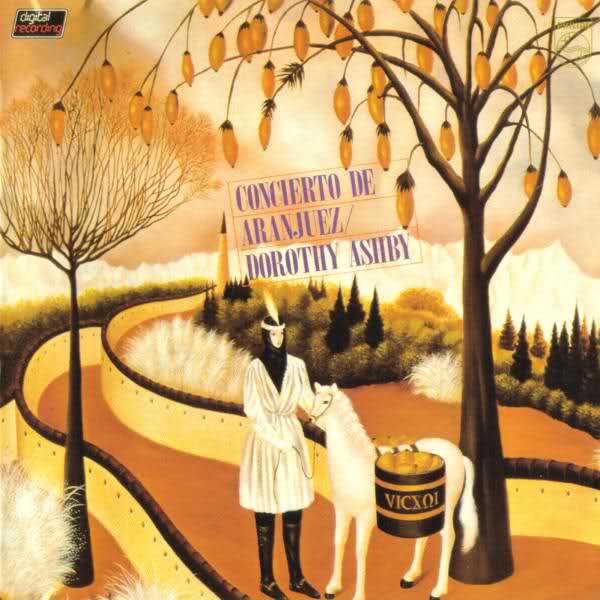
Dorothy Ashby • Concierto de Aranjuez


Biography by Scott Yanow
There have been very few jazz harpists in history and Dorothy Ashby was one of the greats. Somehow she was able to play credible bebop on her instrument. As a pianist she studied at Wayne State University, and in 1952 she switched to harp. Within two years, Ashby was gigging in jazz, and in 1956 she made her first recording as a leader. Between 1956-1970, she led ten albums for such labels as Savoy, Prestige, New Jazz, Argo, Jazzland, Atlantic, and Cadet, guested on many records, and was firmly established as a top studio and session player. She moved to the West Coast in the 1970s and was active up until her death.
 
/////
 
Biografía de Scott Yanow
Ha habido muy pocas arpistas de jazz en la historia y Dorothy Ashby fue una de las grandes. De alguna manera, fue capaz de tocar un bebop creíble con su instrumento. Como pianista, estudió en la Wayne State University, y en 1952 se pasó al arpa. En dos años, Ashby ya actuaba en el mundo del jazz, y en 1956 realizó su primera grabación como líder. Entre 1956 y 1970, dirigió diez álbumes para sellos como Savoy, Prestige, New Jazz, Argo, Jazzland, Atlantic y Cadet, participó como invitada en muchos discos y se estableció firmemente como una de las mejores intérpretes de estudio y de sesión. Se trasladó a la Costa Oeste en los años 70 y estuvo en activo hasta su muerte.


Muddy Waters-Howlin' Wolf • Muddy & The Wolf


Amos Milburn • Rare Masters


Artist Biography by Bill Dahl
Boogie piano master Amos Milburn was born in Houston, and he died there a short 52 years later. In between, he pounded out some of the most hellacious boogies of the postwar era, usually recording in Los Angeles for Aladdin Records and specializing in good-natured upbeat romps about booze and its effects (both positive and negative) that proved massive hits during the immediate pre-rock era.

The self-taught 88s ace made a name for himself as "the He-Man Martha Raye" around Houston before joining the Navy and seeing overseas battle action in World War II. When he came out of the service, Milburn played in various Lone Star niteries before meeting the woman whose efforts would catapult him to stardom.

Persistent manager Lola Anne Cullum reportedly barged into Aladdin boss Eddie Mesner's hospital room, toting a portable disc machine with Milburn's demo all cued up. The gambit worked -- Milburn signed with Aladdin in 1946. His first date included a thundering "Down the Road Apiece" that presaged the imminent rise of rock & roll. But Milburn was capable of subtler charms too, crooning mellow blues ballads in a Charles Brown-influenced style (the two would later become close friends, playing together frequently).

The first of Milburn's 19 Top Ten R&B smashes came in 1948 with his party classic "Chicken Shack Boogie," which paced the charts and anointed his band with a worthy name (the Aladdin Chickenshackers, natch). A velvet-smooth "Bewildered" displayed the cool after-hours side of Milburn's persona as it streaked up the charts later that year, but it was rollicking horn-driven material such as "Roomin' House Boogie" and "Sax Shack Boogie" that Milburn was renowned for. Milburn's rumbling 88s influenced a variety of famous artists, notably Fats Domino.

With the ascent of "Bad, Bad Whiskey" to the peak of the charts in 1950, Milburn embarked on a string of similarly boozy smashes: "Thinking and Drinking," "Let Me Go Home Whiskey," "One Scotch, One Bourbon, One Beer" (an inebriating round John Lee Hooker apparently enjoyed!), and "Good Good Whiskey" (his last hit in 1954). Alcoholism later brought the pianist down hard, giving these numbers a grimly ironic twist in retrospect. Milburn's national profile rated a series of appearances on the Willie Bryant-hosted mid-'50s TV program Showtime at the Apollo (where he gave out with a blistering "Down the Road Apiece").

Aladdin stuck with Milburn long after the hits ceased, dispatching him to New Orleans in 1956 to record with the vaunted studio crew at Cosimo's. There he recut "Chicken Shack Boogie" in a manner so torrid that it's impossible to believe it didn't hit (tenor saxist Lee Allen and drummer Charles "Hungry" Williams blast with atomic power as Milburn happily grunts along with his pounding boogie piano solo). In 1957, he left Aladdin for good.

Milburn contributed a fine offering to the R&B Yuletide canon in 1960 with his swinging "Christmas (Comes but Once a Year)" for King. Berry Gordy gave him a comeback forum in 1962, issuing an album on Motown predominated by remakes of his old hits that doesn't deserve its extreme rarity today (even Little Stevie Wonder pitched in on harp for the sessions).

Nothing could jump start the pianist's fading career by then, though. His health deteriorated to the point where a string of strokes limited his mobility and his left leg was eventually amputated. Not too long after, one of the greatest pioneers in the history of R&B was dead.

///////

Biografía del artista por Bill Dahl
El maestro de piano de Boogie, Amos Milburn, nació en Houston, y murió allí poco después de 52 años. En el medio, luchó contra algunos de los mocos más infelices de la era de la posguerra, generalmente grabando en Los Ángeles para Aladdin Records y especializándose en los optimistas optimistas sobre el alcohol y sus efectos (tanto positivos como negativos) que demostraron éxitos masivos durante el Época inmediata del pre-rock.

El as autodidacta de los años 88 se hizo famoso como "la Martha Raye de He-Man" en Houston antes de unirse a la Armada y ver la acción de batalla en el extranjero en la Segunda Guerra Mundial. Cuando salió del servicio, Milburn jugó en varias clases de Lone Star antes de conocer a la mujer cuyos esfuerzos lo catapultaría al estrellato.

La persistente gerente Lola Anne Cullum presuntamente irrumpió en la habitación del hospital del jefe de Aladdin, Eddie Mesner, portando una máquina de discos portátil con la demostración de Milburn. El gambito funcionó: Milburn firmó con Aladdin en 1946. Su primera cita incluyó un trueno "Down the Road Cada uno" que presagiaba el inminente aumento del rock & roll. Pero Milburn también era capaz de encantamientos más sutiles, cantando baladas de azules suaves en un estilo influenciado por Charles Brown (los dos se convertirían más tarde en amigos íntimos, tocando juntos con frecuencia).

El primero de los 19 mejores diez éxitos de R&B de Milburn se produjo en 1948 con su clásico "Chicken Shack Boogie", que marcó el ritmo de las listas y ungió a su banda con un nombre digno (los Aladdin Chickenshackers, natch). Un "Bewildered" de terciopelo liso mostró el lado fresco de la persona de Milburn después de las horas de juego, ya que se extendió en las listas de éxitos más tarde ese año, pero fue material de cuernos como "Roomin 'House Boogie" y "Sax Shack Boogie" que Milburn era famoso por. El ruido de los 88 de Milburn influyó en una variedad de artistas famosos, en particular Fats Domino.

Con el ascenso de "Bad, Bad Whiskey" a la cima de las listas en 1950, Milburn se embarcó en una serie de éxitos similares: "Pensando y bebiendo", "Let Me Go Home Whiskey", "One Scotch, One Bourbon, One Beer "(¡una borrachera que John Lee Hooker aparentemente disfrutó!), Y" Good Good Whiskey "(su último éxito en 1954). Más tarde, el alcoholismo hizo caer al pianista con fuerza, dando a estos números un retorcido giro irónico en retrospectiva. El perfil nacional de Milburn calificó una serie de apariciones en el programa de televisión Showtime at the Apollo de Willie Bryant a mediados de la década de los 50 (donde se rindió con un "Down the Road cada uno").

Aladdin se quedó con Milburn mucho después de que cesaran los éxitos, enviándolo a Nueva Orleans en 1956 para grabar con el equipo de estudio de Cosimo. Allí recortó "Chicken Shack Boogie" de una manera tan tórrida que es imposible creer que no lo hizo (el saxista tenor Lee Allen y el baterista Charles "Hungry" Williams explotan con poder atómico mientras Milburn gruñe alegremente junto con su fuerte sonido de piano ). En 1957, dejó a Aladdin para siempre.

Milburn contribuyó con una excelente oferta al canon de R&B Yuletide en 1960 con su swing "Christmas (Comes but Once a Year)" para King. Berry Gordy le dio un foro de regreso en 1962, publicando un álbum en Motown predominado por los remakes de sus viejos éxitos que no merecen su extrema rareza hoy (incluso Little Stevie Wonder se lanzó sobre el armónica para las sesiones).

Sin embargo, nada podría hacer saltar la carrera decreciente del pianista para entonces. Su salud se deterioró hasta el punto en que una serie de golpes limitó su movilidad y su pierna izquierda finalmente fue amputada. No mucho después, uno de los más grandes pioneros en la historia de R&B estaba muerto.


Delvon Lamarr Organ Trio • I Told You So


Delvon Lamarr Organ Trio—or as it is sometimes referred to, DLO3—specialize in the lost art of “feel good music.” The ingredients of this intoxicating cocktail include a big helping of the 1960s organ jazz stylings of Jimmy Smith and Baby Face Willette; a pinch of the snappy soul strut of Booker T.  The M.G.’s and The Meters; and sprinkles Motown, Stax Records, blues, and cosmic Jimi Hendrix-style guitar. It’s a soul-jazz concoction that goes straight to your heart and head makes your body break out in a sweat.

The band features organist Delvon Lamarr, a self-taught virtuosic musician, with perfect pitch who taught himself jazz and has effortlessly been able to play a multitude of instruments. On guitar is the dynamo Jimmy James who eases through Steve Cropper-style chanking guitar, volcanic acid-rock freak-out lead playing, and slinky Grant Green style jazz. From Reno, Nevada is drummer Dan Weiss (also of the powerhouse soul and funk collective The Sextones). Dan’s smoldering pocket-groove drumming locks in the trio’s explosive chemistry.

Founded by Lamarr’s wife and manager Amy Novo, the trio started from humble beginnings in 2015, but since then has released two Billboard charting albums and toured the world to sold out venues. The trio returns now with their second studio album, I Told You So, with even heavier grooves and more confidence. It may have been several years since their most recent studio effort, but they haven’t missed a beat.
https://www.coleminerecords.com/products/clmn12028

///////


Delvon Lamarr Organ Trio -o, como se le conoce a veces, DLO3- se especializa en el arte perdido de la "música para sentirse bien". Los ingredientes de este embriagador cóctel incluyen una gran ración de los estilos de jazz de órgano de los años 60 de Jimmy Smith y Baby Face Willette; una pizca del ágil puntal del soul de Booker T. The M.G.'s y The Meters; y unas pizcas de Motown, Stax Records, blues y guitarra cósmica al estilo de Jimi Hendrix. Es un brebaje de soul-jazz que va directo al corazón y a la cabeza y hace que el cuerpo empiece a sudar.

La banda cuenta con el organista Delvon Lamarr, un músico virtuoso autodidacta, con una afinación perfecta, que aprendió por sí mismo a tocar el jazz y que, sin esfuerzo, es capaz de tocar una multitud de instrumentos. A la guitarra está el dínamo Jimmy James, que se desenvuelve con soltura entre el chanking de la guitarra al estilo de Steve Cropper, la interpretación volcánica de freak-rock y el jazz al estilo de Grant Green. De Reno, Nevada, es el baterista Dan Weiss (también del poderoso colectivo de soul y funk The Sextones). El ardiente ritmo de la batería de Dan se une a la explosiva química del trío.

Fundado por la esposa y mánager de Lamarr, Amy Novo, el trío comenzó desde unos humildes comienzos en 2015, pero desde entonces ha publicado dos álbumes que figuran en las listas de Billboard y ha realizado giras por todo el mundo con las entradas agotadas. El trío regresa ahora con su segundo álbum de estudio, I Told You So, con surcos aún más pesados y más confianza. Puede que hayan pasado varios años desde su esfuerzo de estudio más reciente, pero no han perdido el ritmo.
https://www.coleminerecords.com/products/clmn12028


I Told You So ...