


Biography by Ron Wynn
Pianist Norman Simmons is a superior arranger and good accompanist most famous for providing the hit arrangement of "Wade in the Water" for the Ramsey Lewis group. Simmons worked in the '50s and '60s for several vocalists, among them Dakota Staton, Ernestine Anderson, and Carmen McRae. He worked in 1960 with the Johnny Griffin-Eddie "Lockjaw" Davis group. In 1979 Simmons became a regular pianist for Joe Williams, performing with the acclaimed vocalist through the 1990s. Following Williams' death in 1999, Simmons led his first session in quite some time, resulting in the 2000 Savant release Art of Norman Simmons. In 2002 he issued Synthesis, his second effort for Savant. In Private, a Savant date also featuring bassist Lisle Atkinson and drummer Paul Humphrey, arrived in 2004.
https://www.allmusic.com/artist/norman-simmons-mn0000884894/biography
///////
Biografía de Ron Wynn
El pianista Norman Simmons es un excelente arreglista y buen acompañante, famoso por haber realizado el exitoso arreglo de "Wade in the Water" para el grupo de Ramsey Lewis. Simmons trabajó en los años 50 y 60 para varios vocalistas, entre ellos Dakota Staton, Ernestine Anderson y Carmen McRae. Trabajó en 1960 con el grupo de Johnny Griffin-Eddie "Lockjaw" Davis. En 1979 Simmons se convirtió en un pianista habitual de Joe Williams, actuando con el aclamado vocalista hasta la década de 1990. Tras la muerte de Williams en 1999, Simmons dirigió su primera sesión en bastante tiempo, lo que dio lugar al lanzamiento de Savant Art of Norman Simmons en el año 2000. En 2002 publicó "Synthesis", su segundo trabajo para Savant. En Private, una cita de Savant también con la bajista Lisle Atkinson y el baterista Paul Humphrey, llegó en 2004.
https://www.allmusic.com/artist/norman-simmons-mn0000884894/biography


Biography
by Scott Yanow
Along with Julius Watkins, John Graas was one of the first jazz French horn soloists. After playing some classical music, in 1942 he became a member of the Claude Thornhill Orchestra. A period in the Army (1942-1945) and stints with the Cleveland Orchestra and Tex Beneke's big band preceded Graas' first high-profile gig, playing with Stan Kenton's Innovations Orchestra (1950-1951). After leaving Kenton, he settled in Los Angeles and worked as a studio musician in addition to being used on West Coast jazz dates by Shorty Rogers and others. Graas, an excellent composer who sought to combine together jazz and classical music (predating the third stream movement), recorded fairly regularly as a leader during 1953-1958, sessions that (with the exception of one V.S.O.P. release) have not been reissued. He died of a heart attack at the age of 45.
https://www.allmusic.com/artist/john-graas-mn0000219637/biography
///////
Biografía
por Scott Yanow
Junto con Julius Watkins, John Graas fue uno de los primeros solistas de trompa de jazz. Tras tocar algo de música clásica, en 1942 pasó a formar parte de la Orquesta de Claude Thornhill. Tras un periodo en el ejército (1942-1945) y una serie de colaboraciones con la Orquesta de Cleveland y la big band de Tex Beneke, Graas tuvo su primera actuación destacada en la Innovations Orchestra de Stan Kenton (1950-1951). Tras dejar a Kenton, se instaló en Los Ángeles y trabajó como músico de estudio, además de ser utilizado en fechas de jazz de la Costa Oeste por Shorty Rogers y otros. Graas, un excelente compositor que buscaba combinar el jazz y la música clásica (antes del movimiento de la tercera corriente), grabó con bastante regularidad como líder durante 1953-1958, sesiones que (con la excepción de un lanzamiento de V.S.O.P.) no han sido reeditadas. Murió de un ataque al corazón a la edad de 45 años.
https://www.allmusic.com/artist/john-graas-mn0000219637/biography

Review by Ken Dryden
This Lonehill Jazz CD compiles the contents of two Decca LPs, Jazz Studio, Vol. 3 and Jazz Studio, Vol. 4. The first sessions consist of several different small groups led by French horn player John Graas, highlighted by the three tracks featuring his good friend Gerry Mulligan on baritone sax. In fact, Mulligan's influence on Graas' writing style is apparent, creating tight ensembles that nevertheless consistently swing, with the leader's well-named "Mulliganesque," a brisk cooker, being especially noteworthy. Among the other musicians are pianist Marty Paich, bassist Red Mitchell, and trumpeter Don Fagerquist. Other tracks feature tenor saxophonist Zoot Sims, trumpeter Conte Candoli, alto saxophonist Charlie Mariano, and either Paich or André Previn, with Jimmy Giuffre on baritone sax. Graas' "Rogersesque," which salutes Shorty Rogers (another prominent influence upon the leader), showcases Mariano, Candoli, Paich, and guitarist Howard Roberts to good effect. The last 12 selections are from Jazz Studio, Vol. 4, with all of the compositions contributed by trumpeter and flügelhornist Jack Millman, though the personnel and arrangers vary widely from one song to the next. Like Graas' works, Millman's have stood the test of time, even if they never became a part of regularly played jazz repertoire. The music is still very fresh decades after it was recorded, with some of the cream of the crop of West Coast musicians present, including Gerry Wiggins, Curtis Counce, Chico Hamilton, Bob Gordon, Buddy Collette, Jack Montrose, and Russ Freeman, among others. Perhaps one of the biggest surprises of the date is the Latin-infused "Cathy Goes South," arranged by Johnny Mandel with Maynard Ferguson playing claves.
https://www.allmusic.com/album/jazz-studio-vols-3-4-complete-sessions-mw0000191145
///////
Reseña de Ken Dryden
Este CD de Lonehill Jazz recopila el contenido de dos LP de Decca: Jazz Studio, Vol. 3 y Jazz Studio, Vol. 4. Las primeras sesiones consisten en varios grupos pequeños liderados por el trompista John Graas, destacando los tres temas en los que su buen amigo Gerry Mulligan toca el saxo barítono. De hecho, la influencia de Mulligan en el estilo compositivo de Graas es evidente, creando conjuntos sólidos que, sin embargo, mantienen un swing consistente, destacando especialmente el acertado "Mulliganesque" del líder, un estilo de cocción enérgico. Entre los músicos que lo acompañan se encuentran el pianista Marty Paich, el bajista Red Mitchell y el trompetista Don Fagerquist. Otros temas incluyen al saxofonista tenor Zoot Sims, al trompetista Conte Candoli, al saxofonista alto Charlie Mariano y a Paich o André Previn, con Jimmy Giuffre al saxo barítono. "Rogersesque" de Graas, que rinde homenaje a Shorty Rogers (otra influencia destacada del líder), presenta con gran éxito a Mariano, Candoli, Paich y al guitarrista Howard Roberts. Las últimas 12 selecciones pertenecen a Jazz Studio, Vol. 4, con todas las composiciones aportadas por el trompetista y fliscornista Jack Millman, aunque el personal y los arreglistas varían considerablemente de una canción a otra. Al igual que las obras de Graas, las de Millman han resistido el paso del tiempo, incluso si nunca llegaron a formar parte del repertorio de jazz habitual. La música sigue muy vigente décadas después de su grabación, con la presencia de algunos de los músicos más destacados de la Costa Oeste, como Gerry Wiggins, Curtis Counce, Chico Hamilton, Bob Gordon, Buddy Collette, Jack Montrose y Russ Freeman, entre otros. Quizás una de las mayores sorpresas de la cita sea "Cathy Goes South", con influencias latinas, arreglada por Johnny Mandel con Maynard Ferguson tocando las claves. https://www.allmusic.com/album/jazz-studio-vols-3-4-sesiones-completas-mw0000191145


LifeTimes es un álbum de Diana Hubbard, lanzado en 1979 por Waterhouse Records 8. Además de Diana Hubbard, el álbum incluye contribuciones musicales de Chick Corea , Stanley Clarke , John Goodsall , Michael Boddicker y Patrick Moraz.
Diana Hubbard nació en Londres, hija de L. Ron Hubbard, el líder de la Cienciología, un nuevo movimiento religioso a menudo caracterizado como una secta. Nació como Diana Meredith DeWolf Hubbard el 24 de septiembre de 1952, hija de L. Ron Hubbard y su tercera esposa, Mary Sue Hubbard, su primera hija juntos. Compuso sonatas para piano a los 6 años. En sus primeros años de adolescencia, vivió en la sede de la Cienciología en el Reino Unido, Saint Hill Manor, junto con su hermano, Quentin Hubbard. Asistió a la Real Academia, donde tomó cursos de ballet y música. A los 15 años, dejó la Real Academia para servir dentro de la organización de la Cienciología y ayudar a su padre. Durante la mayor parte de su adolescencia, vivió en el yate de su padre, ubicado en el Mediterráneo. A los 16 años, ascendió al rango de teniente comandante dentro de la Sea Org, una organización gerencial y paramilitar de Scientology. Se convirtió en portavoz de la Iglesia de Scientology en los Estados Unidos en 1969. En 1979, Hubbard vivió con su esposo, el audiófilo Jonathan Horwich, y su hija Roanne, en Clearwater, Florida. En 1980, se desempeñó como ejecutiva dentro de la Iglesia de Scientology, y a partir de 2001 mantuvo una posición de liderazgo dentro de la organización.
Producción
El álbum fue producido por un sello independiente, Waterhouse Records 8. Waterhouse Records tenía su sede en Minnesota, y en el momento del lanzamiento del álbum estaba disponible por correo desde Minneapolis. Incluye actuaciones de los músicos Chick Corea y Stanley Clarke, ambos cienciólogos. Otros colaboradores notables incluyen a Patrick Moraz y Denny Seiwell. El artista musical Jimmie Spheeris persuadió a Hubbard para grabar el álbum y también sirvió como su productor ejecutivo. Las partes de cuerda fueron escritas por David Campbell.
Hubbard escribió toda la música del álbum, con colaboradores que utilizan instrumentos como sintetizadores, bajo, instrumentos de viento madera, cuerdas y un bouzouki. Toca el piano en el álbum. La mayoría de las piezas del álbum tienen una duración de tres a cuatro minutos. Wayne Isaak fue el publicista de Waterhouse Records para el álbum. En la publicidad del álbum, el marketing comparó el estilo de escritura musical de Hubbard con el de Erik Satie. La portada del álbum se comercializó con una pegatina en el envoltorio exterior que anunciaba el hecho de que estaba respaldado por Stanley Clarke.
Recepción
El álbum tuvo una mala recepción por parte de la crítica. En una reseña para The Harvard Crimson, Thomas M. Levenson escribió: «La música de Hubbard no ofende al oyente. No es aborrecible. Simplemente es extraordinariamente aburrida. Como pianista y compositor, Hubbard suena como un Bruckner reescrito para la consulta del dentista». Don Lewis reseñó el álbum para The Milwaukee Journal y comentó: «Es música apacible y atractiva, aunque, después de un tiempo, parece que muchas de las composiciones de Hubbard son muestras de la misma tela».
Billboard destacó el álbum en su columna "Los mejores álbumes de Billboard", en la sección "Primera vez". Billboard lo describió como "un LP ligero de clásicos pop" y señaló: "La música es principalmente suave y bonita, con influencias étnicas". El Sarasota Herald-Tribune lo describió como "un instrumental con una cualidad medieval en el sonido envolvente y a veces misterioso de cuerdas, piano y sección rítmica. El fraseo repetitivo y la melodía fluida son tonos y matices sintetizados". El St. Petersburg Times describió las composiciones para piano de Hubbard como "melodías frescas y cautivadoras".
"Rose Coloured Lights" se publicó como sencillo en Waterhouse 15003 y alcanzó el puesto número 40 en la lista Billboard Adult Contemporary en 1980.
Wiki
///////
LifeTimes is an album by Diana Hubbard, released in 1979 by Waterhouse Records. In addition to Diana Hubbard, the album features musical contributions from Chick Corea, Stanley Clarke, John Goodsall, Michael Boddicker, and Patrick Moraz.
Diana Hubbard was born in London, the daughter of L. Ron Hubbard, the leader of Scientology, a new religious movement often characterized as a cult. She was born Diana Meredith DeWolf Hubbard on September 24, 1952, to L. Ron Hubbard and his third wife, Mary Sue Hubbard, their first child together. She composed piano sonatas at age 6. In her early teens, she lived at Scientology's UK headquarters, Saint Hill Manor, with her brother, Quentin Hubbard. She attended the Royal Academy, where she took ballet and music classes. At 15, she left the Royal Academy to serve within the Scientology organization and assist her father. For most of her teenage years, she lived on her father's yacht in the Mediterranean. At 16, she rose to the rank of lieutenant commander within the Sea Org, a Scientology managerial and paramilitary organization. She became a spokesperson for the Church of Scientology in the United States in 1969. In 1979, Hubbard lived with her husband, audiophile Jonathan Horwich, and their daughter Roanne in Clearwater, Florida. In 1980, she served as an executive within the Church of Scientology, and from 2001 onward, she held a leadership position within the organization.
Production
The album was produced by an independent label, Waterhouse Records. Waterhouse Records was based in Minnesota, and at the time of the album's release, it was available by mail from Minneapolis. It features performances by musicians Chick Corea and Stanley Clarke, both Scientologists. Other notable collaborators include Patrick Moraz and Denny Seiwell. Musical artist Jimmie Spheeris persuaded Hubbard to record the album and also served as its executive producer. The string parts were written by David Campbell.
Hubbard wrote all of the music for the album, with collaborators using instruments such as synthesizers, bass, woodwinds, strings, and a bouzouki. He plays piano on the album. Most of the album's pieces are three to four minutes long. Wayne Isaak was Waterhouse Records' publicist for the album. In publicity for the album, marketing compared Hubbard's music-writing style to that of Erik Satie. The album cover was marketed with a sticker on the outer packaging announcing that it was endorsed by Stanley Clarke.
Reception
The album was poorly received by critics. In a review for The Harvard Crimson, Thomas M. Levenson wrote, "Hubbard's music does not offend the listener. It is not abhorrent. It's simply extraordinarily dull. As a pianist and composer, Hubbard sounds like a Bruckner rewritten for the dentist's office." Don Lewis reviewed the album for The Milwaukee Journal and commented, "It's gentle, appealing music, although, after a while, it seems that many of Hubbard's compositions are swatches of the same cloth."
Billboard highlighted the album in its "Billboard's Top Albums" column, in the "First Time Out" section. Billboard described it as "a light LP of pop classics" and noted, "The music is mostly soft and pretty, with ethnic influences." The Sarasota Herald-Tribune described it as "an instrumental with a medieval quality in the sweeping and sometimes eerie sound of strings, piano, and rhythm section. The repetitive phrasing and flowing melody are synthesized tones and nuances." The St. Petersburg Times described Hubbard's piano compositions as "fresh, captivating melodies."
"Rose Colored Lights" was released as a single on Waterhouse 15003 and reached number 40 on the Billboard Adult Contemporary chart in 1980.
Wiki

Nota por egroj: El maestro ha demostrato su genialidad tocando todo el álbum como zurdo.
:D
///////
Note by egroj: The maestro has demonstrated his genius by playing the entire album left-handed.
:D


Biography by Scott Yanow
One of jazz music's great comedians (his spontaneous monologues are often hilarious), Marty Grosz is a brilliant acoustic guitarist whose chordal solos bring back the sound of Carl Kress and Dick McDonough of the 1930s, while his vocals are very much in the Fats Waller tradition. It took Grosz a long time to get some visibility. He grew up in New York, attended Columbia University, and in 1951 led a Dixieland band with Dick Wellstood that was unrecorded. Based in Chicago, Grosz did record with Dave Remington, Art Hodes, and Albert Nicholas in the 1950s; led sessions of his own in 1957 and 1959 for Riverside and Audio Fidelity; and tried his best to coax Jabbo Smith out of retirement (some of their rehearsals were later released on LP), but was pretty obscure until he joined Soprano Summit (1975-1979). After that association ended, Grosz became a busy freelancer on the classic jazz scene, playing with Dick Sudhalter, Joe Muryani, and Dick Wellstood in the Classic Jazz Quartet, and later heading the Orphan Newsboys, a superb quartet that also includes Peter Ecklund, Bobby Gordon, and bassist Greg Cohen. Marty Grosz, a unique personality, has recorded several delightful sets for Jazzology and Stomp Off.
https://www.allmusic.com/artist/marty-grosz-mn0000858488#biography
///////
Biografía de Scott Yanow
Marty Grosz, uno de los grandes cómicos de la música jazz (sus monólogos espontáneos son a menudo desternillantes), es un brillante guitarrista acústico cuyos solos de acordes nos traen a la memoria el sonido de Carl Kress y Dick McDonough de los años 30, mientras que su voz está muy en la tradición de Fats Waller. Grosz tardó mucho tiempo en conseguir visibilidad. Creció en Nueva York, asistió a la Universidad de Columbia y en 1951 dirigió una banda de Dixieland con Dick Wellstood que no llegó a grabarse. Afincado en Chicago, Grosz grabó con Dave Remington, Art Hodes y Albert Nicholas en la década de 1950; dirigió sus propias sesiones en 1957 y 1959 para Riverside y Audio Fidelity; e intentó por todos los medios sacar a Jabbo Smith de su retiro (algunos de sus ensayos se publicaron posteriormente en LP), pero permaneció bastante oculto hasta que se unió a Soprano Summit (1975-1979). Una vez finalizada esa asociación, Grosz se convirtió en un freelance muy ocupado en la escena del jazz clásico, tocando con Dick Sudhalter, Joe Muryani y Dick Wellstood en el Classic Jazz Quartet, y más tarde al frente de los Orphan Newsboys, un magnífico cuarteto que también incluye a Peter Ecklund, Bobby Gordon y el bajista Greg Cohen. Marty Grosz, una personalidad única, ha grabado varios sets deliciosos para Jazzology y Stomp Off.
https://www.allmusic.com/artist/marty-grosz-mn0000858488#biography

Universos is a trio album featuring Yotam Silberstein on guitar, accordionist and pianist Vitor Gonçalves, with drummer Daniel Dor, plus special guests. It is a balance of Silberstein co-ordinating joyful Latin wellbeing and moderated contentment, an acknowledgment of the wonderful and exalted beings and moments that make him, and us, grateful to be alive. Never boring, Universos is accessible, erudite and easy-going and a great album to support good vibes during festivities of all kinds. As mood makers go, Universos may help level winter chills, inside or out.
One can amicably suggest that Yotam Silberstein has been arriving for a long time, and it is high time more people realized he is already here. With Bandcamp, Spotify, Soundcloud, iTunes (other music apps are also available), there must be an easy way...right? Get thee to the socials, use them for good: Silberstein's music rochas jazz hard and his band combines cultures through musical alchemy.
Searching for a glint of positivism and a sound that is true in the jazz world is not as drawn out a task as toppling a carte blanche despot warmonger. Silberstein seems to be a rock in a stormy place. His music is full of ease and unaffected composure, formulating lines of sound from a deeper sanctum of musical delights that are not of this time, yet remain timeless and new. Silberstein encapsulates the jazz epitome.
Recently, having lost too soon the phenom Joey DeFrancesco, and before that, Michel Petrucciani, caliber musicians who cemented the foundations for giant jazz movements to resist destruction, it is heartening to know that there is a body of players who are exploring similar ground, developing musical identities that explore music akin to ensembles that included the aforementioned artists, including the guitarist Bireli Lagrene, and that also support global musical exchanges through the extending arms of cultures as diverse as Brazil, Israel, Argentina and Switzerland via an American base, that is how new generations of jazz stay alive.
As for the special guests, Itai Kriss is a flutist fantastique, as dynamic as Buddy Collette. If one doesn't know so, the Kriss' album The Shark, (Avenue K Records, 2011) is a good place to start, a veritable "Get up" b'tutti shaker. Gregoire Maret is a discrete maestro who has taken the humble harmonica to jazz virtuosic levels, playing with Herbie Hancock, Toots Thielemans and Romain Collin, and Carlos Aguirre, whose "Milongo Gris" from his album Caminos, (Shagrada Medra, 2006), is a composition worthy of a place in Argentinian music history.
Album breakdown: "Brooklyn Frevo" is a spritely inspiration, based on the northeast Brazilian frevo rhythm, featuring Valerio Filho on pandeiro. It is light and happier than a shiny, perfect Brazilian. Kriss plays the right side of softly and shrill, and Silberstein's unison playing is synchronistic smiles. "Dada," dedicated to drummer and percussionist Daniel Dor, is a subtle and sensitive contemplation, with moments of dizzying euphoria; bliss with sticks—an opportunity to hear Silberstein ring out and let his band do the complimenting. "Samba Pro Vitor," a homage to band mate Vitor Gonçalves, is based on a samba, with a bewitching, pacey melody to woo new fans to Brazilian culture. One nod, of a few, to Antonio Carlos Jobim, it is catchy and compelling. "Requiem for Armando" insists on thoughtfulness, and does so with beauty, fragility and sadness. It's a sincere dedication to two of Silberstein's heroes, the Argentinian footballer Diego Maradona, and yet another jazz legend who left us, Chick Corea; both of whom passed during the Covid pandemic.
"Etude #2," based on a merengue rhythm from Venezuela, is a tune for pulling serious dancing shoes out of hibernation. "Parana (Entre Rios)," named after a city in Argentina, is a homage to Carlos Aguirre, inspired by the traditional chamamé rhythm highly popular in the Argentinian province Entre Rios. Almost a solo song by Silberstein, with a highly supportive band and a gentle yet serious composition. "Candombe para Ruben Rada" inspired by the legendary Omár Rubén "Negro" Rada Silva, who popularized the candombe by blending traditional rhythms played on Uruguyan tamboriles drums, with rock, pop and jazz is the closest here to a Bob James composition and is essentially a generous offering of upbeat fun, what's not to like? "Chorão," a celebration of Brazilian choro, and a warm feature for Silberstein to sing out, with a tender Jobim essence, is an exquisite accordion feature a tango step away from the sound of Astor Piazzolla, and a whispering flute from Kriss whose sound is as light a touch as a breeze on a Brazilian beach. A choro with a helping of the innocent beauty of "Águas de Março." "Safta," a moving waltz in memory of Silberstein's grandmother who died aged 96, is a nostalgic duo with Vitor Gonçalves that feels as emotional as a Pat Metheny and Charlie Haden cinematic score. "A Night in Sevilla" validates a friendship between Silberstein and Sevillian guitarist Dani de Morón. Silberstein has a particular attachment to the flamenco tradition and a feel for the style that shows gravitas and respectful appreciation. The song "Tal and Gil," dedicated to Silberstein's sons is a charming lullaby to melt hearts with an extra dose of paternal awe effortlessly and emotionally conveyed by Grégoire Maret.
A perfect accent to purlicue; Silberstein has a stellar band and a refreshing turn of phrase, Universos will add a little extra warmth to winter's austerity.
By Fiona Ord-Shrimpton
December 4, 2022
https://www.allaboutjazz.com/universos-yotam-silberstein-jazz-and-people
///////
Universos es un álbum a trío en el que participan Yotam Silberstein a la guitarra, el acordeonista y pianista Vitor Gonçalves, con el batería Daniel Dor, además de invitados especiales. Es un equilibrio en el que Silberstein coordina el alegre bienestar latino y la moderada satisfacción, un reconocimiento de los seres y momentos maravillosos y exaltados que le hacen, y nos hacen, estar agradecido de estar vivo. Nunca aburrido, Universos es accesible, erudito y desenfadado, y un gran álbum para apoyar las buenas vibraciones durante festividades de todo tipo. Para crear buen humor, Universos puede ayudar a nivelar los escalofríos invernales, dentro o fuera de casa.
Uno puede sugerir amistosamente que Yotam Silberstein ha estado llegando durante mucho tiempo, y ya es hora de que más gente se dé cuenta de que ya está aquí. Con Bandcamp, Spotify, Soundcloud, iTunes (también hay otras aplicaciones musicales disponibles), tiene que haber una manera fácil... ¿no? Utiliza las redes sociales para hacer el bien: La música de Silberstein rochas jazz hard y su banda combina culturas a través de la alquimia musical.
Buscar un destello de positivismo y un sonido que sea verdadero en el mundo del jazz no es una tarea tan ardua como derrocar a un déspota belicista con carta blanca. Silberstein parece ser una roca en un lugar tormentoso. Su música está llena de soltura y compostura, formulando líneas de sonido desde un santuario más profundo de delicias musicales que no son de este tiempo, pero siguen siendo intemporales y nuevas. Silberstein es la personificación del jazz.
Recientemente, habiendo perdido demasiado pronto al fenómeno Joey DeFrancesco, y antes de eso, a Michel Petrucciani, músicos de calibre que cimentaron las bases para que los movimientos gigantes del jazz se resistieran a la destrucción, es alentador saber que existe un cuerpo de músicos que están explorando terrenos similares, desarrollando identidades musicales que exploran músicas afines a los conjuntos que incluían a los artistas mencionados, incluido el guitarrista Bireli Lagrene, y que también apoyan los intercambios musicales globales a través de los brazos extendidos de culturas tan diversas como Brasil, Israel, Argentina y Suiza a través de una base estadounidense, así es como las nuevas generaciones de jazz se mantienen vivas.
En cuanto a los invitados especiales, Itai Kriss es un flautista fantastique, tan dinámico como Buddy Collette. Si uno no lo conoce, el álbum de Kriss The Shark, (Avenue K Records, 2011) es un buen punto de partida, un auténtico "Get up" b'tutti shaker. Gregoire Maret es un discreto maestro que ha llevado la humilde armónica a niveles virtuosos del jazz, tocando con Herbie Hancock, Toots Thielemans y Romain Collin, y Carlos Aguirre, cuyo "Milongo Gris" de su álbum Caminos, (Shagrada Medra, 2006), es una composición digna de un lugar en la historia de la música argentina.
Desglose del álbum: "Brooklyn Frevo" es una inspiración vivaz, basada en el ritmo frevo del nordeste brasileño, con Valerio Filho al pandeiro. Es ligero y más alegre que un brasileño brillante y perfecto. Kriss toca el lado correcto de lo suave y lo estridente, y el unísono de Silberstein son sonrisas sincronizadas. "Dada", dedicada al batería y percusionista Daniel Dor, es una contemplación sutil y sensible, con momentos de euforia vertiginosa; dicha con baquetas, una oportunidad para escuchar a Silberstein sonar y dejar que su banda haga los cumplidos. "Samba Pro Vitor", un homenaje a su compañero de banda Vitor Gonçalves, se basa en una samba, con una melodía hechizante y llena de ritmo para atraer a nuevos fans a la cultura brasileña. Un guiño, de unos cuantos, a Antonio Carlos Jobim, es pegadiza y convincente. "Réquiem por Armando" insiste en la reflexión, y lo hace con belleza, fragilidad y tristeza. Es una sincera dedicatoria a dos héroes de Silberstein, el futbolista argentino Diego Maradona y otra leyenda del jazz que nos dejó, Chick Corea; ambos fallecieron durante la pandemia de Covid.
"Etude #2", basado en un ritmo de merengue venezolano, es un tema para sacar los zapatos de baile de la hibernación. "Paraná (Entre Ríos)", que toma el nombre de una ciudad argentina, es un homenaje a Carlos Aguirre, inspirado en el tradicional ritmo de chamamé, muy popular en la provincia argentina de Entre Ríos. Casi una canción en solitario de Silberstein, con una banda de gran apoyo y una composición suave pero seria. "Candombe para Ruben Rada", inspirada en el legendario Omár Rubén "Negro" Rada Silva, que popularizó el candombe mezclando ritmos tradicionales tocados con tambores uruguyanos, con rock, pop y jazz, es lo más parecido aquí a una composición de Bob James y es esencialmente una generosa oferta de diversión optimista, ¿qué no puede gustar? "Chorão", una celebración del choro brasileño, y un cálido rasgo para que Silberstein cante, con una tierna esencia de Jobim, es un exquisito rasgo de acordeón a un paso del sonido tanguero de Astor Piazzolla, y una susurrante flauta de Kriss cuyo sonido es tan ligero como una brisa en una playa brasileña. Un choro con una ración de la inocente belleza de "Águas de Março". "Safta", un conmovedor vals en memoria de la abuela de Silberstein, fallecida a los 96 años, es un nostálgico dúo con Vitor Gonçalves que resulta tan emotivo como una partitura cinematográfica de Pat Metheny y Charlie Haden. "A Night in Sevilla" revalida la amistad entre Silberstein y el guitarrista sevillano Dani de Morón. Silberstein tiene un apego especial a la tradición flamenca y un sentido del estilo que demuestra seriedad y aprecio respetuoso. La canción "Tal and Gil", dedicada a los hijos de Silberstein, es una encantadora canción de cuna para derretir corazones con una dosis extra de sobrecogimiento paternal transmitida sin esfuerzo y emocionalmente por Grégoire Maret.
Un acento perfecto para la purlicue; Silberstein tiene una banda estelar y un refrescante giro de frase, Universos añadirá un poco más de calidez a la austeridad del invierno.
Por Fiona Ord-Shrimpton
4 de diciembre de 2022
https://www.allaboutjazz.com/universos-yotam-silberstein-jazz-and-people
yotammusic.com ...
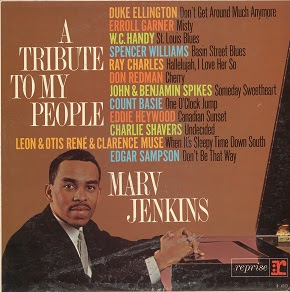
Best known as a pianist, Marvin Jenkins (1932-2005) was also a skilled flute player, tenor saxophonist, organist and a proficient composer. In the early 60s, in addition to working with guitarist Barney Kessels quartet, he recorded three excellent piano trio albums as leader.
The first, Marv Jenkins Arrives (1960), an auspicious debut on the small Los Angeles label Orovox, moved a&r Neal Hefti to sign him for Reprise Records, where he recorded A Tribute to My People (1961), and Good Little Man (1962). Bassists Jack Bruce and Stanley Gilbert and drummer Kenny Dennis contributed to the good groove achieved on both.
Jenkins touch was heavy and swinging, funky without being trite. Despite naming Erroll Garner and Oscar Peterson as influences, he sounded like neither. The twelve selections of the fourth album in this set, Big City, produced by Palomar Records in 1965, served as good vehicles for his talents as pianist, singer and composer, in a groovy session backed by some West Coast jazz stalwarts. That year, still with Palomar, he had a hit single, Ive Got the Blues, added here as a bonus.
Jenkins was an underrated jazzman who spent 25 years of his career as an accompanist to singer/actress Della Reese, and is best known today for his piano work on Marvin Gayes classic 1973 recording Lets Get It On.
///////
Más conocido como pianista, Marvin Jenkins (1932-2005) fue también un hábil flautista, saxofonista tenor, organista y compositor competente. A principios de los 60, además de trabajar con el cuarteto del guitarrista Barney Kessels, grabó tres excelentes álbumes de trío de piano como líder.
El primero, Marv Jenkins Arrives (1960), un auspicioso debut en el pequeño sello de Los Ángeles, Orovox, movió a a&r Neal Hefti a contratarlo para Reprise Records, donde grabó A Tribute to My People (1961), y Good Little Man (1962). Los bajistas Jack Bruce y Stanley Gilbert y el baterista Kenny Dennis contribuyeron al buen ritmo logrado en ambos.
El toque de Jenkins era pesado y swing, funky sin ser trillado. A pesar de nombrar a Erroll Garner y Oscar Peterson como influencias, no sonaba como ninguno de los dos. Las doce selecciones del cuarto álbum de este conjunto, Big City, producido por Palomar Records en 1965, sirvieron como buenos vehículos para sus talentos como pianista, cantante y compositor, en una sesión groovy respaldada por algunos estandartes del jazz de la costa oeste. Ese año, aún con Palomar, tuvo un single de éxito, Ive Got the Blues, añadido aquí como un bonus.
Jenkins fue un jazzista subestimado que pasó 25 años de su carrera como acompañante de la cantante y actriz Della Reese, y es más conocido hoy en día por su trabajo de piano en el clásico de Marvin Gayes de 1973, Lets Get It On.


Biography by Scott Yanow
Wardell Gray was one of the top tenors to emerge during the bop era (along with Dexter Gordon and Teddy Edwards). His Lester Young-influenced tone made his playing attractive to swing musicians as well as younger modernists. He grew up in Detroit, playing in local bands as a teenager. Gray was with Earl Hines during 1943-1945, recording with him (1945). That same year, he moved to Los Angeles and he became a major part of the Central Avenue scene, having nightly tenor battles with Dexter Gordon; their recording of "The Chase" was popular. Gray recorded with Charlie Parker in 1947 and yet his style appealed to Benny Goodman, with whom he played the following year. Among his own sessions, his solos on "Twisted" (1949) and "Farmer's Market" (1952) were turned into memorable vocalese by Annie Ross a few years later. Back in New York, Gray played and recorded with Tadd Dameron and the Count Basie septet and big band (1950-1951); "Little Pony," his showcase with the Basie orchestra, is a classic. Gray was featured on some Norman Granz jam sessions ("Apple Jam" has a particularly heated solo) and recorded with Louie Bellson (1952-1953). Ironically, Wardell Gray, who in the late '40s was an inspiration to some younger musicians due to his opposition to drug use, himself became involved in drugs and died mysteriously in Las Vegas on May 25, 1955, when he was just 34.
https://www.allmusic.com/artist/wardell-gray-mn0000235881#biography
///////
Biografía de Scott Yanow
Wardell Gray fue uno de los tenores más destacados de la era del bop (junto con Dexter Gordon y Teddy Edwards). Su tono, influenciado por Lester Young, lo hizo atractivo tanto para músicos de swing como para jóvenes modernistas. Creció en Detroit, donde tocó en bandas locales durante su adolescencia. Gray estuvo con Earl Hines entre 1943 y 1945, grabando con él (1945). Ese mismo año, se mudó a Los Ángeles y se convirtió en una figura clave de la escena de Central Avenue, teniendo duelos nocturnos de tenores con Dexter Gordon; su grabación de "The Chase" fue popular. Gray grabó con Charlie Parker en 1947, y aun así, su estilo atrajo a Benny Goodman, con quien tocó al año siguiente. Entre sus propias sesiones, sus solos en "Twisted" (1949) y "Farmer's Market" (1952) fueron convertidos en memorables vocales por Annie Ross unos años más tarde. De regreso a Nueva York, Gray tocó y grabó con Tadd Dameron y el septeto y la big band de Count Basie (1950-1951); "Little Pony", su presentación con la orquesta de Basie, es un clásico. Gray participó en algunas sesiones de improvisación de Norman Granz (la "Apple Jam" tiene un solo particularmente apasionado) y gra bó con Louie Bellson (1952-1953). Irónicamente, Wardell Gray, quien a finales de los años 40 inspiró a algunos músicos jóvenes por su oposición al consumo de drogas, se involucró en el consumo de drogas y murió misteriosamente en Las Vegas el 25 de mayo de 1955, con tan solo 34 años.

Review by Stephen Thomas Erlewine
Recorded over a year after Chick Corea's debut Tones for Joan's Bones -- a record cut in late 1966 but not appearing until 1968 -- Now He Sings, Now He Sobs feels like his true first album, the place where he put all the pieces in motion for his long, adventurous career. Much of that has to do with the closed quarters of its recording. Supported by drummer Roy Haynes and bassist Miroslav Vitous, Corea has the freedom to run wild on his five original compositions, letting chords cluster alongside fleet melodic runs. Haynes and Vitous play with the same sense of liberation, which pushes Now He Sings, Now He Sobs into a sweet spot where hard bop and avant intersect. There's an intellectual rigor balanced by an instinctual hunger that makes for music that's lively and challenging while also containing a patina of comfort. Chalk the latter up to the elegance of Corea's piano trio: they move through the dense bop with the same grace that they settle into ballads, a sound that is warm and inviting, yet never disguises how the trio -- and Corea especially -- never stop probing and exploring the outer edges of this music. While it's possible to hear Now He Sings, Now He Sobs as an opening salvo to Corea's career, it also exists as its own special thing because it captures the pianist at the brink: it's kinetic, exciting, and filled with endless possibilities.
https://www.allmusic.com/album/now-he-sings-now-he-sobs-mw0000199392
///////
Reseña de Stephen Thomas Erlewine
Grabado más de un año después del debut de Chick Corea, Tones for Joan's Bones (un disco grabado a finales de 1966 pero que no se publicó hasta 1968), Now He Sings, Now He Sobs se siente como su verdadero primer álbum, el lugar donde puso en marcha todas las piezas de su larga y aventurera carrera. Gran parte de esto se debe al espacio reducido de su grabación. Con el baterista Roy Haynes y el bajista Miroslav Vitous como soporte, Corea tiene la libertad de dar rienda suelta a sus cinco composiciones originales, dejando que los acordes se agrupen junto a fugaces riffs melódicos. Haynes y Vitous tocan con la misma sensación de liberación, lo que lleva a Now He Sings, Now He Sobs a un punto óptimo donde el hard bop y el avant se cruzan. Hay un rigor intelectual equilibrado por un hambre instintiva que crea una música vivaz y desafiante, a la vez que contiene una pátina de confort. Atribuyamos esto último a la elegancia del trío de piano de Corea: se mueven por el bop denso con la misma gracia con la que se asientan en las baladas, un sonido cálido y acogedor, que sin embargo nunca disimula cómo el trío, y Corea en particular, nunca dejan de explorar los límites de esta música. Si bien es posible escuchar Now He Sings, Now He Sobs como un primer paso en la carrera de Corea, también tiene un carácter único porque captura al pianista al límite: es dinámico, emocionante y lleno de infinitas posibilidades.
chickcorea.com/now-he-sings-now-he-sobs ...


