Saturday, October 31, 2026

Young Holt Unlimited • The Beat Goes On


Biography by Steve Huey
 Bassist Eldee Young and drummer Isaac "Red" Holt attended the American Conversatory of Music in Chicago together, and played together in a dance orchestra called the Cleffs, where they met pianist Ramsey Lewis and formed a popular jazz trio in 1956. After a decade as Lewis' rhythm section, Young and Holt split to form their own act in the wake of the trio's breakout pop hit "The 'In' Crowd." Hiring pianist Hysear Don Walker and christening themselves the Young-Holt Trio, they scored a quick Top 20 R&B hit with the infectious and silly "Wack Wack." Most of their material, recorded on several LPs for Brunswick, cut an invigorating soul-jazz groove that explored the territory between Jimmy Smith and Junior Walker, with dour bass, Ray Charles-inspired keyboards, faint scat vocals, and a live party ambience. In 1968, Walker was replaced by Ken Chaney as Young and Holt tightened up their sound, added some funky rhythms, and renamed the group Young-Holt Unlimited. They scored a left-field smash with the instrumental "Soulful Strut," which was actually the backing track from Brunswick soul singer Barbara Acklin's "Am I the Same Girl." Although the actual Young-Holt group was rumored not to have even played on the track, it went all the way to number three in 1969, driven by a bright, indelible horn riff. Attempts to duplicate its success met with indifference, and although Young-Holt Unlimited remained a popular concert attraction on both the R&B and jazz circuits (sometimes with pianist Bobby Lyle in place of Chaney), their recording career was on the wane. They cut LPs for Atlantic (1972's Oh Girl) and Paula (1973's Plays Superfly) that failed to restore their commercial momentum, and disbanded in 1974. Both Young and Holt reunited with Ramsey Lewis in 1983.
https://www.allmusic.com/artist/young-holt-unlimited-mn0000590524#biography

///////

Biografía de Steve Huey
 El bajista Eldee Young y el batería Isaac "Red" Holt estudiaron juntos en el American Conversatory of Music de Chicago y tocaron juntos en una orquesta de baile llamada The Cleffs, donde conocieron al pianista Ramsey Lewis y formaron un popular trío de jazz en 1956. Tras una década como sección rítmica de Lewis, Young y Holt se separaron para formar su propio grupo a raíz del gran éxito pop del trío, "The 'In' Crowd". Tras contratar al pianista Hysear Don Walker y bautizarse como Young-Holt Trio, consiguieron un rápido éxito en el Top 20 de R&B con la contagiosa y tonta "Wack Wack". La mayor parte de su material, grabado en varios LPs para Brunswick, tenía un vigorizante groove soul-jazz que exploraba el territorio entre Jimmy Smith y Junior Walker, con un bajo adusto, teclados inspirados en Ray Charles, tenues voces scat y un ambiente de fiesta en directo. En 1968, Walker fue sustituido por Ken Chaney mientras Young y Holt endurecían su sonido, añadían ritmos funky y rebautizaban el grupo como Young-Holt Unlimited. Consiguieron un gran éxito con el instrumental "Soulful Strut", que en realidad era la banda sonora de "Am I the Same Girl" de la cantante de soul de Brunswick Barbara Acklin. Aunque se rumoreaba que el grupo Young-Holt ni siquiera había tocado en la canción, ésta llegó al número tres en 1969, impulsada por un brillante e indeleble riff de trompeta. Los intentos de duplicar su éxito se toparon con la indiferencia, y aunque Young-Holt Unlimited siguió siendo una popular atracción de conciertos tanto en el circuito de R&B como en el de jazz (a veces con el pianista Bobby Lyle en lugar de Chaney), su carrera discográfica estaba en declive. Grabaron LPs para Atlantic (Oh Girl, 1972) y Paula (Plays Superfly, 1973) que no lograron recuperar su impulso comercial, y se disolvieron en 1974. Young y Holt se reunieron con Ramsey Lewis en 1983.
https://www.allmusic.com/artist/young-holt-unlimited-mn0000590524#biography


Solomon Burke • Hold On


Biography by Richie Unterberger
While Solomon Burke never had a Top 20 hit, he was an important pioneer of early soul. On his 1960s singles for Atlantic, he brought a country influence into R&B, with emotional phrasing and intricately constructed, melodic ballads and midtempo songs. At the same time, he was surrounded with sophisticated "uptown" arrangements, with much of his material provided by his producers, particularly Bert Berns. This combination of gospel, pop, country, and production polish was basic to the recipe of early soul. While Burke wasn't the only one pursuing this path, not many others did so as successfully. And he, like Otis Redding and Wilson Pickett, was an important influence upon the Rolling Stones, who covered Burke's "Cry to Me" and "Everybody Needs Somebody to Love" on their early albums.

Burke came by his gospel roots even more deeply than most soul stars. He was preaching at his family's Philadelphia church and hosting his own gospel radio show even before he'd reached his teens. He began recording gospel and R&B sides for Apollo in the mid- to late '50s. Like several former gospel singers (Aretha Franklin, Wilson Pickett), he was molded into a more secular direction when he signed with Atlantic in the '60s. Burke had a wealth of high-charting R&B hits in the early half of the '60s, which crossed over to the pop listings in a milder fashion as well. "Just Out of Reach," "Cry to Me," "If You Need Me," "Got to Get You Off My Mind," "Tonight's the Night," and "Goodbye Baby (Baby Goodbye)" were the most successful of these, although, unlike Franklin or Pickett, he wasn't able to expand his R&B base into a huge pop following. He left Atlantic in the late '60s and spent the next decade hopping between various labels, getting his biggest hit with a cover of Creedence Clearwater Revival's "Proud Mary" in 1969, and recording an album in the late '70s with cult soulster Swamp Dogg as producer.

From the '80s through the first decade of the new millennium, Burke became one of the most visible living exponents of classic soul music, continuing to tour and record albums in a rootsy, at times gospel-ish style. Although these were critically well-received, their stylistic purity also ensured that their market was primarily confined to roots music enthusiasts, rather than a pop audience. His live and later recorded work, however, are cherished by those who favor a soul legend with his talents and stylistic purity relatively intact. Burke's 2002 release Don't Give Up on Me was hailed as a major comeback for the singer. Great songwriters like Elvis Costello, Dan Penn, Nick Lowe, and Tom Waits contributed songs, and Joe Henry produced the album, leading to comparisons to Johnny Cash's landmark American Recordings.

After the critical success of Don't Give Up on Me reaffirmed Burke's status as one of the greatest living exponents of classic soul, the singer teamed up with producer Don Was for Make Do with What You Got, an updated variation on his classic style that was released in spring 2005. A year later, Burke released an interesting country and soul hybrid, Nashville, on Shout! Factory. A second album on the label, Like a Fire, followed in 2008. Burke next reunited with producer Willie Mitchell for Nothing’s Impossible, which was released shortly after Mitchell’s death in 2010 by Koch Records’ E1 Music. In October of 2009, Burke partnered with Dutch Soul band De Dijk for recording sessions that would become his final album: Hold on Tight. Burke died on October 10, 2010 upon his arrival at Schiphol Airport in Amsterdam, The Netherlands, where the soul legend was scheduled to perform at a sold-out Paradiso concert hall with De Dijk. Hold on Tight was eventually released in March 2011.
https://www.allmusic.com/artist/solomon-burke-mn0000031067#biography

///////


Biografía de Richie Unterberger
Si bien Solomon Burke nunca tuvo un éxito entre los 20 primeros, fue un importante pionero del soul temprano. En sus sencillos de la década de 1960 para Atlantic, trajo una influencia country al R&B, con frases emocionales y baladas melódicas intrincadamente construidas y canciones de midtempo. Al mismo tiempo, estaba rodeado de sofisticados arreglos "uptown", con gran parte de su material proporcionado por sus productores, particularmente Bert Berns. Esta combinación de gospel, pop, country y pulido de producción fue básica para la receta de early soul. Si bien Burke no fue el único que siguió este camino, no muchos otros lo hicieron con tanto éxito. Y él, como Otis Redding y Wilson Pickett, fue una influencia importante para los Rolling Stones, quienes hicieron versiones de "Cry to Me" y "Everybody Needs Somebody to Love" de Burke en sus primeros álbumes.

Burke se basó en sus raíces evangélicas incluso más profundamente que la mayoría de las estrellas del soul. Predicaba en la iglesia de Filadelfia de su familia y presentaba su propio programa de radio evangélico incluso antes de llegar a la adolescencia. Comenzó a grabar lados de gospel y R&B para Apollo a mediados y finales de los 50. Al igual que varios ex cantantes de gospel (Aretha Franklin, Wilson Pickett), fue moldeado en una dirección más secular cuando firmó con Atlantic en los 60. Burke tuvo una gran cantidad de éxitos de R&B de alto perfil a principios de la mitad de los 60, que también pasaron a las listas de éxitos pop de una manera más suave. "Just Out of Reach", "Cry to Me", "If You Need Me", "Got to Get You Off My Mind", "Tonight's the Night" y "Goodbye Baby (Baby Goodbye)" fueron los más exitosos de estos, aunque, a diferencia de Franklin o Pickett, no pudo expandir su base de R & B a un gran número de seguidores pop. Dejó Atlantic a fines de los 60 y pasó la siguiente década saltando entre varios sellos, obteniendo su mayor éxito con una versión de "Proud Mary" de Creedence Clearwater Revival en 1969, y grabando un álbum a fines de los 70 con el alma de culto Swamp Dogg como productor.

Desde los años 80 hasta la primera década del nuevo milenio, Burke se convirtió en uno de los exponentes vivos más visibles de la música soul clásica, continuando de gira y grabando álbumes con un estilo arraigado, a veces gospel. Aunque estos fueron bien recibidos por la crítica, su pureza estilística también aseguró que su mercado se limitara principalmente a los entusiastas de la música de raíz, en lugar de a una audiencia pop. Sin embargo, su trabajo en vivo y grabado más tarde es apreciado por aquellos que favorecen a una leyenda del soul con su talento y pureza estilística relativamente intactos. El lanzamiento de Burke en 2002, Don't Give Up on Me, fue aclamado como un gran regreso para el cantante. Grandes compositores como Elvis Costello, Dan Penn, Nick Lowe y Tom Waits contribuyeron con canciones, y Joe Henry produjo el álbum, lo que llevó a comparaciones con las grabaciones estadounidenses históricas de Johnny Cash.

Después de que el éxito crítico de Don't Give Up on Me reafirmara el estatus de Burke como uno de los mayores exponentes vivos del soul clásico, el cantante se asoció con el productor Don Was para Make Do with What You Got, una variación actualizada de su estilo clásico que se lanzó en la primavera de 2005. Un año después, Burke lanzó un interesante híbrido de country y soul, Nashville, en Shout! Fábrica. Un segundo álbum en el sello, Like a Fire, siguió en 2008. Burke luego se reunió con el productor Willie Mitchell para Nothing's Impossible, que fue lanzado poco después de la muerte de Mitchell en 2010 por E1 Music de Koch Records. En octubre de 2009, Burke se asoció con la banda holandesa de Soul De Dijk para grabar las sesiones que se convertirían en su último álbum: Hold on Tight. Burke murió el 10 de octubre de 2010 a su llegada al aeropuerto de Schiphol en Ámsterdam, Países Bajos, donde la leyenda del soul estaba programada para actuar en una sala de conciertos Paradiso con entradas agotadas con De Dijk. Hold on Tight finalmente fue lanzado en marzo de 2011.
https://www.allmusic.com/artist/solomon-burke-mn0000031067#biography


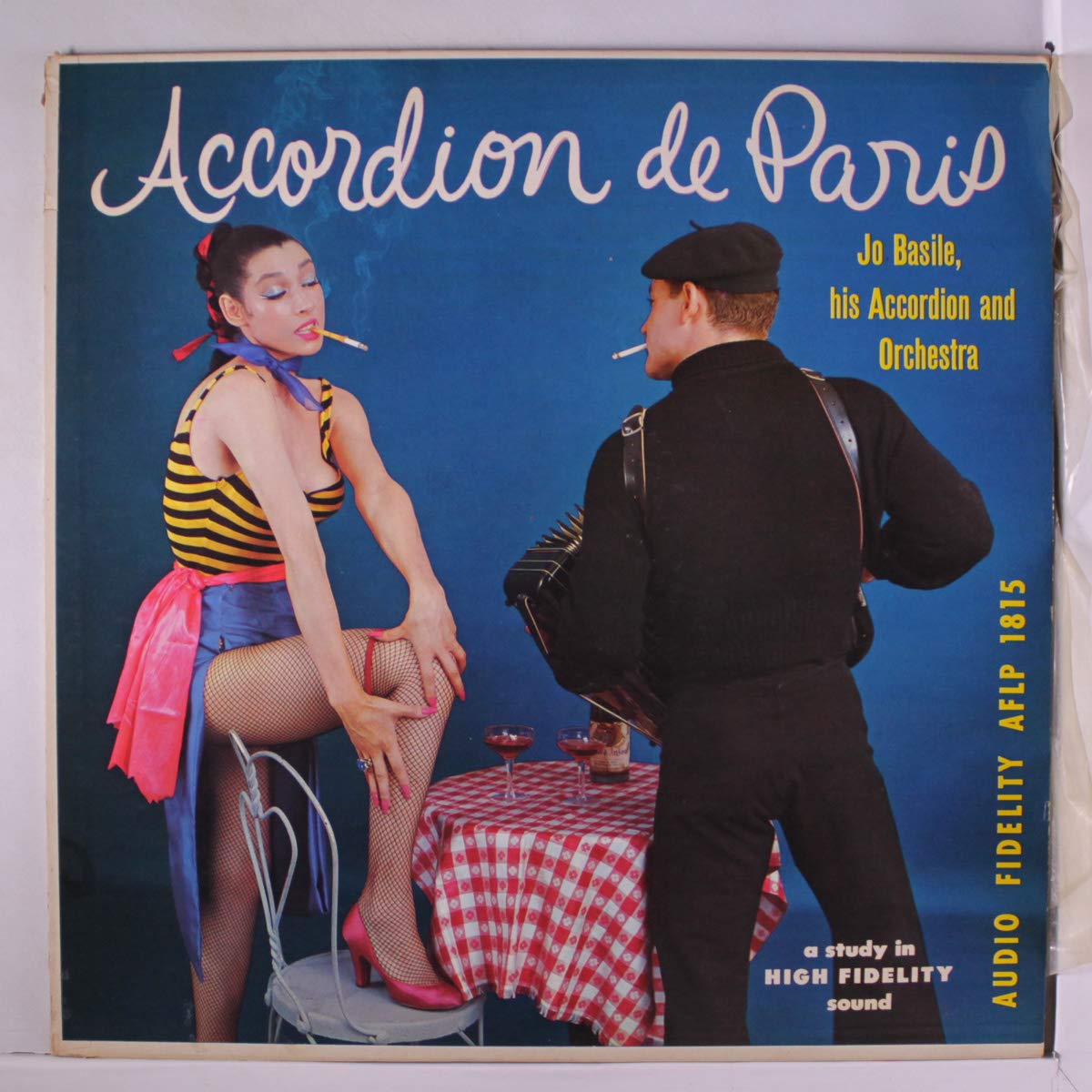
Jo Basile • Accordion de Paris


Jo Basile was the pseudonym of Joss Baselli, accordionist and veteran of the French music scene in the 1950s and 1960s.
Basile's parents were Italian emigrants to northern France, part of the large wave of Italians who came to work the coal mines in the Pas de Nord and Belgium. Although his parents ran a cafe, they were also great music enthusiasts, and Baselli began taking music lessons at the age of six. He and his brother Enrico both studied the accordion and, after a few years of serenading patrons in their parents' cafe, began playing on a semi-professional basis by their late teens.
After World War Two, Baselli met an accomplished accordion player and pioneer of the bal musette style, Gus Viseur, who encouraged him to pursue a career in music. Baselli moved to Paris in 1950 and several years later, while working a summer job in Pau, near the Spanish border, met the rising young chanteuse, Patachou. She offered him the job of principal accompanist, and as her career took off, rivalling Edith Piaf's in popularity, he became a recognized soloist in his own right. Patachou opened a cafe in the Montmartre section of Paris, which became the center of the bal musette scene. Around the same time, Joss married Gus Viseur's daughter.
In 1958, Patachou toured the U.S. and Baselli attracted the attention of Sid Frey, owner of the Audio Fidelity record label. Frey was about to release the first series of long-playing stereo records and was signing numerous international artists. Renaming him Jo Basile, Frey first recorded Baselli straight, playing instrumental versions of Patachou's hits and other French cafe tunes.
Then Baselli suggested he do some of the Italian songs he grew up playing in his parents' cafe, and the album, Rome with Love was released, with a cover featuring a sexy babe in Capri pants riding on the back of a Lambretta. Whether the cover had anything to do with the success of the record, Frey figured it was a winning combination, and most of the two dozen albums Basselli recorded for Audio Fidelity over the next five years followed a standard formula. Basselli played a dozen or so tunes associated with a particular country or city, and Frey slapped on a cover featuring another sexy babe in national garb riding on the back of the same red Vespa--with an appropriate license plate.
For the quantity of material reflected in this series, the quality of performances is quite high. Baselli was a virtuoso accordion player, whose talents are now comemorated in France by an annual award that bears his name, given for the best accordion performance. For the most part, though, the material doesn't match the musicianship.
A couple of the series, however, deserve a closer listen. Swingin' Latin is actually a set of early bossa nova tunes performed with the excellent Brazilian trio, Bossa Tres, and it's been reissued on CD recently as Jo Basile and Bossa Tres by Ubatuqui Records.
My favorite is Foreign Film Festival album, on which he swings through a set of tunes by Nino Rota and others with a crack group of New York session men that includes Bobby Rosengarden, Dick Hyman, Al Caiola, Milt Hinton, and Phil Kraus. It's a jazzy take on theme music from such early 1960s classics as "La Dolce Vita," "Rififi," and "8½" that shows Basselli could easily hold his own among players with such impeccable jazz chops and studio experience.
In all, Basselli's Audio Fidelity albums sold over 4 million copies in the U.S. He was awarded a prize by the American Accordion Association, and undoubtedly inspired many young men to take up the squeezebox--at least, until they discovered it tended not to attract sexy chick in Capri pants the way an electric guitar did.
Back in France, Basselli parted ways with Patachou and joined the studio team of the singer Barbara, who launched an enormously successful variety series on French television. Basselli not only performed on screen as both accompanist and soloist, he also worked as musical director and arranged hundreds of songs for the show.
He stayed with the show until 1967, when he reunited with Patachou for another tour of the U.S. When he returned to France, he began to turn his attention to composing and arranging. He wrote the score for the movie, "L'astragale," as well as for numerous television shows. One of the most notable of these was "Le Manège Enchanté," a stop-action animated series by Serge Danot. A BBC producer asked actress Emma Thompson's father, Eric, to translate and record an English language narration, but Thompson decided the scripts just didn't work in English, and he wrote his own story, even renaming the characters. As "The Magic Roundabout," the series was an even bigger success in the U.K. Basselli also composed the score for the full-length film Danot produced as a spin-off from the series, "Dougal and the Blue Cat".
Throughout the 1960s, Baselli also worked as a songwriter, and his best-known tune, "Free Again," was recorded by numerous Anglophone singers--most notably, Barbra Streisand, on the first track of her 1966 album, My Name is Barbra.
In 1972, Basselli hosted a series on French television titled, "Le monde de l'accordeon," which featured masters of the instrument and encouraged young people to take up and learn the instrument. This time, no chick in Capri pants was promised. He also founded his own music publishing company, Opaline, to oversee the rights to his various compositions, and wrote a popular set of music instruction books on playing the accordion. He died suddenly of a heart attack in 1982.
///////

Jo Basile era el seudónimo de Joss Baselli, acordeonista y veterano de la escena musical francesa en las décadas de 1950 y 1960.
Los padres de Basile eran emigrantes italianos al norte de Francia, parte de la gran ola de italianos que vinieron a trabajar en las minas de carbón del Pas de Nord y Bélgica. Aunque sus padres tenían un café, también eran grandes entusiastas de la música, y Baselli comenzó a tomar clases de música a la edad de seis años. Él y su hermano Enrico estudiaron el acordeón y, después de algunos años de serenatas en el café de sus padres, comenzaron a tocar de manera semi-profesional a finales de la adolescencia.
Después de la Segunda Guerra Mundial, Baselli conoció a un consumado acordeonista y pionero del estilo de la bal musette, Gus Viseur, quien le animó a seguir una carrera en la música. Baselli se trasladó a París en 1950 y varios años más tarde, mientras trabajaba en un trabajo de verano en Pau, cerca de la frontera española, conoció a la joven cantante en ascenso, Patachou. Ella le ofreció el puesto de acompañante principal, y a medida que su carrera despegaba, rivalizando con la popularidad de Edith Piaf, él se convirtió en un reconocido solista por derecho propio. Patachou abrió un café en el barrio de Montmartre de París, que se convirtió en el centro de la escena del bal musette. Más o menos al mismo tiempo, Joss se casó con la hija de Gus Viseur.
En 1958, Patachou realizó una gira por los Estados Unidos y Baselli atrajo la atención de Sid Frey, propietario del sello discográfico Audio Fidelity. Frey estaba a punto de lanzar la primera serie de discos estéreo de larga duración y firmaba con numerosos artistas internacionales. Renombrado Jo Basile, Frey grabó primero Baselli straight, tocando versiones instrumentales de los éxitos de Patachou y otras melodías de cafés franceses.
Luego Baselli le sugirió que hiciera algunas de las canciones italianas que tocó en el café de sus padres, y el álbum, Rome with Love fue lanzado, con una portada con una sexy nena en pantalones Capri montada en la parte trasera de una Lambretta. Si la portada tenía algo que ver con el éxito del disco, Frey pensó que era una combinación ganadora, y la mayoría de los dos docenas de álbumes que Basselli grabó para Audio Fidelity durante los siguientes cinco años siguieron una fórmula estándar. Basselli tocó una docena de canciones asociadas con un país o ciudad en particular, y Frey le dio una bofetada en una portada con otra chica sexy con atuendo nacional montada en la parte trasera de la misma Vespa roja, con una placa de matrícula apropiada.
Por la cantidad de material reflejada en esta serie, la calidad de las prestaciones es bastante alta. Baselli fue un virtuoso acordeonista, cuyos talentos son ahora conmemorados en Francia por un premio anual que lleva su nombre, otorgado a la mejor interpretación del acordeón. Sin embargo, en la mayoría de los casos, el material no coincide con la musicalidad.
Algunas de las series, sin embargo, merecen ser escuchadas más de cerca. Swingin' Latin es en realidad un conjunto de tempranas melodías de bossa nova interpretadas con el excelente trío brasileño Bossa Tres, y ha sido reeditado en CD recientemente como Jo Basile y Bossa Tres por Ubatuqui Records.
Mi favorito es el álbum del Festival de Cine Extranjero, en el que se mueve a través de un conjunto de temas de Nino Rota y otros con un grupo de hombres de sesión de Nueva York que incluye a Bobby Rosengarden, Dick Hyman, Al Caiola, Milt Hinton, y Phil Kraus. Es una versión jazzística de temas clásicos de principios de los sesenta como "La Dolce Vita", "Rififi" y "8½", que demuestra que Basselli puede valerse por sí mismo entre los músicos con un jazz impecable y una experiencia en el estudio tan impecable.
En total, los álbumes de Audio Fidelity de Basselli vendieron más de 4 millones de copias en los EE.UU. Recibió un premio de la Asociación Americana de Acordeón, e indudablemente inspiró a muchos jóvenes a tomar el squeezebox - por lo menos, hasta que descubrieron que tendía a no atraer a las chicas sexys en pantalones de Capri de la misma manera que lo hacía una guitarra eléctrica.
De vuelta en Francia, Basselli se separó de Patachou y se unió al equipo de estudio de la cantante Barbara, que lanzó una serie varietal de enorme éxito en la televisión francesa. Basselli no sólo actuó en la pantalla como acompañante y solista, sino que también trabajó como director musical y arregló cientos de canciones para el espectáculo.
Permaneció en el espectáculo hasta 1967, cuando se reunió con Patachou para otra gira por los EE.UU. Cuando regresó a Francia, comenzó a prestar atención a la composición y los arreglos. Escribió la partitura para la película "L'astragale", así como para numerosos programas de televisión. Una de las más notables fue "Le Manège Enchanté", una serie de animación de stop-action de Serge Danot. Un productor de la BBC le pidió al padre de la actriz Emma Thompson, Eric, que tradujera y grabara una narración en inglés, pero Thompson decidió que los guiones no funcionaban en inglés, y escribió su propia historia, incluso renombrando a los personajes. Como "The Magic Roundabout", la serie fue un éxito aún mayor en el Reino Unido. Basselli también compuso la partitura para el largometraje Danot producido como resultado de la serie "Dougal and the Blue Cat".
A lo largo de la década de 1960, Baselli también trabajó como compositor, y su canción más conocida, "Free Again", fue grabada por numerosos cantantes anglófonos, entre los que destaca Barbra Streisand, en el primer tema de su álbum de 1966, My Name is Barbra.

En 1972, Basselli presentó en la televisión francesa una serie titulada "Le monde de l'accordeon" (El mundo del acordeón), que presentaba a maestros del instrumento y animaba a los jóvenes a aprenderlo. Esta vez, no se prometió ninguna chica con pantalones de Capri. También fundó su propia compañía editorial de música, Opaline, para supervisar los derechos de sus diversas composiciones, y escribió un popular conjunto de libros de instrucciones musicales sobre cómo tocar el acordeón. Murió repentinamente de un ataque al corazón en 1982.
https://www.spaceagepop.com/basile.htm
Traducción realizada con el traductor www.DeepL.com/Translator


Art Farmer-Benny Golson • Killer Joe


Art Farmer Biography by Scott Yanow
Largely overlooked during his formative years, Art Farmer's consistently inventive playing was more greatly appreciated as he continued to develop. Along with Clark Terry, Farmer helped to popularize the flügelhorn among brass players. His lyricism gave his bop-oriented style its own personality. Farmer studied piano, violin, and tuba before settling on trumpet. He worked in Los Angeles from 1945 on, performing regularly on Central Avenue and spending time in the bands of Johnny Otis, Jay McShann, Roy Porter, Benny Carter, and Gerald Wilson among others; some of the groups also included his twin brother, bassist Addison Farmer (1928-1963). After playing with Wardell Gray (1951-1952) and touring Europe with Lionel Hampton's big band (1953), Farmer moved to New York and worked with Gigi Gryce (1954-1956), Horace Silver's Quintet (1956-1958), and the Gerry Mulligan Quartet (1958-1959). Farmer, who made many recordings in the latter half of the '50s (including with Quincy Jones and George Russell and on some jam-session dates for Prestige) co-led the Jazztet with Benny Golson (1959-1962) and then had a group with Jim Hall (1962-1964). He moved to Vienna in 1968 where he joined the Austrian Radio Orchestra, worked with the Kenny Clarke-Francy Boland Big Band and toured with his own units. Starting in the '80s, Farmer visited the U.S. more often and remained greatly in demand up until his death on October 4, 1999. Farmer recorded many sessions as a leader throughout the years for Prestige, Contemporary, United Artists, Argo, Mercury, Atlantic, Columbia, CTI, Soul Note, Optimism, Concord, Enja, and Sweet Basil.
https://www.allmusic.com/artist/art-farmer-mn0000502199#biography


Benny Golson Biography by Scott Yanow
Benny Golson is a talented composer/arranger whose tenor playing has continued to evolve with time. After attending Howard University (1947-1950) he worked in Philadelphia with Bull Moose Jackson's R&B band (1951) at a time when it included one of his writing influences, Tadd Dameron on piano. Golson played with Dameron for a period in 1953, followed by stints with Lionel Hampton (1953-1954), and Johnny Hodges and Earl Bostic (1954-1956). He came to prominence while with Dizzy Gillespie's globetrotting big band (1956-1958), as much for his writing as for his tenor playing (the latter was most influenced by Don Byas and Lucky Thompson). Golson wrote such standards as "I Remember Clifford" (for the late Clifford Brown), "Killer Joe," "Stablemates," "Whisper Not," "Along Came Betty," and "Blues March" during 1956-1960. His stay with Art Blakey's Jazz Messengers (1958-1959) was significant, and during 1959-1962 he co-led the Jazztet with Art Farmer. From that point on Golson gradually drifted away from jazz and concentrated more on working in the studios and with orchestras including spending a couple of years in Europe (1964-1966). When Golson returned to active playing in 1977, his tone had hardened and sounded much closer to Archie Shepp than to Don Byas. Other than an unfortunate commercial effort for Columbia in 1977, Golson has recorded consistently rewarding albums (many for Japanese labels) since that time including a reunion with Art Farmer and Curtis Fuller in a new Jazztet. Through the years he has recorded as a leader for Contemporary, Riverside, United Artists, New Jazz, Argo, Mercury, and Dreyfus among others. Returning once again to the spirit of the original Jazztet, Golson released New Time, New 'Tet on Concord Records in 2009.
https://www.allmusic.com/artist/benny-golson-mn0000135391#biography

///////


Biografía de Art Farmer por Scott Yanow
En gran parte ignorado durante sus años de formación, la interpretación consistentemente inventiva de Art Farmer fue más apreciada a medida que continuaba desarrollándose. Junto con Clark Terry, Farmer ayudó a popularizar el flügelhorn entre los músicos de metal. Su lirismo le dio a su estilo orientado al bop su propia personalidad. Farmer estudió piano, violín y tuba antes de decidirse por la trompeta. Trabajó en Los Ángeles a partir de 1945, actuando regularmente en Central Avenue y pasando tiempo en las bandas de Johnny Otis, Jay McShann, Roy Porter, Benny Carter y Gerald Wilson, entre otros; algunos de los grupos también incluían a su hermano gemelo, el bajista Addison Farmer (1928-1963). Después de tocar con Wardell Gray (1951-1952) y recorrer Europa con la big band de Lionel Hampton (1953), Farmer se mudó a Nueva York y trabajó con Gigi Gryce (1954-1956), el Quinteto de Horace Silver (1956-1958) y el Cuarteto Gerry Mulligan (1958-1959). Farmer, que realizó muchas grabaciones en la segunda mitad de los años 50 (incluso con Quincy Jones y George Russell y en algunas sesiones improvisadas para Prestige) codirigió el Jazztet con Benny Golson (1959-1962) y luego formó un grupo con Jim Hall (1962-1964). Se mudó a Viena en 1968, donde se unió a la Orquesta de la Radio Austriaca, trabajó con la Big Band de Kenny Clarke-Francy Boland y realizó giras con sus propias unidades. A partir de los años 80, Farmer visitó los EE.UU. con más frecuencia y mantuvo una gran demanda hasta su muerte el 4 de octubre de 1999. Farmer grabó muchas sesiones como líder a lo largo de los años para Prestige, Contemporary, United Artists, Argo, Mercury, Atlantic, Columbia, CTI, Soul Note, Optimism, Concord, Enja y Sweet Basil.
https://www.allmusic.com/artist/art-farmer-mn0000502199#biography


Biografía de Benny Golson por Scott Yanow
Benny Golson es un talentoso compositor / arreglista cuya interpretación de tenor ha seguido evolucionando con el tiempo. Después de asistir a la Universidad de Howard (1947-1950) trabajó en Filadelfia con Bull Moose Jackson's R&B band (1951) en un momento en que incluía una de sus influencias de composición, Tadd Dameron al piano. Golson tocó con Dameron durante un período en 1953, seguido de temporadas con Lionel Hampton (1953-1954) y Johnny Hodges y Earl Bostic (1954-1956). Saltó a la fama mientras estaba con la big band trotamundos de Dizzy Gillespie (1956-1958), tanto por su composición como por su interpretación de tenor (este último estuvo más influenciado por Don Byas y Lucky Thompson). Golson escribió estándares como " I Remember Clifford "(para el difunto Clifford Brown)," Killer Joe"," Stablemates"," Whisper Not"," Along Came Betty "y" Blues March " durante 1956-1960. Su estancia con Art Blakey's Jazz Messengers (1958-1959) fue significativa, y durante 1959-1962 codirigió el Jazztet con Art Farmer. A partir de ese momento, Golson se alejó gradualmente del jazz y se concentró más en trabajar en los estudios y con orquestas, incluido pasar un par de años en Europa (1964-1966). Cuando Golson regresó a la actuación activa en 1977, su tono se había endurecido y sonaba mucho más cercano a Archie Shepp que a Don Byas. Aparte de un desafortunado esfuerzo comercial para Columbia en 1977, Golson ha grabado álbumes consistentemente gratificantes (muchos para sellos japoneses) desde entonces, incluida una reunión con Art Farmer y Curtis Fuller en un nuevo Jazztet. A lo largo de los años ha grabado como líder para Contemporary, Riverside, United Artists, New Jazz, Argo, Mercury y Dreyfus, entre otros. Volviendo una vez más al espíritu del Jazztet original, Golson lanzó New Time, New ' Tet con Concord Records en 2009.
https://www.allmusic.com/artist/benny-golson-mn0000135391#biography


In Search of the Blues A Journey to the Soul of Black Texas


The rich, complex lives of African Americans in Texas were often neglected by the mainstream media, which historically seldom ventured into Houston's Fourth Ward, San Antonio's East Side, South Dallas, or the black neighborhoods in smaller cities. When Bill Minutaglio began writing for Texas newspapers in the 1970s, few large publications had more than a token number of African American journalists, and they barely acknowledged the things of lasting importance to the African American community. Though hardly the most likely reporter—as a white, Italian American transplant from New York City—for the black Texas beat, Minutaglio was drawn to the African American heritage, seeking its soul in churches, on front porches, at juke joints, and anywhere else that people would allow him into their lives. His nationally award-winning writing offered many Americans their first deeper understanding of Texas's singular, complicated African American history.

This eclectic collection gathers the best of Minutaglio's writing about the soul of black Texas. He profiles individuals both unknown and famous, including blues legends Lightnin' Hopkins, Amos Milburn, Robert Shaw, and Dr. Hepcat. He looks at neglected, even intentionally hidden, communities. And he wades into the musical undercurrent that touches on African Americans' joys, longings, and frustrations, and the passing of generations. Minutaglio's stories offer an understanding of the sweeping evolution of music, race, and justice in Texas. Moved forward by the musical heartbeat of the blues and defined by the long shadow of racism, the stories measure how far Texas has come . . . or still has to go.

 
Bill Minutaglio (Author)

Freddie Roach • The Soul Book - Mocha Motion!


Review by Steve Huey
As Freddie Roach's Blue Note career progressed, his work increasingly celebrated contemporary black culture, and accordingly developed a greater interest in funky, jukebox-ready grooves, a stylistic departure from his initial melodic finesse. Roach took both interests with him to Prestige, as demonstrated on The Soul Book/Mocha Motion, a U.K.-only two-fer compiling his first two albums for the label. Roach definitely brings the hard funk on parts of The Soul Book, but there's a laid-back, even meditative quality to others, which is surprising since his liner notes seem to suggest a concept album about the urban grit of Harlem. That isn't a problem, though; The Soul Book is a fine effort that, even if it doesn't hang together quite as well as his Blue Note dates, does find Roach exploring an impressively wide range of sounds. Mocha Motion is a more consistently funky affair than its eclectic predecessor, and that's both a good and bad thing. Good, because the album works up a solid groove that's maintained from start to finish; bad, because more of the material leans toward the generic. There's an underlying Latin tinge to many of the tracks thanks to conga player Ralph Dorsey, but the dominant feel is unquestionably soul-jazz. Roach partially redeems the less memorable tracks with his fleet-fingered solo work, but it's not quite enough to prevent Mocha Motion from becoming one of his weaker releases. Still, heard in this context as part of a two-fer, it's certainly passable, and the overall package will be worth tracking down for the bigger fans of Roach's brand of soul-jazz.

///////

Reseña por Steve Huey
A medida que avanzaba la carrera de Blue Note de Freddie Roach, su trabajo celebraba cada vez más la cultura negra contemporánea y, en consecuencia, desarrollaba un mayor interés por los ritmos funky y listos para la caja de discos, un alejamiento estilístico de su finura melódica inicial. Roach se llevó ambos intereses a Prestige, como se demostró en The Soul Book / Mocha Motion, una serie de dos fer del Reino Unido que compila sus dos primeros álbumes para el sello. Roach definitivamente trae el hard funk en partes de The Soul Book, pero hay una calidad relajada, incluso meditativa para otros, lo cual es sorprendente ya que sus notas de línea parecen sugerir un álbum conceptual sobre la arena urbana de Harlem. Eso no es un problema, sin embargo; The Soul Book es un buen esfuerzo que, incluso si no se une tan bien como sus fechas de Blue Note, hace que Roach explore una impresionante variedad de sonidos. Mocha Motion es un asunto más funky que su antecesor ecléctico, y eso es algo bueno y malo. Bien, porque el álbum desarrolla un ritmo sólido que se mantiene de principio a fin; Mal, porque más del material se inclina hacia lo genérico. Hay un tinte latino subyacente en muchas de las pistas gracias al jugador de conga Ralph Dorsey, pero el sentimiento dominante es, sin duda, el soul-jazz. Roach redime parcialmente las pistas menos memorables con su trabajo en solitario con los dedos de la flota, pero no es suficiente para evitar que Mocha Motion se convierta en uno de sus lanzamientos más débiles. Aún así, escuchado en este contexto como parte de una oferta doble, es ciertamente pasable, y el paquete en general valdrá la pena para los fanáticos más grandes de la marca de soul-jazz de Roach.


Freddie Hubbard • Super Blue


Biography by Scott Yanow
One of the great jazz trumpeters of all time, Freddie Hubbard formed his sound out of the Clifford Brown/Lee Morgan tradition, and by the early '70s was immediately distinctive and the pacesetter in jazz. However, a string of blatantly commercial albums later in the decade damaged his reputation and, just when Hubbard, in the early '90s (with the deaths of Dizzy Gillespie and Miles Davis), seemed perfectly suited for the role of veteran master, his chops started causing him serious troubles.

Born and raised in Indianapolis, Hubbard played early on with Wes and Monk Montgomery. He moved to New York in 1958, roomed with Eric Dolphy (with whom he recorded in 1960), and was in the groups of Philly Joe Jones (1958-1959), Sonny Rollins, Slide Hampton, and J.J. Johnson, before touring Europe with Quincy Jones (1960-1961). He recorded with John Coltrane, participated in Ornette Coleman's Free Jazz (1960), was on Oliver Nelson's classic Blues and the Abstract Truth album (highlighted by "Stolen Moments"), and started recording as a leader for Blue Note that same year. Hubbard gained fame playing with Art Blakey's Jazz Messengers (1961-1964) next to Wayne Shorter and Curtis Fuller. He recorded Ascension with Coltrane (1965), Out to Lunch (1964) with Eric Dolphy, and Maiden Voyage with Herbie Hancock, and, after a period with Max Roach (1965-1966), he led his own quintet, which at the time usually featured altoist James Spaulding. A blazing trumpeter with a beautiful tone on flügelhorn, Hubbard fared well in freer settings but was always essentially a hard bop stylist.

In 1970, Freddie Hubbard recorded two of his finest albums (Red Clay and Straight Life) for CTI. The follow-up, First Light (1971), was actually his most popular date, featuring Don Sebesky arrangements. But after the glory of the CTI years (during which producer Creed Taylor did an expert job of balancing the artistic with the accessible), Hubbard made the mistake of signing with Columbia and recording one dud after another; Windjammer (1976) and Splash (a slightly later effort for Fantasy) are low points. However, in 1977, he toured with Herbie Hancock's acoustic V.S.O.P. Quintet and, in the 1980s, on recordings for Pablo, Blue Note, and Atlantic, he showed that he could reach his former heights (even if much of the jazz world had given up on him). But by the late '80s, Hubbard's "personal problems" and increasing unreliability (not showing up for gigs) started to really hurt him, and a few years later his once mighty technique started to seriously falter. In late 2008, Hubbard suffered a heart attack that left him hospitalized until his death at age 70 on December 29 of that year.Freddie Hubbard's fans can still certainly enjoy his many recordings for Blue Note, Impulse, Atlantic, CTI, Pablo, and his first Music Masters sets.
https://www.allmusic.com/artist/freddie-hubbard-mn0000798326#biography

///////


Biografía de Scott Yanow
Freddie Hubbard, uno de los grandes trompetistas de jazz de todos los tiempos, formó su sonido a partir de la tradición de Clifford Brown/Lee Morgan, y a principios de los 70 se distinguió de inmediato y marcó el ritmo del jazz. Sin embargo, una serie de álbumes descaradamente comerciales a finales de la década dañaron su reputación y, justo cuando Hubbard, a principios de los 90 (con la muerte de Dizzy Gillespie y Miles Davis), parecía perfectamente adecuado para el papel de maestro veterano, sus habilidades comenzaron a causarle serios problemas.

Nacido y criado en Indianápolis, Hubbard tocó temprano con Wes y Monk Montgomery. Se mudó a Nueva York en 1958, compartió habitación con Eric Dolphy (con quien grabó en 1960) y formó parte de los grupos de Philly Joe Jones (1958-1959), Sonny Rollins, Slide Hampton y J. J. Johnson, antes de realizar una gira por Europa con Quincy Jones (1960-1961). Grabó con John Coltrane, participó en Free Jazz de Ornette Coleman (1960) , estuvo en el álbum Classic Blues and the Abstract Truth de Oliver Nelson (destacado por "Stolen Moments") y comenzó a grabar como líder de Blue Note ese mismo año. Hubbard ganó fama tocando con los Jazz Messengers de Art Blakey (1961-1964) junto a Wayne Shorter y Curtis Fuller. Grabó Ascension con Coltrane (1965), Out to Lunch (1964) con Eric Dolphy y Maiden Voyage con Herbie Hancock, y, después de un período con Max Roach (1965-1966), dirigió su propio quinteto, que en ese momento generalmente presentaba al altoista James Spaulding. Un trompetista ardiente con un hermoso tono en flügelhorn, a Hubbard le fue bien en entornos más libres, pero siempre fue esencialmente un estilista de hard bop.

En 1970, Freddie Hubbard grabó dos de sus mejores álbumes (Red Clay y Straight Life) para CTI. El seguimiento, First Light (1971), fue en realidad su cita más popular, con arreglos de Don Sebesky. Pero después de la gloria de los años de CTI (durante los cuales el productor Creed Taylor hizo un trabajo experto en equilibrar lo artístico con lo accesible), Hubbard cometió el error de firmar con Columbia y grabar un fracaso tras otro; Windjammer (1976) y Splash (un esfuerzo ligeramente posterior para Fantasy) son puntos bajos. Sin embargo, en 1977, realizó una gira con V. S. O. P. acústico de Herbie Hancock. Quinteto y, en la década de 1980, en grabaciones para Pablo, Blue Note y Atlantic, demostró que podía alcanzar sus alturas anteriores (incluso si gran parte del mundo del jazz se había dado por vencido con él). Pero a fines de los 80, los "problemas personales" de Hubbard y la creciente falta de confiabilidad (no presentarse a los conciertos) comenzaron a lastimarlo realmente, y unos años más tarde, su una vez poderosa técnica comenzó a fallar seriamente. A fines de 2008, Hubbard sufrió un ataque cardíaco que lo dejó hospitalizado hasta su muerte a los 70 años el 29 de diciembre de ese año.Los fanáticos de Freddie Hubbard aún pueden disfrutar de sus muchas grabaciones para Blue Note, Impulse, Atlantic, CTI, Pablo y sus primeros sets de Music Masters.
https://www.allmusic.com/artist/freddie-hubbard-mn0000798326#biography


Mike LeDonne Quintet • Waltz For An Urbanite


Review by Scott Yanow
An excellent hard bop pianist, Mike LeDonne is teamed on this Criss Cross CD with vibraphonist Steve Nelson, guitarist Peter Bernstein, bassist Peter Washington, and drummer Kenny Washington. Although LeDonne and Nelson are not innovative voices on their instruments, they are top-notch interpreters and certainly play well in boppish settings. This disc features four LeDonne originals; the standard "Don't Blame Me"; and such obscurities as Jimmy Heath's "Re-Rev," Ray Brown's "F.S.R," Ahmad Jamal's "Tranquility," and Lucky Thompson's "Monsoon." Recommended for hard bop collectors.
https://www.allmusic.com/album/waltz-for-an-urbanite-mw0000083129

//////////


Reseña de Scott Yanow
Mike LeDonne, un excelente pianista de hard bop, forma equipo en este CD de Criss Cross con el vibrafonista Steve Nelson, el guitarrista Peter Bernstein, el bajista Peter Washington y el baterista Kenny Washington. Aunque LeDonne y Nelson no son voces innovadoras en sus instrumentos, son intérpretes de primera categoría y ciertamente tocan bien en los escenarios de bopp. Este disco incluye cuatro originales de LeDonne; el estándar "Don't Blame Me"; y oscuridades como "Re-Rev" de Jimmy Heath, "F.S.R" de Ray Brown, "Tranquility" de Ahmad Jamal y "Monsoon" de Lucky Thompson. Recomendado para los coleccionistas de hard bop.
https://www.allmusic.com/album/waltz-for-an-urbanite-mw0000083129


mikeledonne.net ...
www.amazon.com ...
www.crisscrossjazz.com ...


Colaborador / Contributor:  Michel


VA • Verve JazzClub - Latin Jazz


Sarah Vaughan, Oscar Peterson, Clark Terry, Chico O'Farrill, Quincy Jones, Machito, Cal Tjader, Les McCann, Ramsey Lewis, Willie Bobo, Xavier Cugat, Dizzy Gillespie, Dave Pike ...


Bill Frisell • Good Dog, Happy Man


"Bill Frisell makes such consistently great records that it would be easy to take the guitarist for granted. That would be sad, since no one refracts age-old Americana through a cutting-edge prism with the warm-hearted, fleet-minded individuality of Frisell. With "Good Dog, Happy Man," he has crafted one of his earthiest essays yet - a sort of funky follow-up to his sublime "Nashville" album from 1997. Backed by an ultra-hip band - pedal-steel artisan Greg Leisz, bassist Viktor Krauss, organ grinder Wayne Horvitz, and drum legend Jim Keltner - Frisell has forged originals whose folky melodies and big-sky grooves make them seem like old friends in snazzy new clothes. Tellingly, the outfit channels the traditional "Shenandoah" with Ry Cooder in tow, and its sepia-toned melancholy pairs perfectly with Frisell's dusty ballads, like the gem "Cadillac 1959."
- Billboard

"As a composer, Frisell seems to have located his center. Once as eclectic and mercurial as downtown New York contemporaries like John Zorn, he now devotes himself to building seamless and personal collages of 20th-century Americana. The only cover on Good Dog is a shimmering meditation on "Shenandoah," performed here as a duet with an exceptionally introspective Ry Cooder, but all these tracks are derived from folk and folk-jazz and blues sources. And all of them glow."
- LA Weekly

"Frisell and company focus on the subtleties inherent in groove music, like the way textural variation can push a slow moving melodic line to another level without having to wait for the chords to change."
- Baltimore Sun

///////


"Bill Frisell hace discos tan consistentemente geniales que sería fácil dar por sentado al guitarrista . Eso sería triste, ya que nadie refracta la antigua Americana a través de un prisma de vanguardia con la individualidad cálida y veloz de Frisell. Con "Good Dog, Happy Man", ha elaborado uno de sus ensayos más terrenales hasta el momento, una especie de seguimiento funky de su sublime álbum "Nashville" de 1997. Respaldado por una banda ultra moderna: el artesano Greg Leisz, el bajista Viktor Krauss, el organillero Wayne Horvitz y la leyenda de la batería Jim Keltner, Frisell ha forjado originales cuyas melodías folk y ritmos de cielo grande los hacen parecer viejos amigos con ropa nueva y elegante. De manera reveladora, el atuendo canaliza el tradicional "Shenandoah" con Ry Cooder a cuestas, y su melancolía en tonos sepia combina perfectamente con las baladas polvorientas de Frisell, como la joya "Cadillac 1959."
- Cartelera

"Como compositor, Frisell parece haber localizado su centro . Alguna vez fue tan ecléctico y volátil como contemporáneos del centro de Nueva York como John Zorn, ahora se dedica a construir collages perfectos y personales de la cultura americana del siglo XX. La única versión de Good Dog es una meditación brillante sobre "Shenandoah", interpretada aquí a dúo con un Ry Cooder excepcionalmente introspectivo, pero todas estas pistas se derivan de fuentes de folk y folk-jazz y blues. Y todos ellos brillan."
- LA Weekly

"Frisell y compañía se enfocan en las sutilezas inherentes a la música groove, como la forma en que la variación de texturas puede llevar una línea melódica de movimiento lento a otro nivel sin tener que esperar a que cambien los acordes."
- Baltimore Sun


www.billfrisell.com ...
www.billfrisell.com/good-dog-happy-man ...


Pat Martino • Stone Blue


Biograph:
When the anesthesia wore off, Pat Martino looked up hazily at his parents and his doctors and tried to piece together any memory of his life.

One of the greatest guitarists in jazz. Martino had suffered a severe brain aneurysm and underwent surgery after being told that his condition could be terminal. After his operations he could remember almost nothing. He barely recognized his parents. and had no memory of his guitar or his career. He remembers feeling as if he had been “dropped cold, empty, neutral, cleansed... naked.”

In the following months. Martino made a remarkable recovery. Through intensive study of his own historic recordings, and with the help of computer technology, Pat managed to reverse his memory loss and return to form on his instrument. His past recordings eventually became “an old friend, a spiritual experience which remained beautiful and honest.” This recovery fits in perfectly with Pat's illustrious personal history. Since playing his first notes while still in his pre-teenage years, Martino has been recognized as one of the most exciting and virtuosic guitarists in jazz. With a distinctive, fat sound and gut-wrenching performances, he represents the best not just in jazz, but in music. He embodies thoughtful energy and soul.

Born Pat Azzara in Philadelphia in 1944, he was first exposed to jazz through his father, Carmen “Mickey” Azzara, who sang in local clubs and briefly studied guitar with Eddie Lang

. He took Pat to all the city's hot-spots to hear and meet Wes Montgomery and other musical giants. “I have always admired my father and have wanted to impress him. As a result, it forced me to get serious with my creative powers.”

He began playing guitar when he was twelve years old. and left school in tenth grade to devote himself to music. During Visits to his music teacher Dennis Sandole, Pat often ran into another gifted student, John Coltrane, who would treat the youngster to hot chocolate as they talked about music.

Besides first-hand encounters with `Trane and Montgomery, whose album Grooveyard had “an enormous influence” on Martino, he also cites Johnny Smith, a Stan Getz associate, as an early inspiration. “He seemed to me, as a child. to understand everything about music,” Pat recalls.

Martino became actively involved with the early rock scene in Philadelphia, alongside stars like Bobby Rydell, Chubby Checker and Bobby Darin. His first road gig was with jazz organist Charles Earland, a high school friend. His reputation soon spread among other jazz players, and he was recruited by bandleader Lloyd Price to play hits such as Stagger Lee on-stage with musicians like Slide Hampton and Red Holloway.

Martino moved to Harlem to immerse himself in the “soul jazz” played by Earland and others. Previously, he had “heard all of the white man's jazz. I never heard that other part of the culture,” he remembers. The organ trio concept had a profound influence on Martino's rhythmic and harmonic approach. and he remained in the idiom as a sideman, gigging with Jack McDuff and Don Patterson. An icon before his eighteenth birthday, Pat was signed as a leader for Prestige Records when he was twenty. His seminal albums from this period include classics like Strings!, Desperado, El Hombre and Baiyina (The Clear Evidence), one of jazz's first successful ventures into psychedelia.

In 1976, Martino began experiencing the excruciating headaches which were eventually diagnosed as symptoms of his aneurysms. After his surgery and recovery, he resumed his career when he appeared in 1987 in New York, a gig that was released on a CD with an appropriate name, The Return. He then took another hiatus when both of his parents became ill, and he didn't record again until 1994, when he recorded Interchange and then The Maker.

Today, Martino lives in Philadelphia again and continues to grow as a musician. As the New York Times recently noted, “Mr. Martino, at fifty, is back and he is plotting new musical directions, adding more layers to his myth.” His experiments with guitar synthesizers, begun during his rehabilitation, are taking him in the direction of orchestral arrangements and they promise groundbreaking possibilities. Musicians flock to his door for lessons, and he offers not only the benefits of his musical knowledge, but also the philosophical insights of a man who has faced and overcome enormous obstacles. “The guitar is of no great importance to me,” he muses. “The people it brings to me are what matter. They are what I'm extremely grateful for, because they are alive. The guitar is just an apparatus.”
https://musicians.allaboutjazz.com/patmartino
 
Note: Pat Martino passed away on 1 November 2021.

///////

Biografía:
Cuando el efecto de la anestesia desapareció, Pat Martino miró vagamente a sus padres y a sus doctores e intentó reconstruir cualquier recuerdo de su vida.

Uno de los más grandes guitarristas del jazz. Martino había sufrido un severo aneurisma cerebral y fue operado después de que le dijeran que su condición podía ser terminal. Después de sus operaciones no podía recordar casi nada. Apenas reconocía a sus padres y no tenía recuerdos de su guitarra o de su carrera. Recuerda sentirse como si le hubieran "dejado caer frío, vacío, neutral, limpio... desnudo".

En los meses siguientes. Martino se recuperó notablemente. A través del estudio intensivo de sus propias grabaciones históricas, y con la ayuda de la tecnología informática, Pat logró revertir su pérdida de memoria y volver a formarse en su instrumento. Sus grabaciones pasadas se convirtieron finalmente en "un viejo amigo, una experiencia espiritual que permaneció hermosa y honesta". Esta recuperación encaja perfectamente con la ilustre historia personal de Pat. Desde que tocó sus primeras notas cuando aún era un adolescente, Martino ha sido reconocido como uno de los guitarristas más excitantes y virtuosos del jazz. Con un sonido distintivo, gordo y actuaciones desgarradoras, representa lo mejor no sólo en el jazz, sino en la música. Encarna la energía reflexiva y el alma.

Nacido Pat Azzara en Filadelfia en 1944, fue expuesto por primera vez al jazz a través de su padre, Carmen "Mickey" Azzara, que cantaba en clubes locales y estudió brevemente guitarra con Eddie Lang

. Llevó a Pat a todos los puntos calientes de la ciudad para escuchar y conocer a Wes Montgomery y otros gigantes de la música. "Siempre he admirado a mi padre y he querido impresionarlo. Como resultado, me obligó a ponerme serio con mis poderes creativos."

Empezó a tocar la guitarra a los doce años y dejó la escuela en el décimo grado para dedicarse a la música. Durante las visitas a su profesor de música Dennis Sandole, Pat se encontró a menudo con otro estudiante dotado, John Coltrane, que invitaba al joven a un chocolate caliente mientras hablaban de música.

Además de los encuentros de primera mano con `Trane y Montgomery, cuyo álbum Grooveyard tuvo "una enorme influencia" en Martino, también cita a Johnny Smith, un asociado de Stan Getz, como una inspiración temprana. "Me pareció, de niño, que entendía todo sobre la música", recuerda Pat.

Martino se involucró activamente en la escena del rock temprano en Filadelfia, junto a estrellas como Bobby Rydell, Chubby Checker y Bobby Darin. Su primera actuación en la carretera fue con el organista de jazz Charles Earland, un amigo de la escuela secundaria. Su reputación pronto se extendió entre otros músicos de jazz, y fue reclutado por el líder de la banda Lloyd Price para tocar éxitos como Stagger Lee en el escenario con músicos como Slide Hampton y Red Holloway.

Martino se mudó a Harlem para sumergirse en el "soul jazz" que tocaban Earland y otros. Anteriormente, había "escuchado todo el jazz del hombre blanco". Nunca escuché esa otra parte de la cultura", recuerda. El concepto de trío de órgano tuvo una profunda influencia en el enfoque rítmico y armónico de Martino. y se mantuvo en el idioma como sideman, tocando con Jack McDuff y Don Patterson. Icono antes de cumplir los 18 años, Pat fue contratado como líder por Prestige Records cuando tenía 20 años. Sus álbumes seminales de este período incluyen clásicos como Strings!, Desperado, El Hombre y Baiyina (The Clear Evidence), una de las primeras aventuras exitosas del jazz en la psicodelia.

En 1976, Martino comenzó a experimentar los insoportables dolores de cabeza que fueron eventualmente diagnosticados como síntomas de sus aneurismas. Después de su cirugía y recuperación, reanudó su carrera cuando apareció en 1987 en Nueva York, un concierto que fue lanzado en un CD con un nombre apropiado, The Return. Luego hizo otro paréntesis cuando sus padres se enfermaron, y no volvió a grabar hasta 1994, cuando grabó Interchange y luego The Maker.

Hoy en día, Martino vive en Filadelfia de nuevo y sigue creciendo como músico. Como señaló recientemente el New York Times, "El Sr. Martino, a los cincuenta años, ha vuelto y está trazando nuevas direcciones musicales, añadiendo más capas a su mito". Sus experimentos con sintetizadores de guitarra, iniciados durante su rehabilitación, le están llevando en la dirección de los arreglos orquestales y prometen posibilidades revolucionarias. Los músicos acuden a su puerta para recibir clases, y él ofrece no sólo los beneficios de sus conocimientos musicales, sino también las ideas filosóficas de un hombre que ha enfrentado y superado enormes obstáculos. "La guitarra no es de gran importancia para mí", reflexiona. "La gente que me trae es lo que importa. Son por lo que estoy extremadamente agradecido, porque están vivos. La guitarra es sólo un aparato."
https://musicians.allaboutjazz.com/patmartino
 
Nota:  Pat Martino falleció el  1 de noviembre de 2021.


Bossa novaː La historia y las historias • Ruy Castro


Este libro, que construye la vida bohemia y cultural carioca de los tiempos de la bossa nova.

Para componer este completo mosaico, que mezcla música y anécdotas, Ruy Castro escuchó a decenas de sus protagonistas: cantantes, compositores, músicos… y a sus correspondientes amigos y enemigos.

El resultado es un relato que se lee como una novela, lleno de pasiones y traiciones, amores y desamores, situaciones cómicas y trágicas. Sus protagonistas son João Gilberto, Antonio Carlos Jobim, Vinicius de Moraes, y la legión de jóvenes a los que sedujeron con el encanto de unas canciones que salieron de Brasil a conquistar el mundo.
https://www.lossonidosdelplanetaazul.com/publicacion/ruy-castro-bossa-nova-la-historia-y-las-historias/?podcal_m=7&podcal_y=2018


Gracias Pablo por recomendar este libro. 


Hank Mobley • Touch And Go


Biography by Steve Huey
One of the Blue Note label's definitive hard bop artists, tenor saxophonist Hank Mobley remains somewhat underappreciated for his straightforward, swinging style. Any characterization of Mobley invariably begins with critic Leonard Feather's assertion that he was the "middleweight champion of the tenor saxophone," meaning that his tone wasn't as aggressive and thick as John Coltrane or Sonny Rollins, but neither was it as soft and cool as Stan Getz or Lester Young. Instead, Mobley's in-between, "round" (as he described it) sound was controlled and even, given over to subtlety rather than intense displays of emotion. Even if he lacked the galvanizing, mercurial qualities of the era's great tenor innovators, Mobley remained consistently solid throughout most of his recording career. His solo lines were full of intricate rhythmic patterns that were delivered with spot-on precision, and he was no slouch harmonically either. As a charter member of Horace Silver's Jazz Messengers, Mobley helped inaugurate the hard bop movement: jazz that balanced sophistication and soulfulness, complexity and earthy swing, and whose loose structure allowed for extended improvisations. As a solo artist, he began recording for Blue Note in the latter half of the '50s, and hit his peak in the first half of the '60s with hard bop cornerstones like Soul Station, No Room for Squares, and A Caddy for Daddy.

Henry "Hank" Mobley was born on July 7, 1930, in Eastman, GA, and grew up mostly in Elizabeth, NJ. Several family members played piano and/or church organ, and Mobley himself learned piano as a child. He switched to the saxophone at age 16, initially modeling his style on players like Lester Young, Charlie Parker, Dexter Gordon, Don Byas, and Sonny Stitt. He soon started playing professionally in the area, and built enough of a reputation that trumpeter Clifford Brown recommended him for a job without having heard him play. That job was with Paul Gayten's Newark-based R&B band, which he joined in 1949, doubling as a composer. He departed in 1951 and joined the house band at a Newark nightclub, where he played with pianist Walter Davis, Jr. and backed some of the era's top jazz stars. That led to a job with Max Roach, who hired both Mobley and Davis after performing with them; they all recorded together in early 1953, at one of the earliest sessions to feature Roach as a leader. Meanwhile, Mobley continued to gig around his home area, playing with the likes of Milt Jackson, Tadd Dameron, and J.J. Johnson, among others; he also served two weeks in Duke Ellington's orchestra in 1953.

Mobley spent much of 1954 performing and recording with Dizzy Gillespie. He left in September to join pianist Horace Silver's group, which evolved into a quintet co-led by Art Blakey and dubbed the Jazz Messengers. Their groundbreaking first album for Blue Note, 1955's Horace Silver and the Jazz Messengers, was a landmark in the genesis of hard bop, with its sophisticated solos and bright, almost funky rhythms. Mobley led his first session for Blue Note, The Hank Mobley Quartet, in 1955, and recorded for Savoy and Prestige during 1956. In the middle of that year, the original lineup of the Jazz Messengers split, with Blakey keeping the name and Silver forming a new group. Mobley stayed with Silver until 1957, by which time he had begun to record prolifically as a leader for Blue Note, completing eight albums' worth of material over the next 16 months. Some of his best work, such as Hank Mobley and His All Stars and The Hank Mobley Quintet, was cut with a selection of old Messengers mates. Not all of his sessions were released at the time, but some began to appear as import reissues in the '80s. Often composing his own material, Mobley was beginning to truly hit his stride with 1958's Peckin' Time, when a worsening drug problem resulted in an arrest that took him off the scene for a year.

Upon returning to music in 1959, Mobley oriented himself by rejoining Art Blakey in the Jazz Messengers for a short period. His comeback session as a leader was 1960's classic Soul Station, near-universally acknowledged as his greatest recorded moment. Mobley cut two more high-quality hard bop albums, Roll Call and Workout, over 1960-1961, as well as some other sessions that went unreleased at the time. In 1961, Mobley caught what looked to be a major break when he was hired to replace John Coltrane in Miles Davis' quintet. Unfortunately, the association was a stormy one; Mobley came under heavy criticism from the bandleader, and wound up leaving in 1962. He returned to solo recording with 1963's No Room for Squares, often tabbed as one of his best efforts, before drug and legal problems again put him out of commission during 1964. Energized and focused upon his return, Mobley recorded extensively during 1965, showcasing a slightly harder-edged tone and an acumen for tricky, modal-flavored originals that challenged his sidemen. At the same time, Dippin' found a funkier soul-jazz sound starting to creep into his work, an approach that reached its apex on the infectious A Caddy for Daddy later that year.

Mobley recorded steadily for Blue Note through the '60s, offering slight variations on his approach, and continued to appear as a sideman on a generous number of the label's other releases (especially frequent collaborator Lee Morgan). 1966's A Slice of the Top found Mobley fronting a slightly larger band arranged by Duke Pearson, though it went unissued until 1979. After cutting the straightforward Third Season in 1967, Mobley embarked on a brief tour of Europe, where he performed with Slide Hampton. He returned to the U.S. to record the straight-ahead Far Away Lands and Hi Voltage that year, and tried his hand at commercially oriented jazz-funk on 1968's Reach Out. Afterward, he took Hampton's advice and returned to Europe, where he would remain for the next two years. 1969's The Flip was recorded in Paris, and Mobley returned to the States to lead his final session for Blue Note, Thinking of Home, in 1970 (it wasn't released until ten years later). He subsequently co-led a group with pianist Cedar Walton, which recorded the excellent Breakthrough in 1972.

Sadly, that would prove to be Mobley's last major effort. Health problems forced him to retire in 1975, when he settled in Philadelphia. He was barely able to even play his horn for fear of rupturing a lung; by the dawn of the '80s, he was essentially an invalid. In 1986, he mustered up the energy to work on a limited basis with Duke Jordan; however, he died of pneumonia not long after, on May 30, 1986. During Mobley's heyday, most critics tended to compare him unfavorably to Sonny Rollins, or dismiss him for not being the innovator that Coltrane was. However, in the years that followed Mobley's death, Blue Note hard bop enjoyed a positive reappraisal; with it came a new appreciation for Mobley's highly developed talents as a composer and soloist, instead of a focus on his shortcomings.
https://www.allmusic.com/artist/hank-mobley-mn0000951384#biography

///////

Biografía de Steve Huey
Uno de los artistas definitivos del hard bop del sello Blue Note, el saxofonista tenor Hank Mobley sigue siendo algo subestimado por su estilo directo y oscilante. Cualquier caracterización de Mobley invariablemente comienza con la afirmación del crítico Leonard Feather de que él era el "campeón de peso mediano del saxofón tenor", lo que significa que su tono no era tan agresivo y grueso como John Coltrane o Sonny Rollins, pero tampoco era tan suave y fresco como Stan Getz o Lester Young. En cambio, el sonido intermedio, "redondo" (como él lo describió) de Mobley estaba controlado e incluso, entregado a la sutileza en lugar de a intensas demostraciones de emoción. Incluso si carecía de las cualidades galvanizadoras y mercuriales de los grandes innovadores tenores de la época, Mobley se mantuvo consistentemente sólido durante la mayor parte de su carrera discográfica. Sus líneas solistas estaban llenas de intrincados patrones rítmicos que se entregaban con precisión precisa, y tampoco se quedaba atrás armónicamente. Como miembro fundador de Jazz Messengers de Horace Silver, Mobley ayudó a inaugurar el movimiento hard bop: jazz que equilibraba la sofisticación y el sentimiento, la complejidad y el swing terrenal, y cuya estructura suelta permitía improvisaciones extendidas. Como solista, comenzó a grabar para Blue Note en la segunda mitad de los años 50, y alcanzó su punto máximo en la primera mitad de los 60 con piedras angulares del hard bop como Soul Station, No Room for Squares y A Caddy for Daddy.

Henry" Hank " Mobley nació el 7 de julio de 1930 en Eastman, Georgia, y creció principalmente en Elizabeth, Nueva Jersey. Varios miembros de la familia tocaban el piano y / o el órgano de la iglesia, y el propio Mobley aprendió piano cuando era niño. Cambió al saxofón a los 16 años, inicialmente modelando su estilo en músicos como Lester Young, Charlie Parker, Dexter Gordon, Don Byas y Sonny Stitt. Pronto comenzó a tocar profesionalmente en el área y se ganó la reputación suficiente como para que el trompetista Clifford Brown lo recomendara para un trabajo sin haberlo escuchado tocar. Ese trabajo fue con la banda de R&B con sede en Newark de Paul Gayten, a la que se unió en 1949, doblando como compositor. Partió en 1951 y se unió a la banda de la casa en un club nocturno de Newark, donde tocó con el pianista Walter Davis, Jr.y respaldó a algunas de las principales estrellas del jazz de la época. Eso llevó a un trabajo con Max Roach, quien contrató a Mobley y Davis después de actuar con ellos; todos grabaron juntos a principios de 1953, en una de las primeras sesiones en las que Roach actuó como líder. Mientras tanto, Mobley continuó actuando en su área local, tocando con artistas como Milt Jackson, Tadd Dameron y J. J. Johnson, entre otros; también sirvió dos semanas en la orquesta de Duke Ellington en 1953.

Mobley pasó gran parte de 1954 actuando y grabando con Dizzy Gillespie. Se fue en septiembre para unirse al grupo del pianista Horace Silver, que se convirtió en un quinteto codirigido por Art Blakey y apodado the Jazz Messengers. Su innovador primer álbum para Blue Note, Horace Silver and the Jazz Messengers de 1955, fue un hito en la génesis del hard bop, con sus sofisticados solos y ritmos brillantes, casi funky. Mobley dirigió su primera sesión para Blue Note, el Cuarteto Hank Mobley, en 1955, y grabó para Savoy y Prestige durante 1956. A mediados de ese año, la formación original de los Jazz Messengers se separó, Blakey mantuvo el nombre y Silver formó un nuevo grupo. Mobley permaneció con Silver hasta 1957, momento en el que había comenzado a grabar prolíficamente como líder de Blue Note, completando ocho álbumes de material en los siguientes 16 meses. Algunos de sus mejores trabajos, como Hank Mobley and His All Stars y The Hank Mobley Quintet, fueron cortados con una selección de viejos compañeros de Messengers. No todas sus sesiones fueron lanzadas en ese momento, pero algunas comenzaron a aparecer como reediciones de importación en los años 80. A menudo componiendo su propio material, Mobley comenzaba a dar un verdadero salto con Peckin' Time de 1958, cuando un empeoramiento de los problemas con las drogas provocó un arresto que lo sacó de escena durante un año.

Al regresar a la música en 1959, Mobley se orientó al reunirse con Art Blakey en los Jazz Messengers por un corto período. Su sesión de regreso como líder fue el clásico Soul Station de 1960, reconocido casi universalmente como su mejor momento grabado. Mobley grabó dos álbumes más de hard bop de alta calidad, Roll Call y Workout, durante 1960-1961, así como algunas otras sesiones que quedaron inéditas en ese momento. En 1961, Mobley se dio cuenta de lo que parecía ser una gran oportunidad cuando fue contratado para reemplazar a John Coltrane en el quinteto de Miles Davis. Desafortunadamente, la asociación fue tormentosa; Mobley fue objeto de fuertes críticas por parte del líder de la banda, y terminó abandonando en 1962. Regresó a la grabación en solitario con No Room for Squares de 1963, a menudo catalogado como uno de sus mejores esfuerzos, antes de que las drogas y los problemas legales lo pusieran nuevamente fuera de servicio durante 1964. Energizado y concentrado en su regreso, Mobley grabó extensamente durante 1965, mostrando un tono un poco más duro y una perspicacia para originales complicados y con sabor a modal que desafiaban a sus acompañantes. Al mismo tiempo, Dippin ' encontró un sonido soul-jazz más funky que comenzó a infiltrarse en su trabajo, un enfoque que alcanzó su punto máximo en el infeccioso A Caddy for Daddy más tarde ese año.

Mobley grabó constantemente para Blue Note durante los años 60, ofreciendo ligeras variaciones en su enfoque, y continuó apareciendo como acompañante en un generoso número de otros lanzamientos del sello (especialmente su colaborador frecuente Lee Morgan). A Slice of the Top de 1966 encontró a Mobley al frente de una banda un poco más grande organizada por Duke Pearson, aunque no se publicó hasta 1979. Después de cortar la sencilla Tercera Temporada en 1967, Mobley se embarcó en una breve gira por Europa, donde actuó con Slide Hampton. Regresó a los EE. UU. grabó los sencillos Far Away Lands y Hi Voltage ese año, y probó suerte con el jazz-funk orientado comercialmente en Reach Out de 1968. Posteriormente, siguió el consejo de Hampton y regresó a Europa, donde permanecería durante los dos años siguientes. The Flip de 1969 se grabó en París, y Mobley regresó a los Estados Unidos para dirigir su última sesión de Blue Note, Thinking of Home, en 1970 (no se lanzó hasta diez años después). Posteriormente codirigió un grupo con el pianista Cedar Walton, que grabó the excellent Breakthrough en 1972.

Lamentablemente, ese resultaría ser el último gran esfuerzo de Mobley. Los problemas de salud lo obligaron a retirarse en 1975, cuando se instaló en Filadelfia. Apenas podía tocar la bocina por temor a romperse un pulmón; a principios de los 80, era esencialmente un inválido. En 1986, reunió la energía para trabajar de forma limitada con Duke Jordan; sin embargo, murió de neumonía poco después, el 30 de mayo de 1986. Durante el apogeo de Mobley, la mayoría de los críticos tendían a compararlo desfavorablemente con Sonny Rollins, o descartarlo por no ser el innovador que era Coltrane. Sin embargo, en los años que siguieron a la muerte de Mobley, Blue Note hard bop disfrutó de una reevaluación positiva; con ella vino una nueva apreciación de los talentos altamente desarrollados de Mobley como compositor y solista, en lugar de centrarse en sus defectos.
https://www.allmusic.com/artist/hank-mobley-mn0000951384#biography